Cut back to clean metal
We open the panel until the steel is bright on every edge, then go a little further. Any brown left behind keeps growing under the new paint.
New steel welded in, not glued over
Patch panels or full repair sections are fitted, tacked and welded, then the welds are ground flush. The repair carries load the way the original did.
Sealed on both sides
Seam sealer on the outside and cavity wax inside the rocker or arch, because the rust started from the back where the salt slush sat.
Honest about what is worth doing
Our estimator tells you when a rocker is a sensible repair and when the floor behind it has gone too far. You get the photos either way.
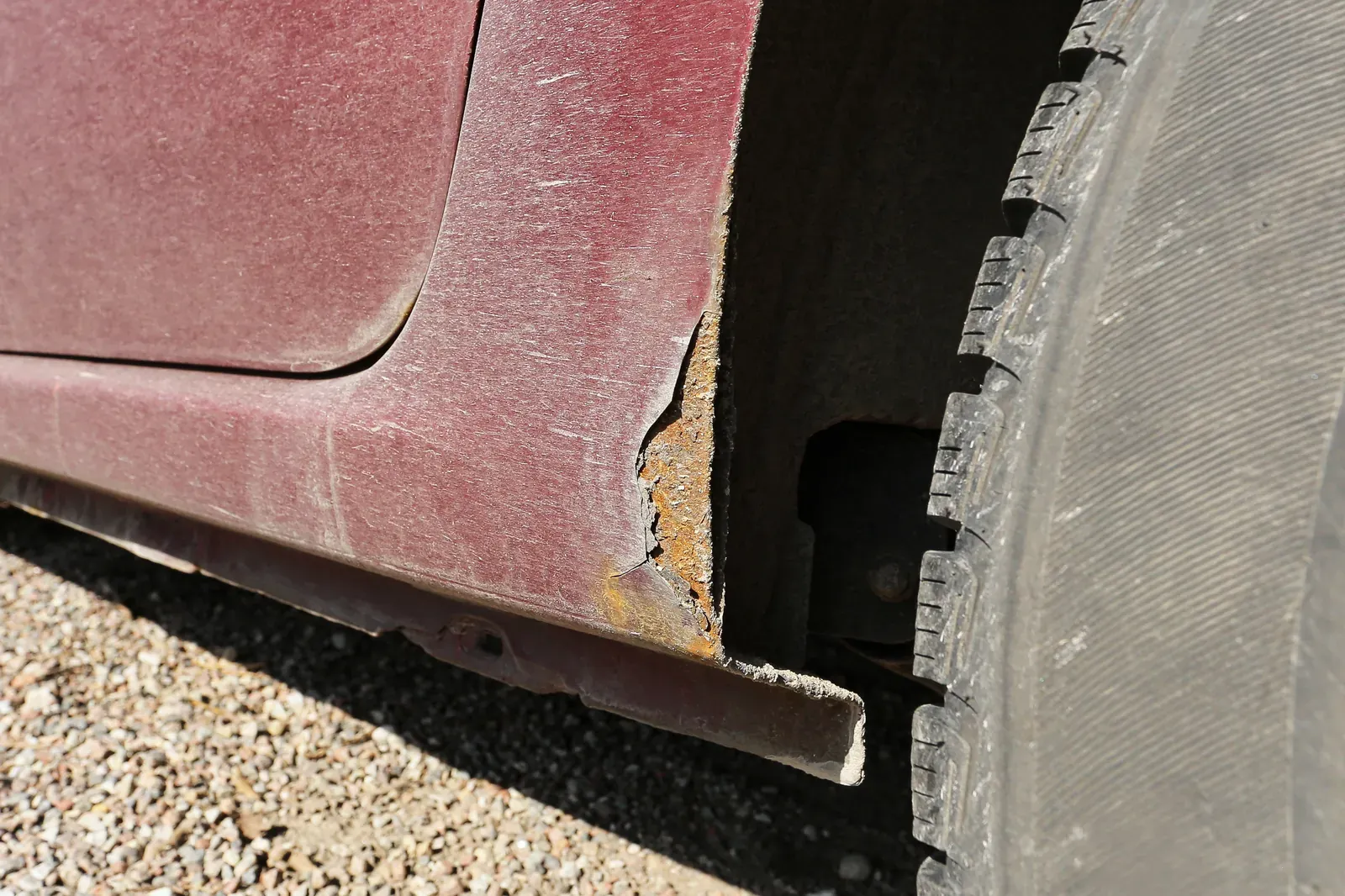 Rocker rotted from inside
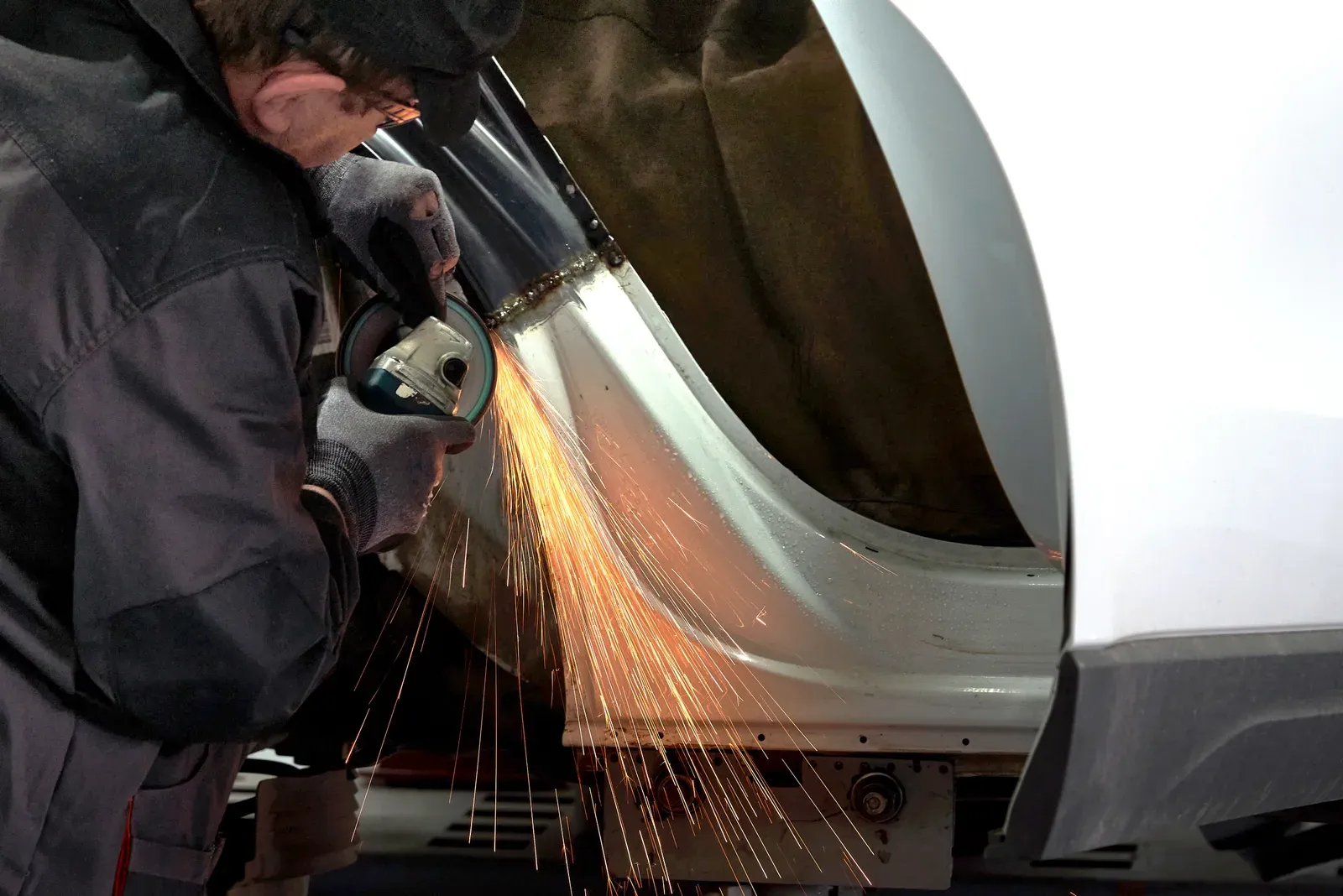 Grinding to bright steel
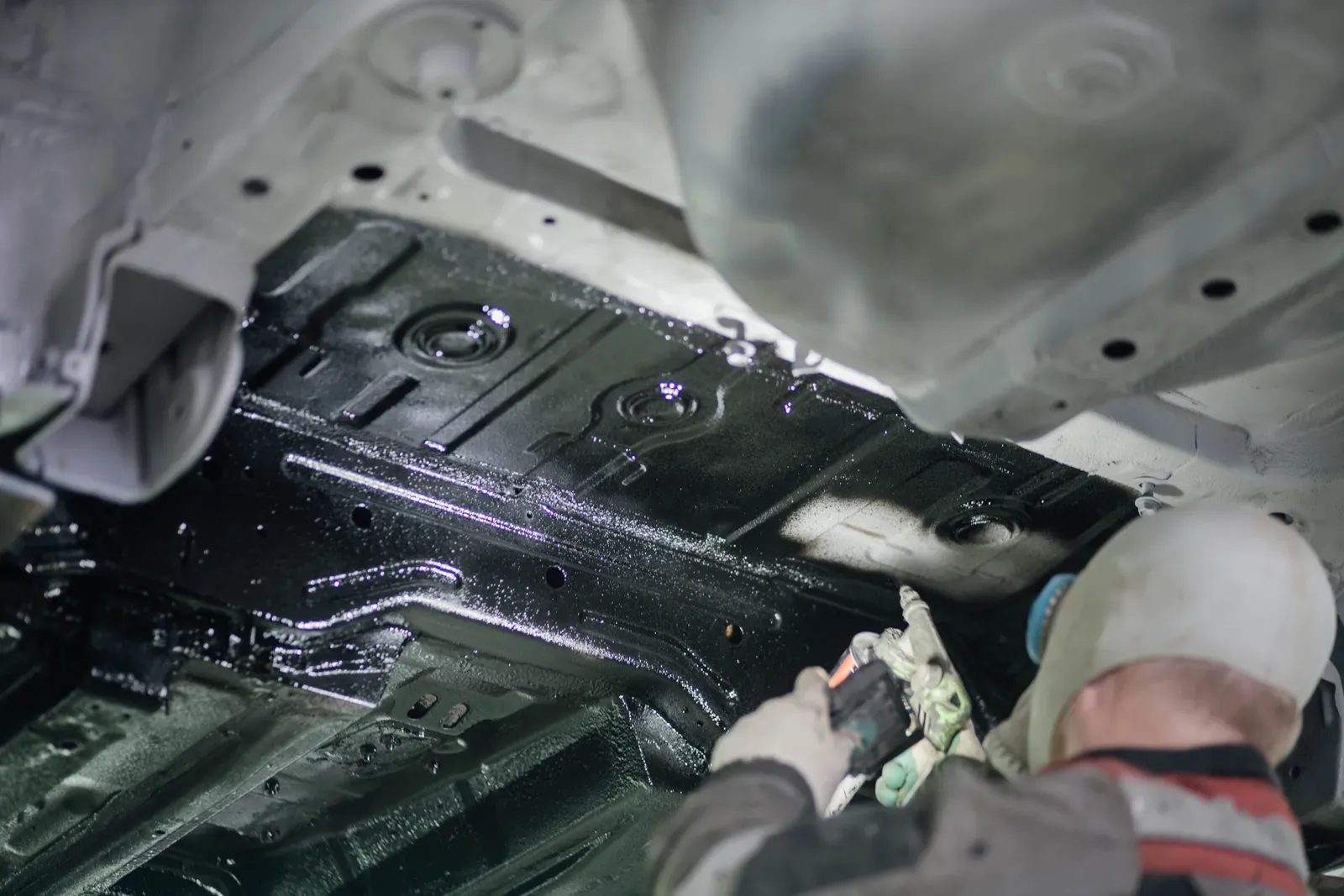 Sealing the underside
Where GTA cars rust first, and why
Salt is the whole story. Toronto and York Region put down road salt and brine from the first November freeze until April, and the slush it makes is thrown up by the front tires straight into the rocker panels, the rear wheel arches and the dogleg where the rear door meets the quarter panel. Those areas are double-skinned: an outer panel you can see and an inner structure behind it with drain holes that plug with sand and leaf litter. The salt water sits in that cavity for months, and the rust works from the inside out. By the time bubbles show in the paint on the outside, the inner skin is usually already perforated.
Freeze–thaw makes it worse. Water that has soaked into a seam expands when it freezes, lifts the seam sealer, and lets the next thaw drive brine deeper. Cars that commute on the 401 or the 404 every day get a fresh coat of spray with every trip, and cars parked outside on the street in Scarborough or East York never dry out between storms. A four-year-old car can have holes in the rockers here that would take a decade to appear in a dry climate.
How a rust repair actually goes
The first step is finding the real edge of the damage, which is always bigger than the bubble. The panel is stripped and the area is probed and ground back until the metal is solid and shiny in every direction, plus a margin. If the inner structure is holed, it gets repaired first, since there is no point welding a new outer skin onto a rotten backing. Our estimator photographs the opened area and sends it to you before going further, because this is the moment where the scope becomes clear and where we tell you if the floor or the seat mount behind it needs attention too.
Repair steel is then shaped to fit: a manufacturer replacement rocker or arch section where one exists, or a fabricated patch where it does not. It is fitted, clamped, tack-welded and then welded out in short runs to keep the heat from warping the surrounding panel. Welds are ground flush, the joint gets epoxy primer, seam sealer goes over every join, and cavity wax is fogged into the enclosed space behind. Only then does the panel move to filler, primer, block sanding and paint, blended into the neighbouring panel so the repair does not show as a colour break.
Rust that is worth fixing and rust that is not
The honest question is whether the car has enough life left to justify opening it up. A rocker or arch repair on a car that is otherwise sound, that you plan to keep for years, or that has to pass a safety inspection for a sale, pays for itself in what you avoid: a safety inspector can fail a vehicle for perforated structural rockers, and a private buyer will walk away from bubbling arches. Surface rust on a hood edge or a chip on a door is a small job and should be done before it spreads.
The other end of the scale is the car whose frame rails, floor pans and subframe mounts have gone soft along with the rockers. Patching the visible panel on that car is cosmetic and we say so. Rust is never an insurance claim, so the decision is entirely yours, and the photos from the opened panel are meant to let you make it with the facts in front of you rather than after the money is spent.
Keeping it from coming back
A repaired section, properly sealed, should outlast the rest of the panel, but the rest of the car is still being salted every winter. Washing the underbody through the cold months, especially after a thaw, moves more salt off the car than anything else you can do. Clearing the drain holes at the bottom of the doors and rockers each spring keeps the cavities from holding water. An annual oil-based or wax rust-proofing treatment slows the process on cars that will stay in the GTA for the long term. We will point out any other areas that are starting when the car is up on the hoist, so you can plan the next one rather than be surprised by it.
Questions people ask
Is rust repair covered by insurance?
No. Corrosion is wear rather than an insured event, so it falls outside both collision and comprehensive coverage. It is paid for by the owner, which is why we photograph the opened panel and confirm the scope with you before the welding starts.
Can you just sand it and repaint it?
Only when the rust is surface-level and the metal underneath is still solid, which is usually true of a stone chip on a hood or a scratch that has started to brown. Once the panel is bubbling or soft, sanding and paint hide the problem for a season and it returns larger. Perforated steel needs to be cut out.
How long will the repair last?
A welded section that has been epoxy-primed, seam-sealed and wax-coated inside is protected better than the factory panel was, and it should not be the next place to rust. What it cannot do is protect the untouched panels around it, so winter washing and a rust-proofing routine still matter.
Will the repaired area pass a safety inspection?
Structural rockers and floor sections with new steel welded in are what an inspector expects to see when a car has been repaired properly. If you are repairing for a sale or a Safety Standards Certificate, tell us at the estimate so the work is done with that in mind.
Do you repair rust on trucks and vans?
Yes. Pickup cab corners, rocker panels and box arches rust the same way for the same reasons, and work vans that run Steeles and the 401 all day take more salt than anything. The approach is identical: cut to clean metal, weld, seal, refinish.