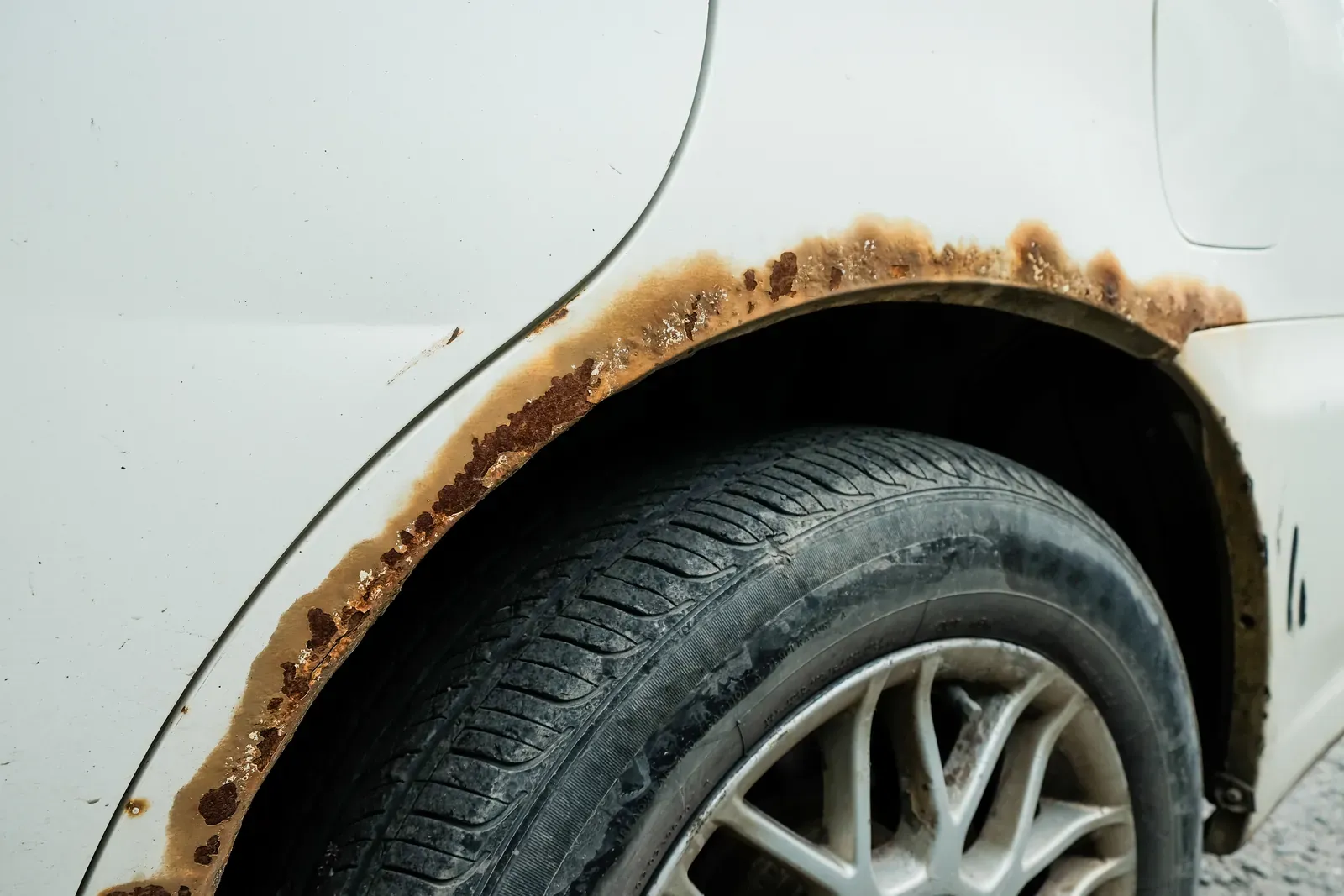
A decade of Highway 7 salt, seam by seam
Rust on a Unionville car is bought a winter at a time on the way to work. Highway 7, Kennedy and the 404 are salted early and often, and the spray packs into the places that never dry: rocker seams, the pinch weld behind the arch lip, door bottoms, the lip under the tailgate. Freeze-thaw does the pumping — February and March push brine in and out of every seam a few dozen times — and the paint above it stays perfect right up until it is not.
The first visible sign is usually a small bubble at the rear arch, and by the time it shows, the steel behind it has been corroding from the inside for a season or two. Pressing it flat or covering it with touch-up paint changes the appearance, and only the appearance.
The car you have kept for a decade is who this repair is for
Around Main Street and the older streets by the pond, households keep cars: the same sedan or minivan on the same driveway for ten or twelve years, mechanically sound and paid off. Those are the cars that arrive with bubbled arches and soft rockers, and for them the work is usually worth it — new arches or rockers cost far less than replacing a car that still does its job every morning. North of Carlton the fleet turns over on leases before rust-through can start, but stone-peppered rockers and a door bottom beginning to lift are exactly the lines a return inspection prices, so the same work happens there on a different schedule.
One thing to know before budgeting: rust is wear rather than an insured loss, so this is not a claim. The estimate we send from your photos is the whole conversation — and if the underside shots show rot in the floor or subframe, we say so before you spend anything on the trip down.
Why the repair starts with a cutting wheel, not a sander
Sanding polishes the symptom; the corrosion continues underneath, because it lives on the hidden face of the panel. A lasting repair cuts the rusted steel out past the last of the pitting, welds in a patch — or a full arch or rocker repair panel where the rot runs long — grinds and seals every seam against water, and coats the inside of the panel before the outside is primed, painted to the code and blended into the panel beside it. The refinish carries the same lifetime paint warranty as any other paint work we do.
Plan for the car to stay a few days for one arch and longer for both rockers; cutting and welding does not hand a car back the same afternoon. The useful timing is seasonal — steel welded in and sealed during September faces the salt with every layer cured, which an April repair spends its first winter proving. Drop the car on a morning run down the 404; Don Mills station is across the intersection when you need to get back north without it.
Questions people ask
Why does the estimate say cut and weld when the bubble is smaller than a coin?
Because the bubble is the far end of the damage rather than the extent of it. Rust starts on the hidden side of the panel and works outward, so the visible blister sits on top of a patch of thinned steel. Cutting back to bright metal on all sides is what stops it; anything less is repainting over an active process.
We swap our leased cars every three years. Is rust something we can just ignore?
Rust-through, yes — it will not develop in three years on a modern car. What a lease cannot ignore is the cosmetic edge of the same chemistry: stone chips down the rockers and a door bottom starting to lift can show up on the return inspection. Handling those a season before the return is far cheaper than a chargeback.
Is it worth doing arches on a twelve-year-old car that makes the Unionville GO run every day?
If the floor, subframe and mechanicals are sound, usually yes — a set of arches or rockers costs far less than replacing a paid-off car that earns its keep daily. Send photos of the visible rust and, if you can, the underside; if what we see says the car is past saving, we tell you before you book anything.