What the windrow does
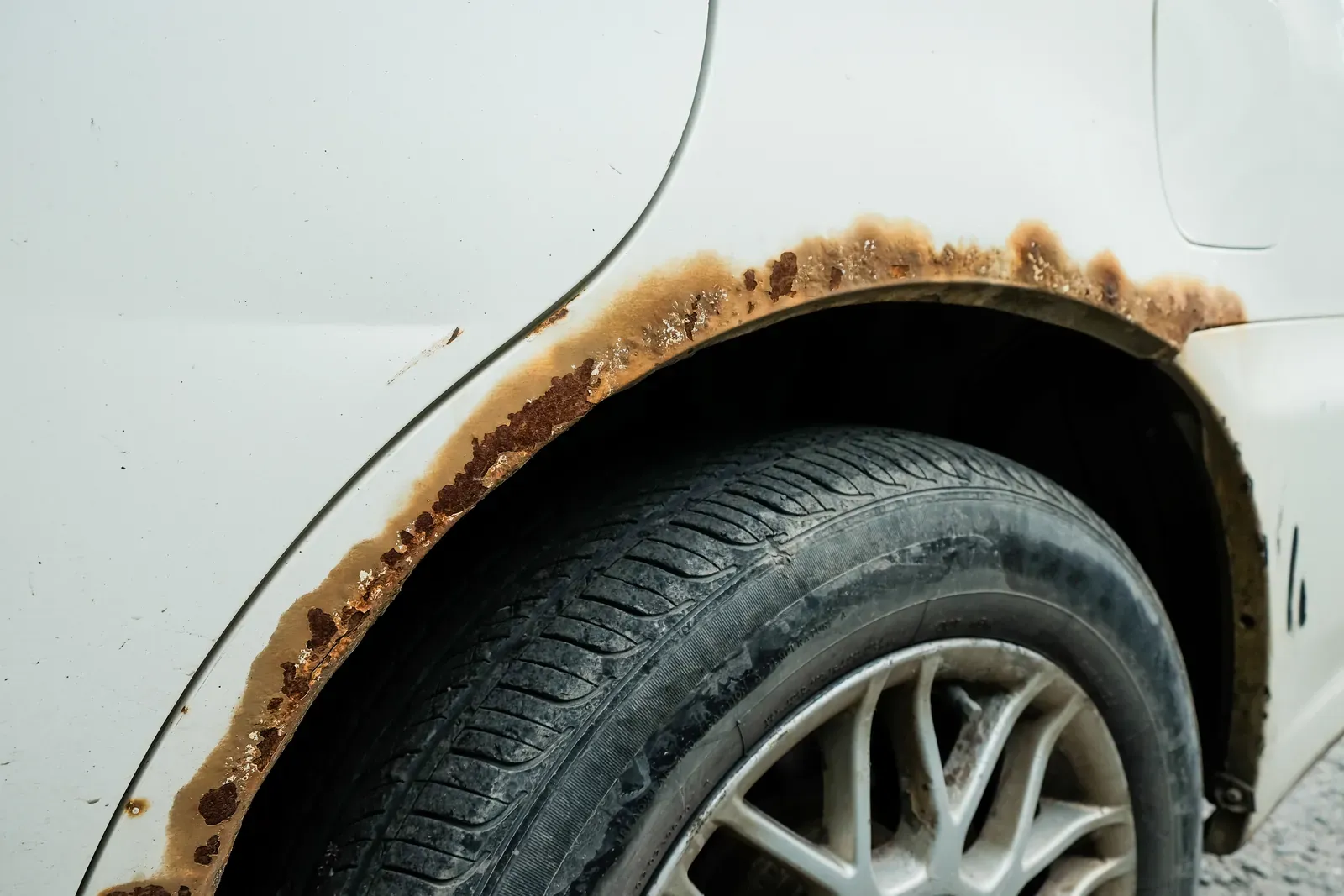
When the plow comes down a Danforth side street it pushes the slush against the parked cars and leaves it there, a grey ridge packed along the rocker panel from the front wheel to the back, and it stays until the thaw. That ridge is salt water held against steel at exactly the seam the manufacturer sealed least. It freezes at night, melts against the warm car in the afternoon, and wicks into the pinch weld and up behind the rear arch. The car never gets rinsed because there is no hose at the curb, and the laneway garage, for the few who have one, is unheated and unventilated and holds the damp in. By April the rocker is stained; by the second April there is a bubble under the paint on the arch; by the third the rocker gives under a thumb.
The places it shows are the same on every car on the street: the rocker under the driver’s door where the windrow sits, the rear arch where the wheel throws spray, and the dogleg behind the rear door where both meet.
Cut it out, weld it in
A bubble is the top of something. The rust began on the inside of the panel, in the seam, and the metal under the paint is lace by the time it lifts. So the repair is not sanding the bubble and filling over it — that holds for a winter and then cracks — it is cutting the section back to clean steel, welding in a new one, dressing the welds, sealing the seams from both sides, priming with an epoxy that bonds to bare metal, and painting and blending into the panel beside it. Where a patch panel exists for the car it is used; where it does not, the section is fabricated. A repaired arch or rocker looks like the day the car was built and stays that way if the cavities behind it are treated afterwards.
Rust is not a claim. No Ontario policy covers it, so the cost is yours, and the estimate is written in sections you can choose between: the rocker this autumn, the arch next. The one exception is rust that formed under a previous body repair where bare metal was left under filler, and that is a warranty conversation with whoever did the work.
- Sectioned back to clean steel, welded, sealed, epoxy-primed
- Painted and blended into the panel beside it
- Estimate written in sections so the work can be staged
Worth it, or not, and when
The honest call comes from three photos: one close on the worst of it, one from a few steps back, and one along the underside of the rocker if you can get low enough. An arch bubble on a car with a solid floor and a rocker that rings when tapped is the routine repair, and on a car you own outright that starts every morning it is nearly always worth it. A rocker gone soft up to the seat-belt anchor is a structural question, and if the car is not safe to repair we say so before you spend anything. Cars on the Danforth are kept a long time by people who know what they are worth, and they get the plain answer.
The best week to do it is in autumn before the first brine goes down; the second best is whenever you are reading this. Drop the car by Pape and Don Mills Road, take the 25 bus or the subway back from Don Mills station, and have the cavities sprayed while the car is here so the next windrow finds nothing to eat.
Questions people ask
The rocker under the driver’s door is soft on my 2011. Is the car done?
Not necessarily. A rocker can be sectioned and welded if the floor and the inner sill behind it are sound, and on a car that runs well that repair is far cheaper than replacing the car. What ends the conversation is rot reaching the floor pan or the seat-belt anchors. A photo from underneath tells us which.
Can I just have the bubbles sanded and painted to get through another year?
You can, but it is not a repair and we will not call it one. Filler over perforated steel lifts within a winter, and the rust keeps spreading behind it, so the honest section-and-weld a year later is bigger than it would be now. If the budget is tight, do the rocker properly and leave the arch for next season.
I have no garage and no hose. Is there anything I can do to slow it after the repair?
Have the cavities oil-sprayed here before you leave and again each autumn, and run the car through a wash with an underbody rinse whenever the brine builds up on the sides — a coin wash on the way home counts. Park away from where the plow leaves the windrow if the street gives you any choice.