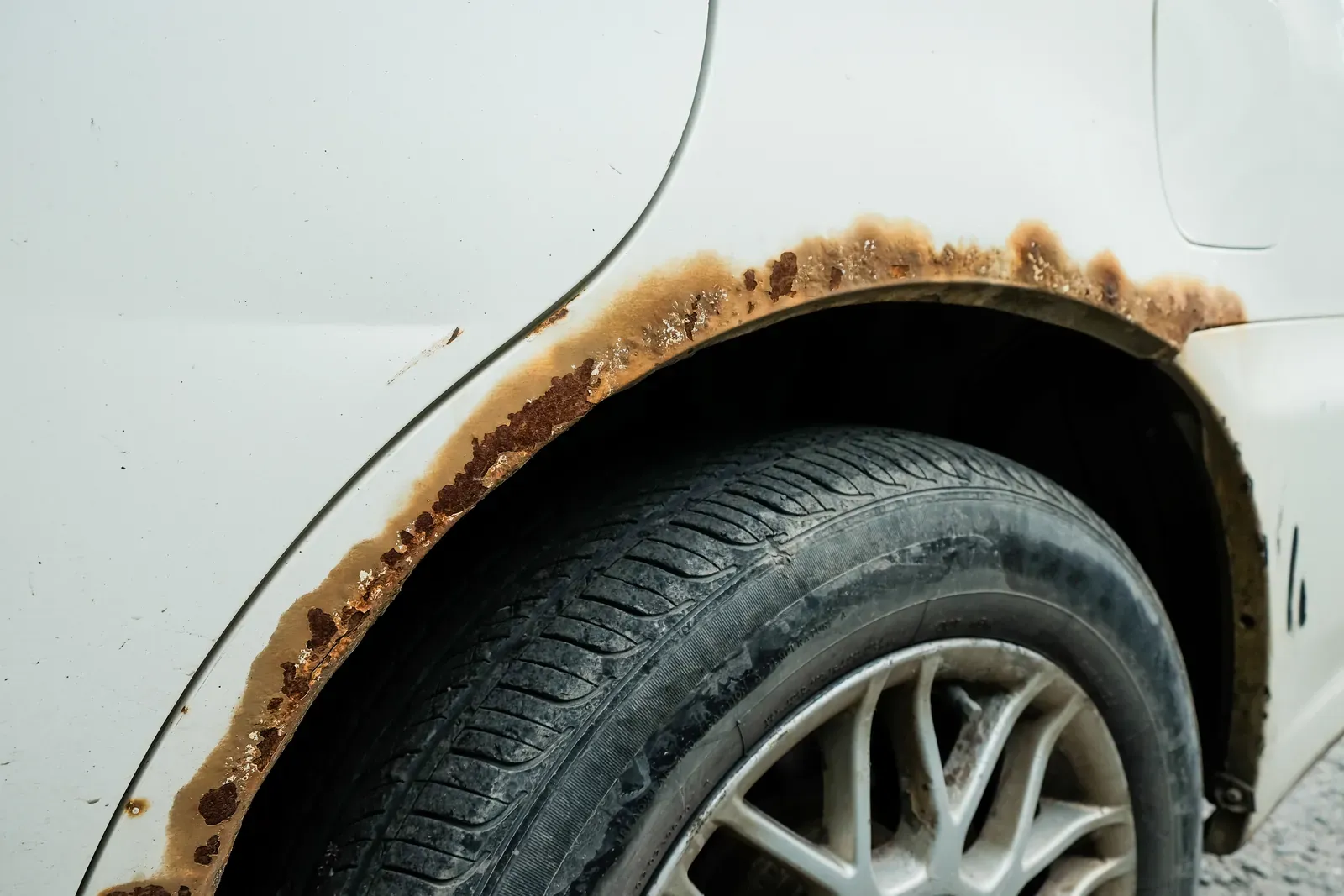
Fifteen salted winters on Kennedy and Midland
Agincourt’s rust is seasonal in the long sense. Kennedy, Midland, Sheppard and Brimley are salted the moment snow is forecast, the slush freezes in the wheel wells overnight, and the melt runs into the seams behind the arches and the drain holes at the bottom of the doors. One winter does nothing you can see. Twelve or fifteen of them, on a car that has otherwise been washed and waxed and garaged when the garage was free, produce the first bubbles along the rear arch lip — usually on the passenger side, which gets the gutter spray.
That is why the cars that come in from here are not junk. They are the neighbourhood’s well-kept older sedans and minivans, a decade or more old, mechanically sound, worth keeping — with a line of blisters above one rear wheel, a soft spot at the bottom of the rocker where the jacking point is, or a door that has started to lift at the bottom seam. The owner has noticed it in the spring wash and wants it stopped.
Why we cut instead of fill
Rust that shows as a bubble on the outside has already eaten the metal from the inside, and the patch visible on the paint is smaller than the hole under it. Grinding the bubble and skimming filler over it looks fine for one summer and comes back the next spring, larger. So the repair here starts by cutting the rusted section out back to clean, sound steel — the arch lip, the lower rocker, the door skin bottom — and welding in new metal shaped to the panel.
The welded seam is ground, the inside of the panel is treated so the new steel does not follow the old, seams are resealed, and the outside is primed, painted and blended into the quarter or the door above it. The finish is warrantied for life; the rust repair itself is only as durable as the car’s next winters, and we say that plainly. On an Agincourt car that has been looked after, the repair usually adds years of service for a fraction of what replacing the car would cost.
- Rusted metal cut back to sound steel, never bridged with filler
- New steel welded in and treated on the inside
- Seams resealed, panel refinished and blended
- Honest word on when rust has gone too far to be worth it
Sending photos, and when to book it
Rust is the one job you can plan. Send a photo of each affected spot, a wider shot of the panel, and a picture from underneath with your phone if you can reach the rocker, and our estimator prices the work from those pictures. Spring is the natural time — the salt is off the roads, the bubbles have shown themselves, and the repair goes through a summer of dry weather before the next season. Autumn works too if you want it sealed before the first salt run down Kennedy.
The car is with us for several days because the welding, sealing, priming and paint each need their own time. Most Agincourt owners drive it down Sheppard and leave it; the second car at home covers the week. Rust is not an insurance matter — it is wear, not an accident — so this is a job you pay for directly, and the estimate is itemized so you can see what is arch, what is rocker and what is paint.
Questions people ask
The blisters are only above one wheel. Do both sides of the car need work?
Not necessarily. One side often ages faster — more gutter spray, more sun — but the salt reached both, so we check the opposite arch and the rockers during the same visit. If the other side is still sound it is left alone; if it is a season behind, we say so, and you can plan one repair instead of two.
Is it worth fixing rust on a car that is fourteen years old?
If the car runs well and you plan to keep it, usually yes. Arch and rocker rust is cosmetic until it reaches the structure, and a proper cut-and-weld repair keeps a sound older car on the road for years. If the rust has reached the floor or the rails, we will tell you straight that the money is better spent elsewhere.
Will the repaired area rust again?
Not from the same spot, if it was cut back to clean metal, treated and sealed. The rest of the car keeps ageing at its own pace, so we also point out the next spots to watch and suggest a wash of the wheel wells through the winter.