Carports, long ownership, and a salted arterial
The original Don Mills was built with carports and single garages that most owners have long filled with something other than a car, so the vehicles on the curved streets around Lawrence and Don Mills spend their winters in the open. They are also kept longer than the GTA average: a lot of the houses have had the same owner for decades, and the car in the driveway is often ten or fifteen winters old. Don Mills Road and Lawrence are arterial roads that are salted early and heavily, and the wet, salty slush sprays into the rocker panels and wheel arches every trip to the plaza and dries there under the tree canopy, which keeps everything damp longer than an open lot would.
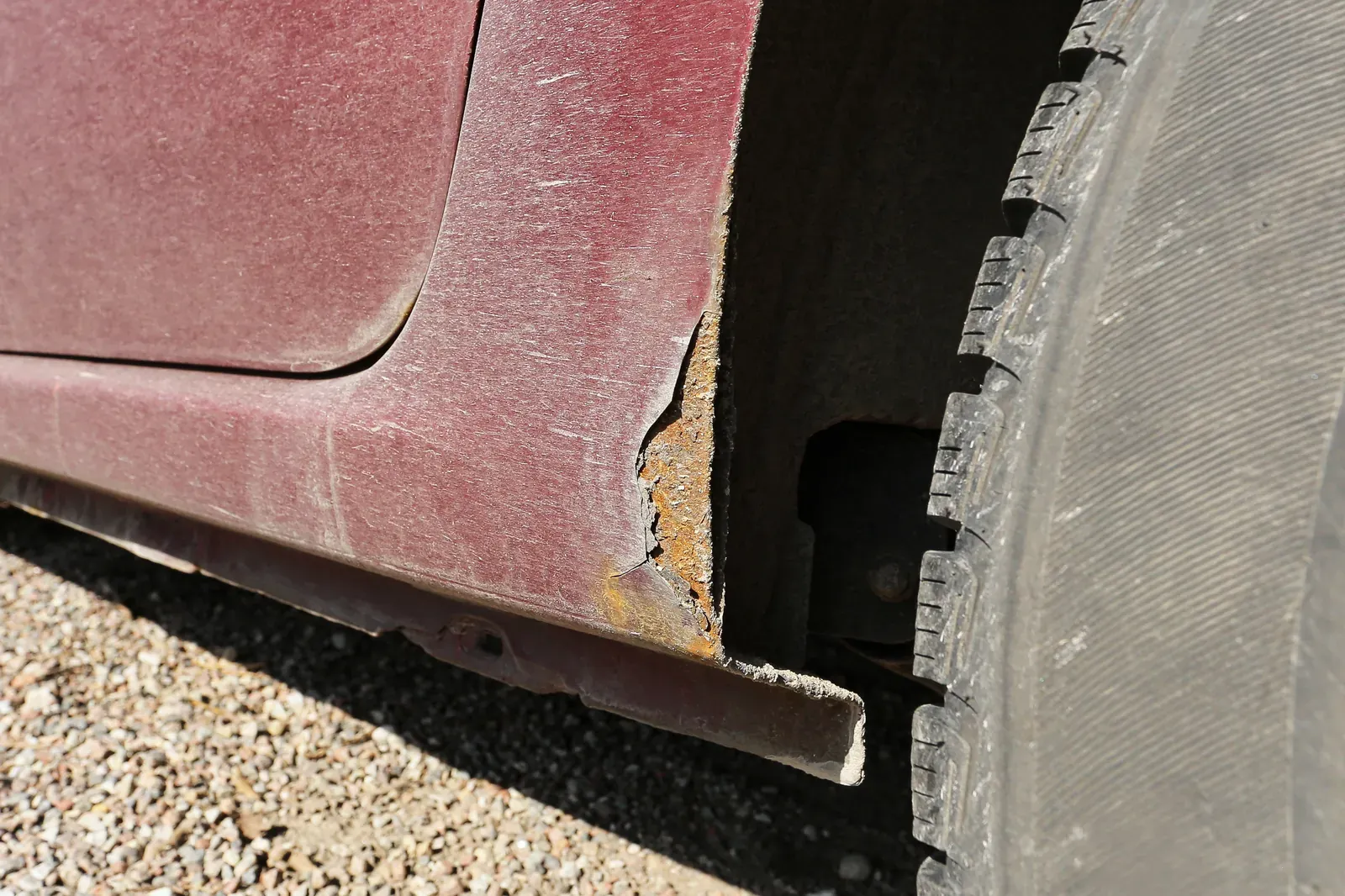
That combination is why Don Mills sends us rust that is further along than the owner expected. The first bubble on the rear arch appears in the spring; by the following spring the rocker under the driver’s door has a hole behind the plastic trim that nobody has looked at, and the dogleg ahead of the rear wheel has gone soft. None of it stops the car. All of it gets more expensive each winter it waits.
Where it starts and what it means
Rust on a Don Mills car follows the salt. The rear wheel arches take the spray thrown by the tires and hold it in the seam where the outer panel folds over the inner; that is where the first bubble shows. Rocker panels sit lowest and collect slush, and their drain holes block with road grit, so they rot from inside out and look fine until the paint blisters or a jack goes through them. The dogleg, the curved section of the quarter panel ahead of the rear wheel, catches spray from both sides. Door bottoms and tailgate seams follow.
A bubble under the paint means the metal beneath has already been eaten through in a patch, because rust grows from the inside; by the time it lifts the paint it has been working for a season or two. A repair that sands the bubble flat and repaints it will bubble again within a winter. The only repair that lasts is one that removes the rusted metal entirely.
Cutting it out, and what to expect afterward
The rusted section is cut back until the cutting wheel reaches bright, solid steel, and a little further. New metal — a patch panel, a full rocker section or a new arch lip depending on how far it has spread — is welded in, the welds are ground, the seams are sealed, the inside of the panel is treated with cavity wax so the new steel does not go the same way, and the outside is primed, painted and blended into the neighbouring panels. Where the rust has reached an inner structure, the estimate says so, because an inner rocker is a structural part and the repair is bigger.
Rust is not an insurance repair; it is wear, and no policy covers it, so the cost is discussed as factors — how many panels, whether the inner structure is involved, whether the paint needs a full blend — and the decision is yours. It is worth doing when the car is otherwise sound, and it is necessary when the car is being sold, because a rusted-through rocker will fail the inspection for a Safety Standards Certificate that a buyer needs to license it.
- Rust cut back to clean steel, never sanded over
- New metal welded in, seams sealed, cavities waxed from the inside
- Panel refinished and blended, with the lifetime paint warranty
- Honest advice on whether the car is worth the repair
Questions people ask
My car has been in the family since new and I want to keep it. What order should the rust work go in?
Structure first, cosmetics second. The rockers and floor get inspected before any arch is made pretty, because welding an inner rocker is the repair that keeps the car on the road; the arch lip and the paint follow it. Done in that order the car takes the work once. We plan it from your photos plus a look underneath on the hoist.
Does insurance ever cover rust on a Don Mills car?
No. Rust is wear rather than an accident, and no Ontario policy covers it. The only time rust ends up in a claim is when a collision damages a panel that was already rusting, in which case the insurance company pays for the collision part and the rust is a separate conversation. We keep those two clearly divided on the estimate.
I want to sell my car privately. Does the rust on the rockers matter?
It does, because a private buyer needs a Safety Standards Certificate to license the car, and a rocker that is rusted through or soft will fail that inspection. Repairing it first means the sale goes through and the price is not negotiated down against the rust. Bring the UVIP with you when you sell; the rust repair is your side of the preparation.