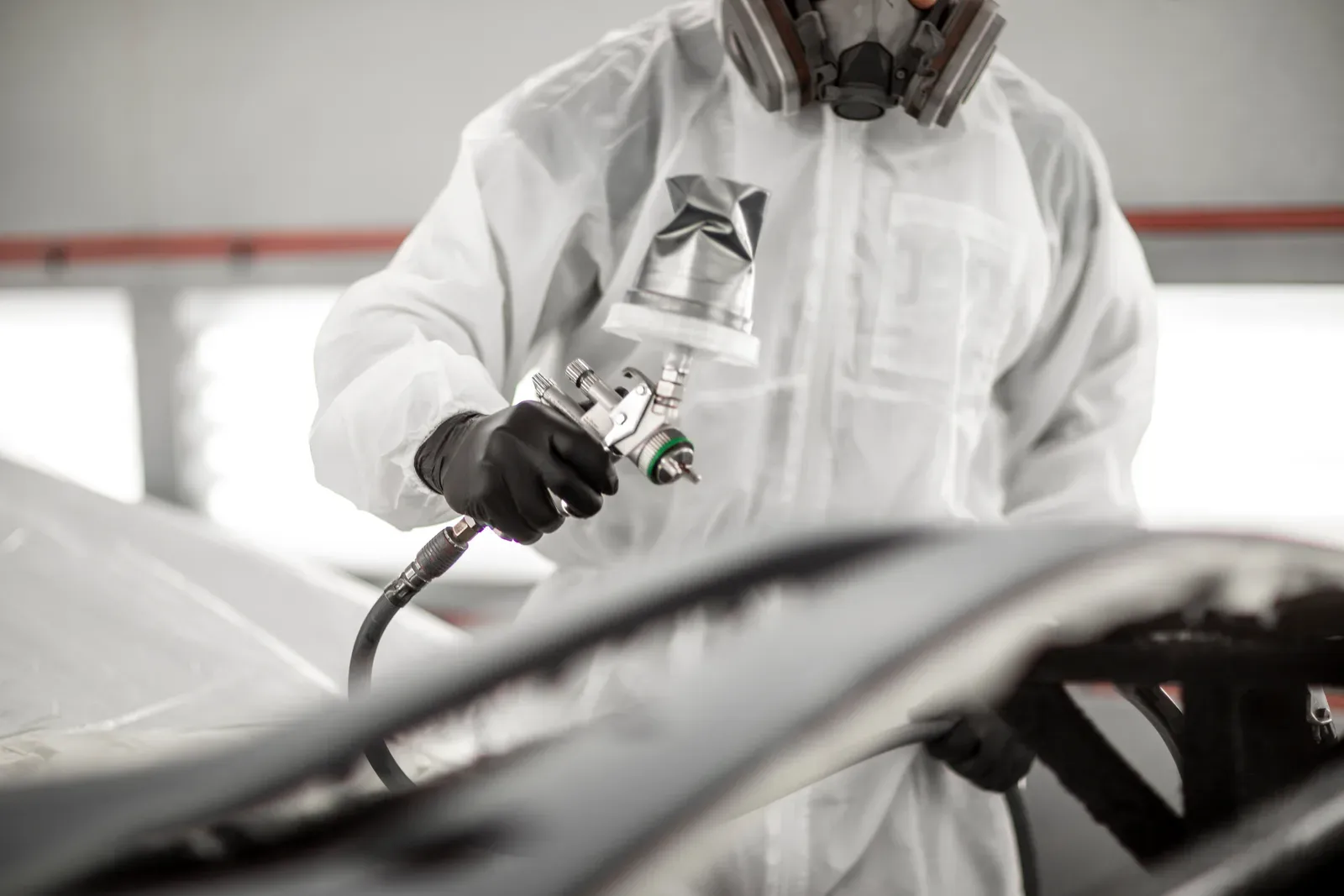
Matched to the car, not just the code
Every factory colour has variants that drifted between plants and model years. We read the code, compare the candidates against the actual panel and confirm with a spray-out card before mixing the batch.
Blended, never boxed in
Fresh colour is faded into the panel beside the repair and the clear is run to the nearest natural edge. The result has no line for the light to catch on a wet night on the DVP.
Prep that outlasts the paint
Feathered edges, epoxy primer on bare metal and a sealer coat under the base are what stop peeling and rust bubbles a few winters on. Most of the hours in a paint job are spent here.
Lifetime warranty on paint and refinish
If our finish peels, fades unevenly or loses gloss in a way the rest of the car does not, we redo it. You keep the invoice; we keep the mix record.
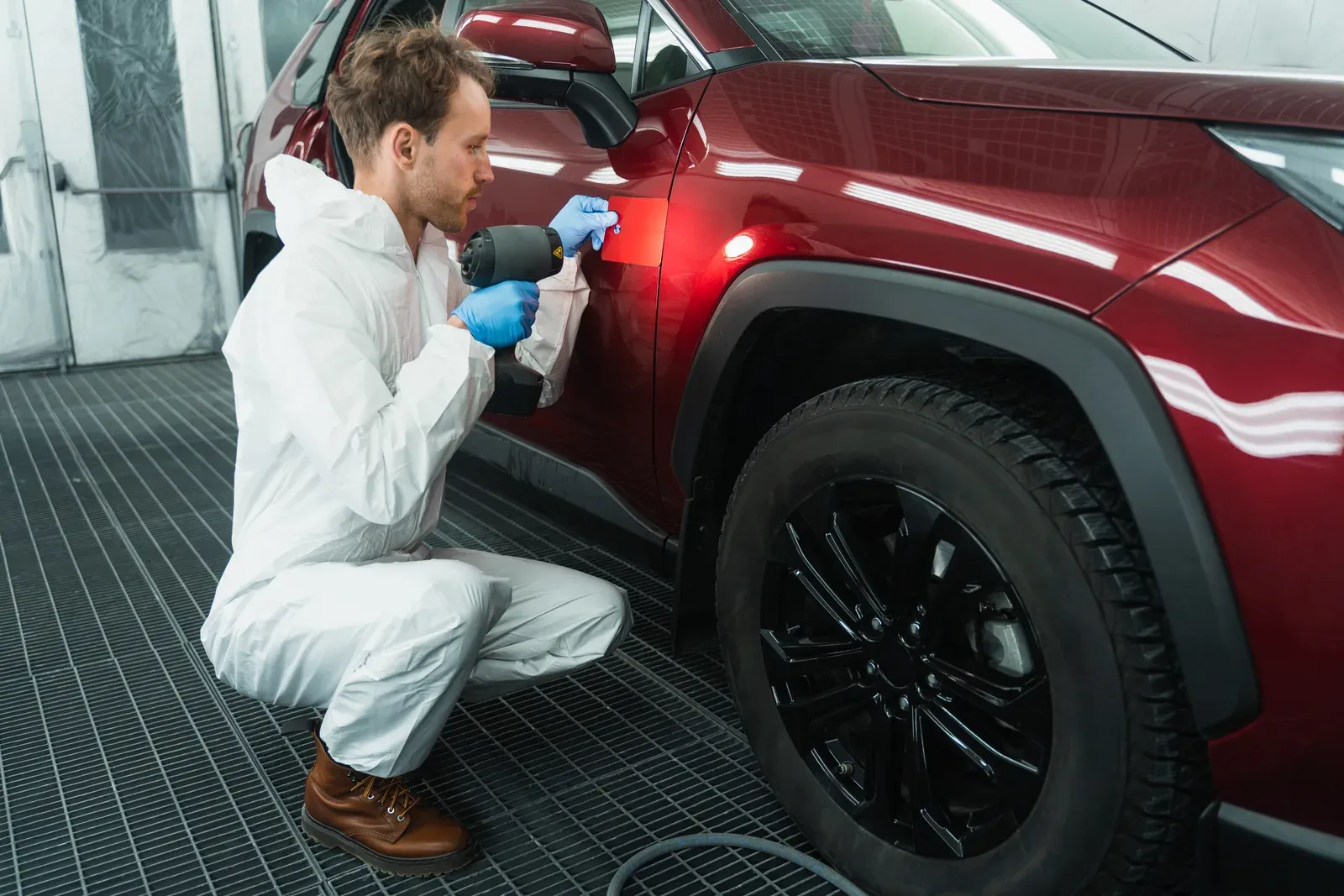 Matching the colour
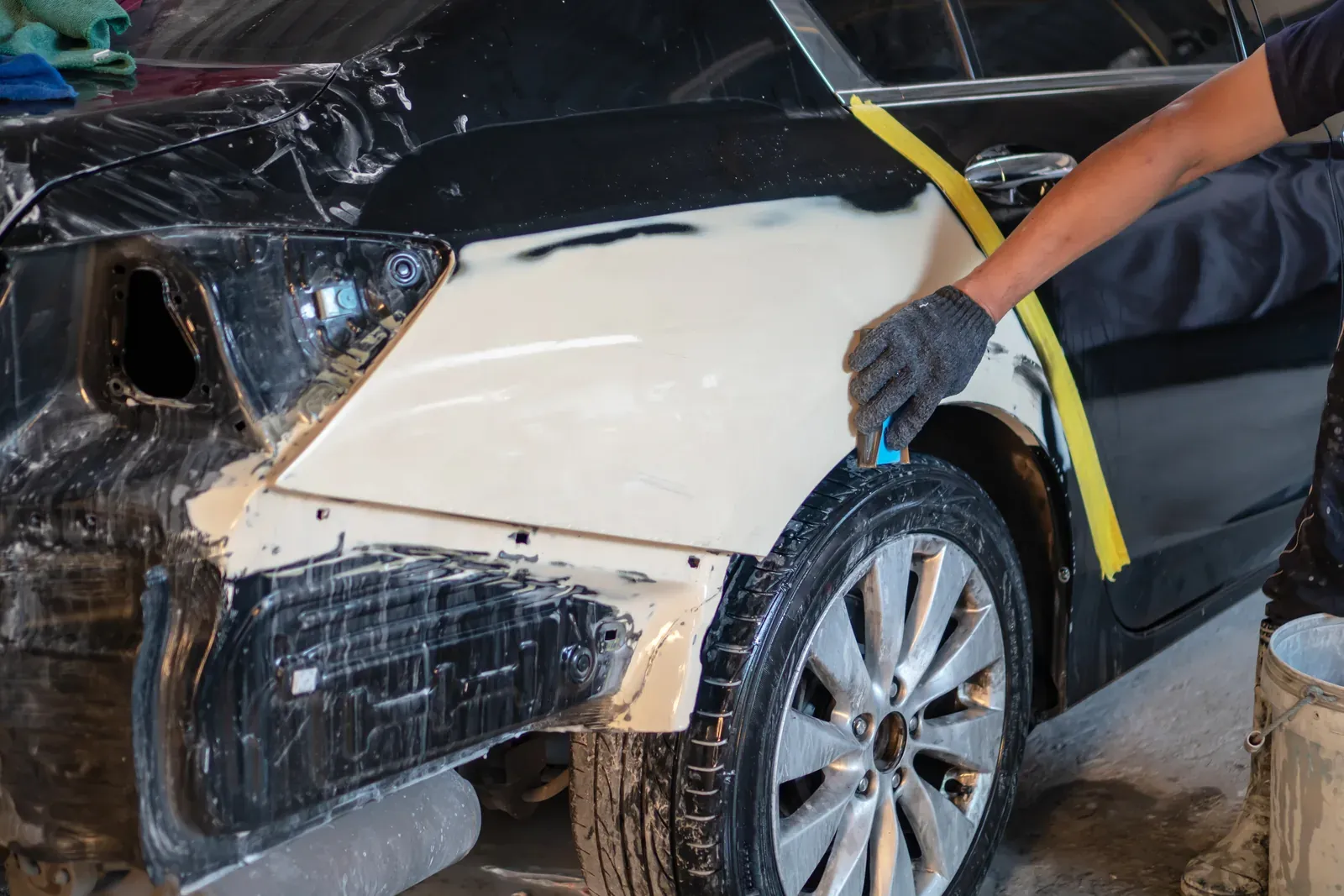 Masked for the booth
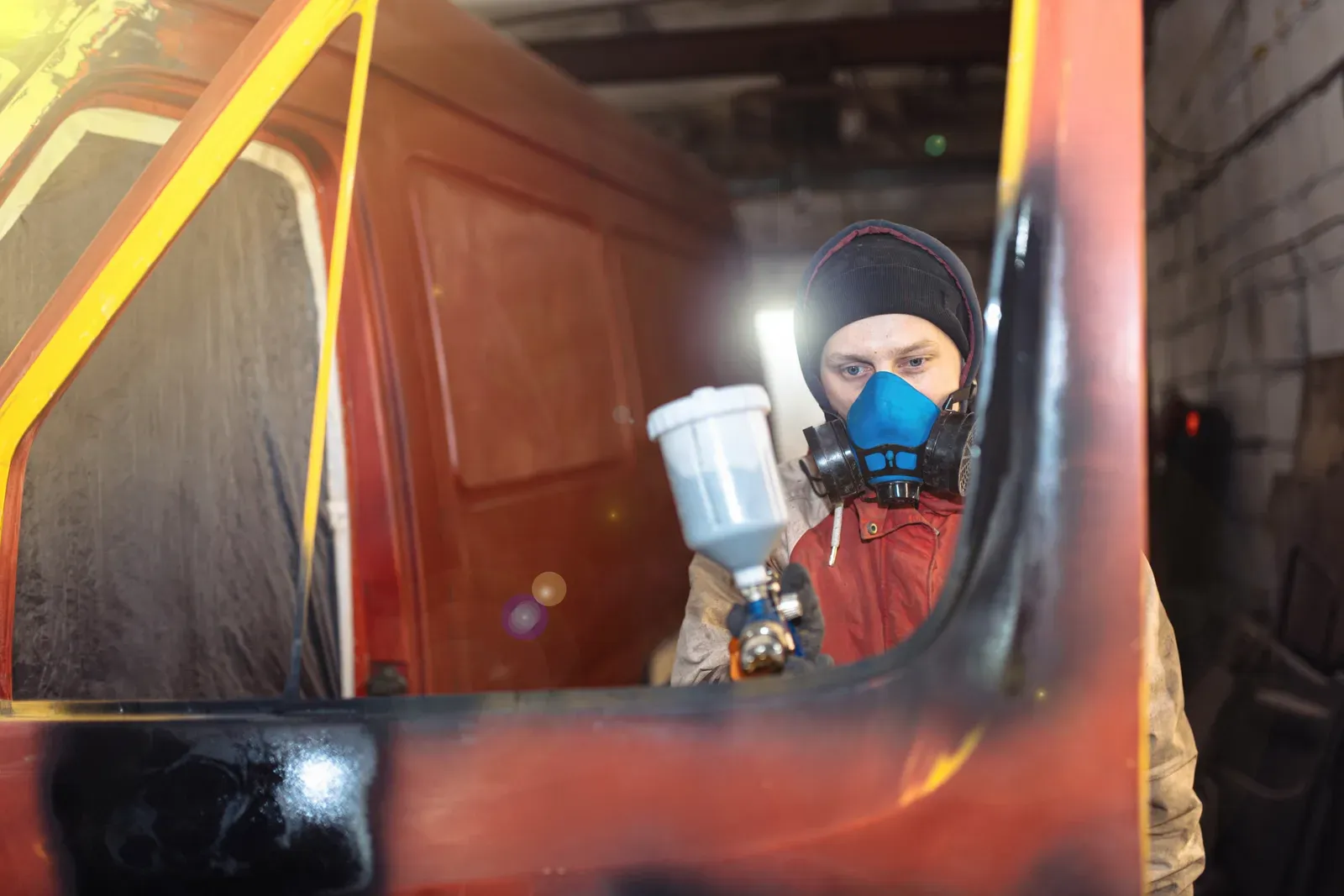 Colour going on
Why the paint code is only a starting point
Every car carries a paint code on a sticker in the door jamb or under the hood, and every code maps to several variants. A silver that left one plant in one year is not quite the silver from another, and both sit under the same code. Sun, car washes and a decade of Ontario winters shift the panel again. Matching means finding the variant closest to the car in front of us, then adjusting toward it.
The process at the shop is the same every time. The code is pulled, the candidate formulas are mixed in small amounts, and each is sprayed on a test card that gets held against the panel in daylight and under the booth lamps. Metallics and pearls are checked from straight on and from a low angle, because the flake can match head-on and go dark from the side. Only when the card disappears against the car does the batch get mixed for real.
Prep is where the hours go
A panel is not painted until it is ready to hold paint for as long as the car lasts. Damaged clear and colour are sanded back to a feathered edge so the new material sits flush instead of forming a ridge. Bare metal is cleaned and primed with an epoxy that seals it from moisture the same day it is exposed. Filler, where it is needed, is applied thin, blocked flat and guide-coated so the sanding shows every low spot before primer goes on.
Once the primer is blocked, the whole car is masked, the panel is wiped and tacked, and a sealer goes down to give the base coat a uniform colour underneath. A door that has been through this cycle properly will not show the repair through the paint in a year, which is where most cheap paint jobs give themselves away.
Blending into the next panel
Even a perfect match sprayed only within the borders of one panel can read as different, because the eye compares the door to the fender beside it. So the colour is carried a short distance into the neighbouring panels, thinning out as it goes, and then the clear coat is applied over the full panel or to a body line where an edge can hide. The blend is what makes the repair vanish; the match is what makes the blend possible.
Clear coat is sprayed in a booth at a controlled temperature, then baked so it hardens through. The panel is wet-sanded to remove any dust nib and polished to the same gloss as the factory finish beside it. Fresh clear keeps curing for a few weeks after that, which is why we ask you to hold off on wax and to avoid high-pressure washes for a little while.
Painting a car that lives in the GTA
The climate here is hard on paint twice a year. Winter brings road salt that finds every chip and every unsealed edge, so a repair that skips the primer step starts bubbling by the second March. Summer brings direct sun on black and dark-red cars that were repaired with a slightly wrong variant, and the mismatch that looked fine in the shop shows up in a Fairview Mall parking lot at noon.
Condo and underground garages add their own wear: the tight columns and the grit tracked in on tires are why so many downtown cars arrive with scrapes on the same rear quarter. For commuters coming off the 401 or the 404, we time paint work so the car is dropped and collected around the drive, and a rental can be arranged through your coverage when the paint is part of a claim.
How long a paint job takes, and what the warranty means
A single panel with a blend usually takes a few working days, most of it prep and cure. A full side or a whole-car respray runs longer, often a couple of weeks, because each panel has to go through the same cycle and the car has to be sequenced through the booth. We give a window when the car arrives and confirm it once the prep is done.
The lifetime warranty covers our paint and refinish work on the panels we sprayed, for as long as you own the car. It means peeling, delamination or gloss failure on those panels gets corrected at no charge. It does not cover stone chips, a new scrape or a collision, which are new damage, and we say that plainly so there is no argument later.
Questions people ask
Will the new paint match the rest of the car?
Yes, and the way it is checked is visible: a spray-out card of the chosen variant is held against your panel before anything is mixed for the job, and the colour is blended into the adjacent panel so the eye has no edge to compare. Metallics and pearls get an angle check as well.
Can you paint just one panel, or does the whole car need doing?
One panel is the normal job. The colour is blended a short way into the neighbours so the repair disappears, which is different from painting them fully. A whole-car respray is only worth discussing when the original finish has failed everywhere.
How soon can I wash the car after it is painted?
A gentle hand wash is fine after a few days. Hold off on wax, sealants and pressure washers for a few weeks so the clear can finish curing, and avoid automatic brush washes in that window.
Does a paint repair go through insurance?
It can when it is part of a collision or vandalism claim, and the paint lines on the estimate are itemized the same as parts. For a small cosmetic job you may prefer to pay directly rather than use your deductible; we can show both options on the estimate.
What if the colour is a three-stage pearl or a matte finish?
Tri-coat pearls take a larger blend area because the mid coat changes the colour with each pass, and matte finishes cannot be polished, so the whole panel is refinished. Both are routine work, but they change the time and the estimate, and we tell you that up front.