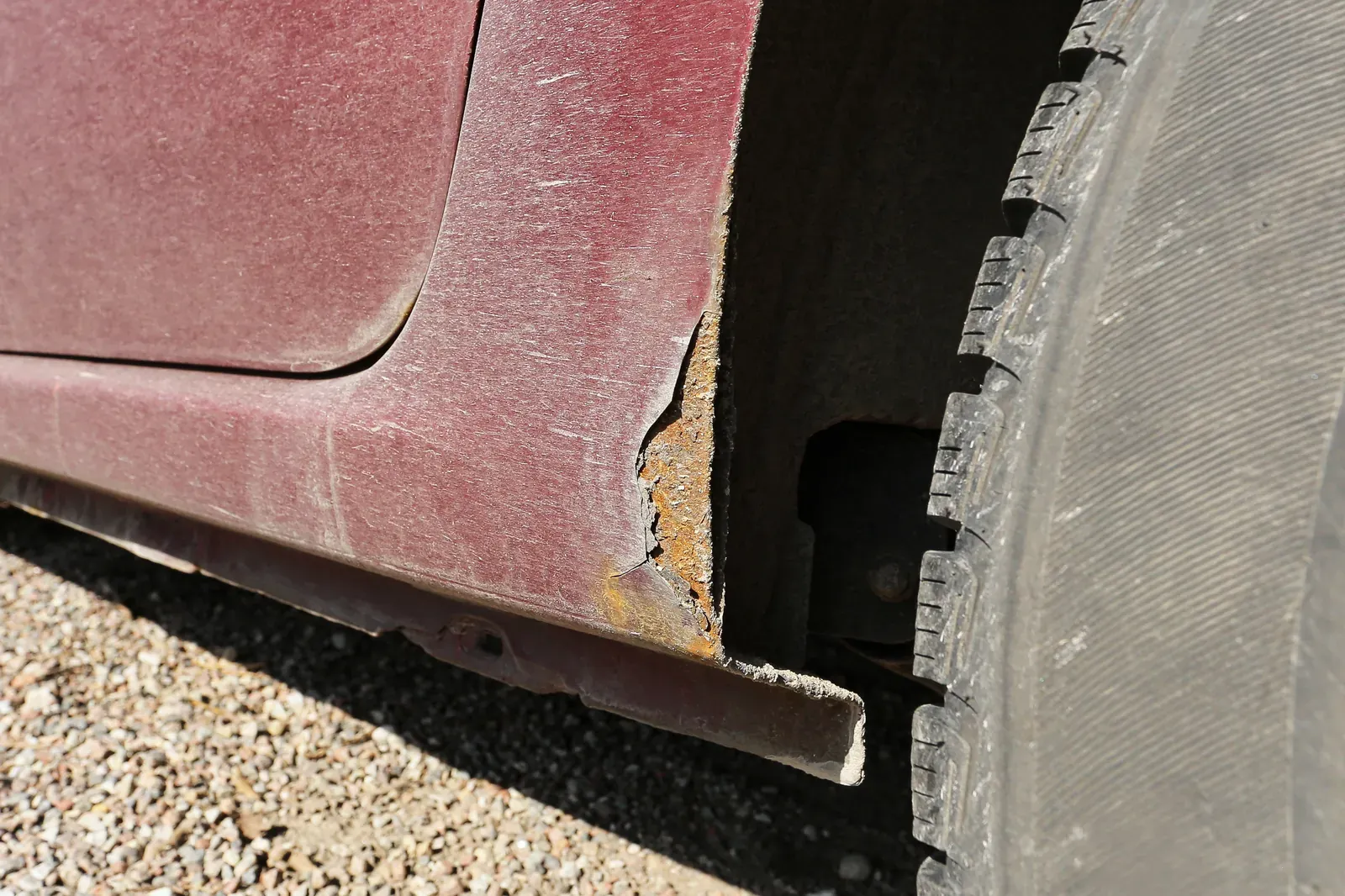
No garage, no cover, ten winters
The garage courts in Malvern’s townhouse blocks were built for one small car, and the garage is often storage now, so the car lives outside. Every winter night the slush that Neilson, Finch, Sheppard and the 401 pack into the wheel wells sits there, thaws a little in the afternoon, and runs into the seams behind the arches and the drain holes at the bottom of the doors and rockers. Nobody hoses out a wheel well in February in an open court. Ten years of that and the first bubbles show on the rear arch lip, and the rocker sounds different when you tap it.
The cars are the ones the neighbourhood runs hard: a decade-old sedan or minivan that does the shift commute, the school run and the trip to the plaza, and is not going to be replaced this year. Tapscott vans get there faster — they are on the 401 every day and washed rarely. The owner has usually spotted the bubbles in the spring and wants to know one thing: whether the car is worth it.
What is worth fixing on an older car
The honest answer depends on where the rust is. Arch lips, lower doors, rockers and the bottom of a tailgate are skin rust: ugly, spreading, but repairable, and on a car that runs well the repair buys years for a fraction of a replacement. Rust that has reached the floor pans, the rear rails or the subframe mounts is structural, and it moves the conversation to whether the car will pass its next safety inspection, not whether the arch looks good. We say which it is from your photos and, if it is close, from a look underneath on the hoist.
Rust is wear, not an accident, so there is no claim; you pay directly, and the estimate is itemized by panel so you can do the rocker now and the arch in the fall if that is what the budget allows. A bubble the size of a coin is the cheapest it will ever be. Next spring the same spot is a hole.
- Skin rust on arches, rockers and doors: repairable, worth it on a sound car
- Structural rust on floors and rails: a safety question first
- Estimate itemized by panel so the work can be staged
- Straight answer on when the money is better spent elsewhere
Cutting it out, and when to book
Filler over a bubble lasts one summer. The rot is cut out back to clean, sound steel — the arch lip, the rocker section, the door skin bottom — and new metal shaped to the panel is welded in. The seam is ground, the inside of the panel is treated so the new steel does not follow the old, seams are resealed, and the outside is primed, painted and blended into the panel above. The refinish carries a lifetime warranty; the metal itself lasts as long as the next winters allow, and we say so.
Spring is the time to do it, once the salt is off Neilson and the bubbles have shown themselves, so the repair gets a dry summer before the next season. Late autumn works for sealing a rocker before the first salt run. The car is with us for several days, so for a one-car household it is booked to the start of a stretch of days off, and the Sheppard East bus from Don Mills station next door gets you home to Neilson the same morning. Send a photo of each spot, a wider shot of the panel and, if you can reach it, one from underneath the rocker.
Questions people ask
The rocker is soft under the driver’s door. Is the car still safe?
Usually yes for now — the rocker is the outer skin, and the inner structure often has years left. The concern is that it is also where the jack goes and where the safety inspector looks. Send a photo from underneath and we will tell you whether it is a cut-and-weld repair or a sign the floor is going too.
Can rust repair be done a panel at a time?
Yes. The estimate is broken out by panel, so a rocker this spring and an arch in the fall is a normal way for Malvern owners to spread the cost. We tell you which spot is most urgent so the order makes sense.
Will the repair last if I still park outside?
The repaired section will, because it is new steel treated inside and sealed. The rest of the car keeps ageing. A wheel-well rinse at a coin wash a few times each winter and a rust-proofing treatment in the fall slow the next spot down considerably.