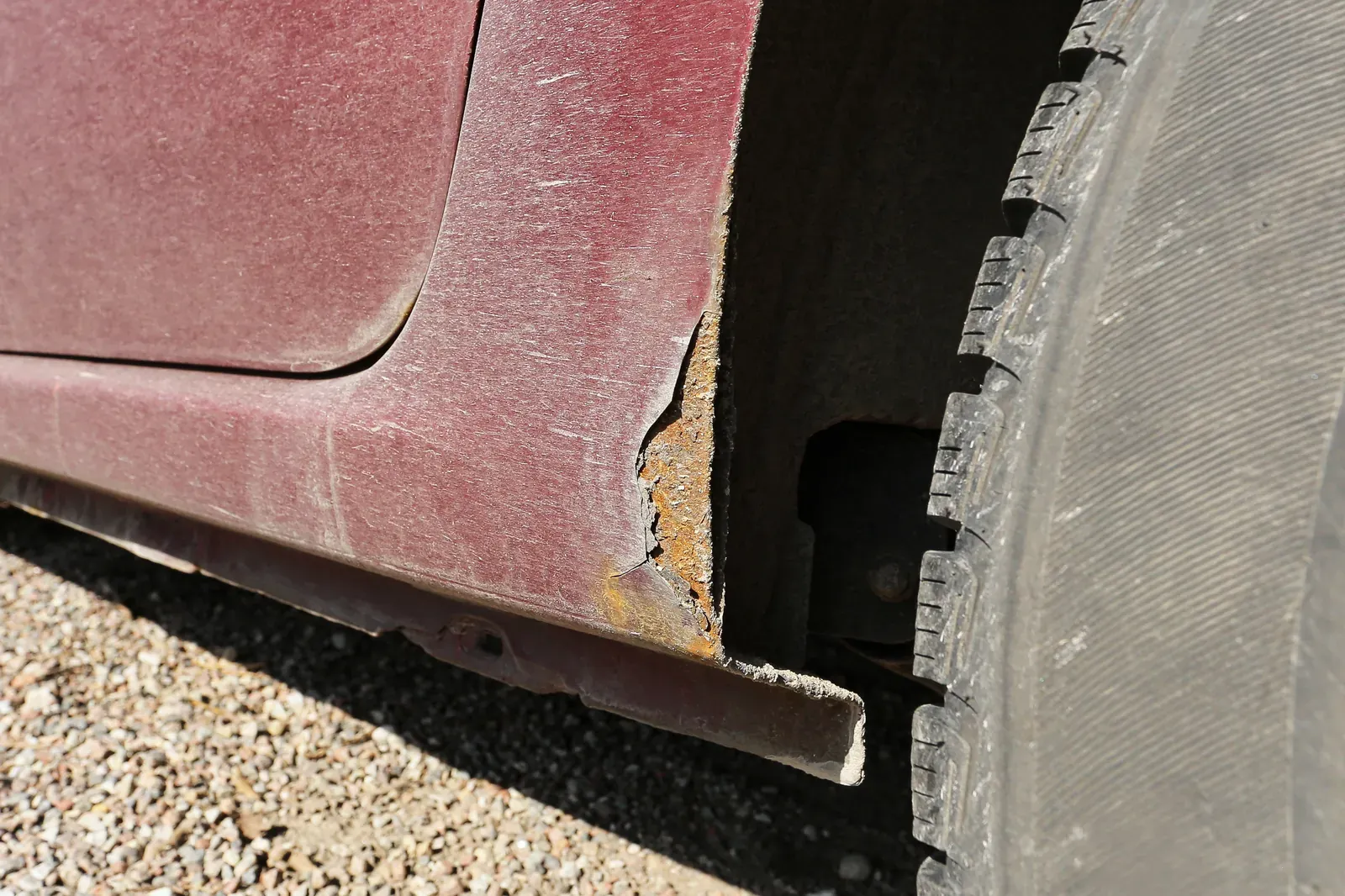
Three kinds of rust, and only one is cosmetic
Press a thumb against the bubble. If the paint is chipped and the metal underneath is brown but hard, that is surface rust: it is sanded to bright metal, treated, primed and refinished, and the panel is fine. If the paint is bubbling with nothing chipped, the rust is on the back of the panel and coming through, and by the time it shows, the metal around it is thin. The bubbles are cut out to sound steel, a patch is welded in, the seams are sealed and the panel is refinished. If the thumb goes through, or the rocker crunches, the structure is gone in that section, and the fix is a rocker or dogleg section welded in at the factory seams.
That last one is not cosmetic. Rockers and the lower pillars carry side-impact load and hold the jacking points, and a rusted rocker on a unibody car is a safety item and a Safety Standards Certificate item both. Cars that have lived on Riverdale streets for ten winters often arrive with one bubble on the arch that turns out to be a rocker underneath; we tell you what we find before we cut.
Broadview, Gerrard and the Danforth are salted first, and the seams keep it
The Danforth, Broadview and Gerrard are salted heavily and early, because they carry streetcars and buses and cannot be allowed to ice. Every trip along them throws brine into the wheel arches, and the arches drain into the rocker seams and the door bottoms. A car in a heated garage drips and dries. A car on Logan freezes with the brine in the seam overnight, thaws in the afternoon sun, and does it again for four months, which is worse: the freeze pushes the paint off from behind and the thaw keeps the salt working.
The car Riverdale keeps longest is the one that suffers most — say a twelve-year-old wagon that has done every winter at the curb. On the hoist its story is usually one rocker: bubbled for a hand-span below the driver’s door, still solid at both ends. The repair is a section, not a whole panel. The bubbled length is cut back until the steel at the cut is bright, a formed patch goes in with welds along the factory seam lines, the weld is dressed, the cavity behind it gets wax, the seam gets sealer, and the outside is primed and refinished. The owner’s photos show every stage — the cut, the bare patch, the sealed seam — because a rust repair you cannot see into is the kind that comes back. While the car is up there we also check the subframe mounts and the brake lines, because a beautiful rocker over a rotten mount is not a repair.
- Rear arches and rockers checked together, never alone
- Underbody, mounts and lines inspected on the hoist
- Seams sealed and cavities waxed after the weld
When the repair makes sense, and what a buyer will want to see
Rust is not an insurance claim; it is maintenance, and the question is whether the car deserves it. Our rule: if the structure is sound and the rust sits in bolt-on and lower panels, the repair buys years on a car you like. If the floor, the rails or the subframe mounts are perforated, the work can cost more than the car is worth, and we say that rather than take the job. The estimate is written from photos of every arch and both rockers before the car comes in, and a single rocker section usually spends a few days in the bay.
If you are selling, an Ontario private sale needs a UVIP, and the buyer needs a Safety Standards Certificate to license the car — a certificate a perforated rocker will not earn. Fixing it properly before the sale, with photos of the weld before the paint went on, is what makes a buyer trust the ad. Afterward, rinse the arches through the winter and have the cavities re-waxed each fall; it is cheaper than the next patch.
Questions people ask
My car has never once slept in a garage. Is rust-proofing worth doing for a car that lives on the street?
Yes — street-parked cars are exactly who it is for. An annual dripless oil or wax spray works from inside the cavities and seams, which is where curb life does its damage, and it needs no garage to apply or to keep working. Book it in the fall, before the first brine goes down. What it cannot do is reverse rust that is already through: a bubbled arch or rocker gets repaired first, then protected.
Would the damp laneway garage behind the house be kinder to the car than the curb?
Often not, and sometimes worse. What ruins street cars is brine sitting wet in the seams, and a dim, unventilated laneway garage keeps it wet longer — the car misses both the hard freeze that slows the chemistry and the wind that dries the seams, so the salt keeps working. If the garage is dry and aired, use it. If the floor stays dark with damp until May, the curb plus a regular underbody rinse is the better winter.
The seam at the bottom of my pickup’s tailgate is bubbling, and the truck does cottage duty all summer. Same fix as a rocker?
Same logic, different economics. A tailgate seam traps water inside the fold, so bubbles at the seam usually mean more rust inside the skin than outside, and cutting and welding it is fiddly work on a part that unbolts. On common pickups a sound used tailgate, refinished to match, is often the cheaper and better repair, and we say so when it is. Unlike a rocker it is not structural; the cost of waiting is spreading stains and a seized latch rather than a safety problem.