Photos read against the lease guide
Every lease company publishes what counts as excess wear: usually a dent larger than a coin, a scratch through the paint, a scuff bigger than a credit card. Our estimator sorts your photos into what will be charged and what will not.
The lightest fix that passes
A ding with intact paint is pushed out without repainting. A scuff is polished before anyone talks about paint. Only what needs refinishing gets refinished, and it is blended so the inspector sees a factory panel.
Wheels, bumpers and doors in one visit
Curb rash on a rim, a scraped bumper corner and a row of door dings are the most common charges on a return, and all of them are handled in one drop-off rather than at three different shops.
Timed to the turn-in date
The work is scheduled so the car is finished a week or more before the inspection, with a copy of the invoice for the file in case anything is questioned.
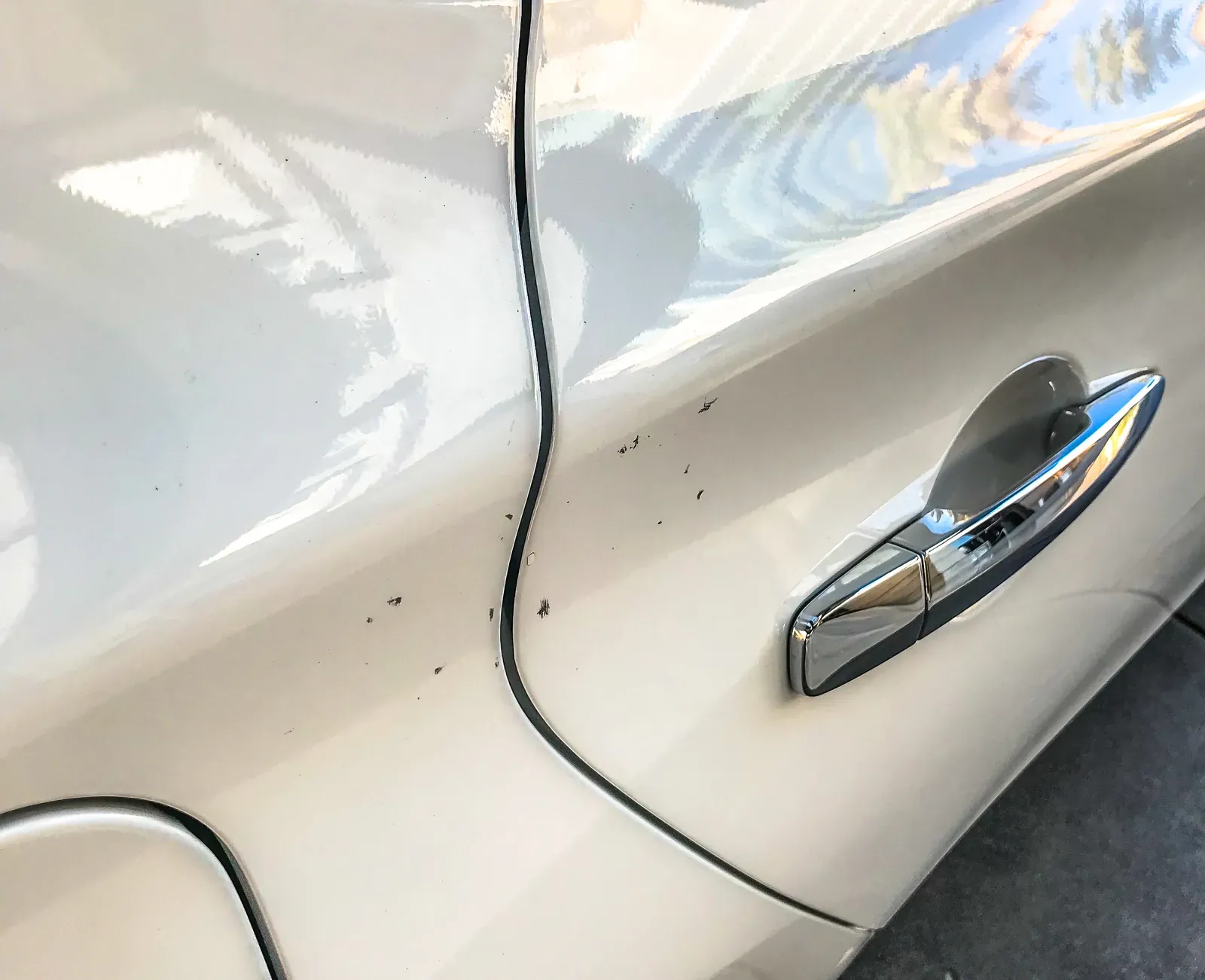 The dings the inspector counts
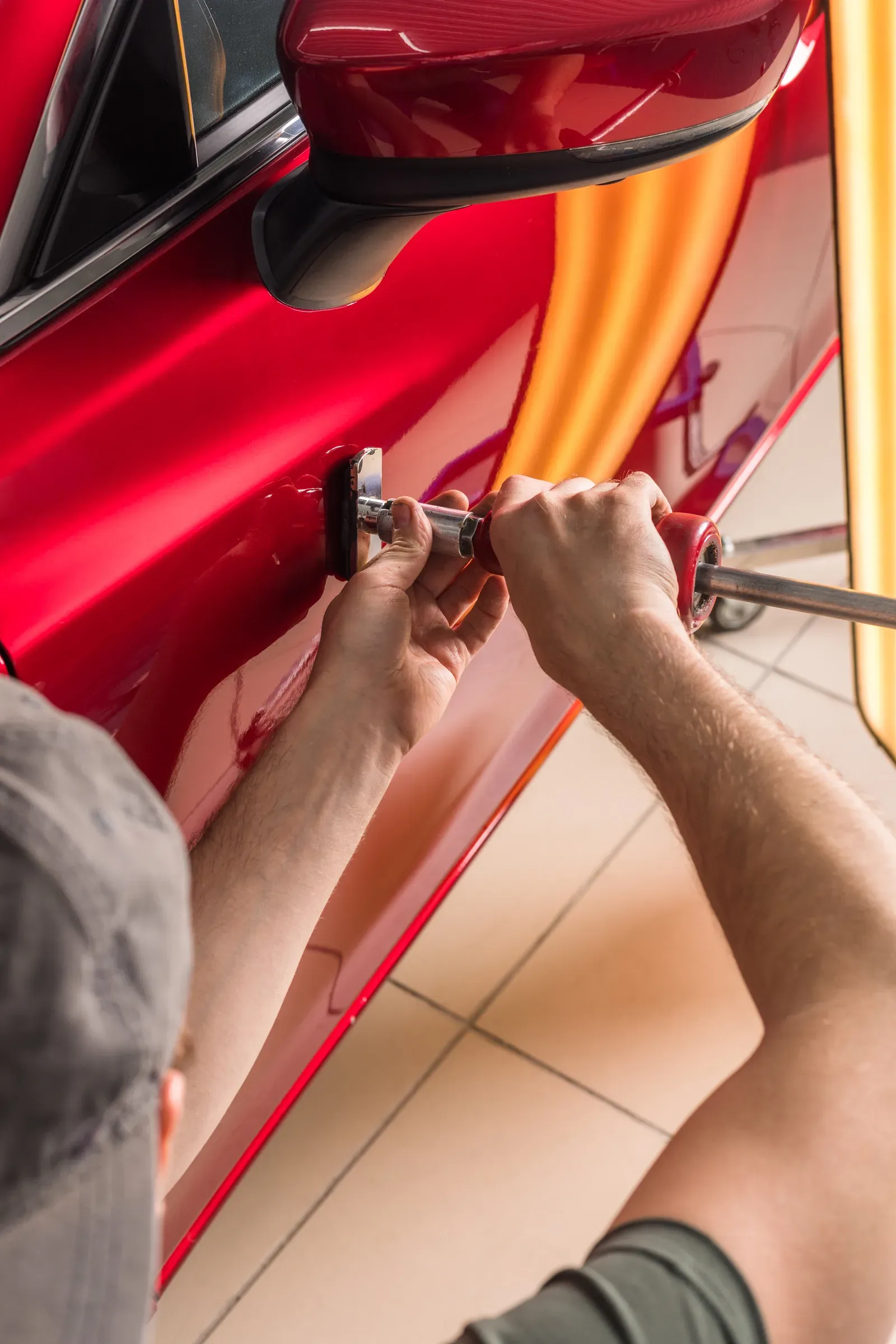 Pushed out, paint untouched
 Turn-in day
What the inspector is looking for
A lease-return inspection is a walk-around with a ruler and a camera. The inspector, either at the dealer or from a third-party company the lease company hires, checks every panel against the wear-and-tear schedule in your agreement. The schedule draws a line between normal wear, which is free, and excess wear, which is billed. Where the line sits varies by brand, but the pattern is consistent: small dings with no paint damage are tolerated up to a certain diameter and a certain number per panel, scratches that have gone through the clear coat are charged, scuffs on a bumper are charged once they exceed a set size, curb rash on an alloy wheel is charged per wheel, and any panel that has been repainted badly, with visible overspray, tape lines or mismatched colour, is charged as if it were still damaged.
The bill for excess wear is set at the lease company’s rate, not a body shop’s, and it arrives after the car has already been returned, when you have no way to shop it around. That is the whole reason to deal with it beforehand.
What we fix and how we decide
Our estimator starts with photos of every panel, the wheels and the bumper corners, taken in daylight, and goes through them against the schedule from your lease. Some of what you are worried about will not be charged and is left alone. What remains is sorted by the lightest method that will pass inspection. Door dings and small dents where the paint is intact are pushed out without paint. Bumper scuffs are polished if the scuff is in the clear coat, and refinished if it has gone through to the plastic. Scratches are treated by depth: polished, touched in, or the panel refinished and blended. Curb rash on alloy wheels is filled and refinished on the wheel. Chips on a hood edge are touched in rather than repainted, because a repainted hood invites a closer look.
Where a panel does have to be painted, it is done to the same standard as a collision repair, blended into the neighbouring panel and cured, because an inspector who spots a repaint that is not up to factory will charge twice: once for the original damage and again for the poor repair.
Timing it around the turn-in date
Lease companies typically arrange the inspection in the last month or two before the end date, and many will do it at your home or workplace. Book the repair so it is finished before that inspection, not the week of it. Most lease-return jobs are a few days in the shop; a car that needs a panel refinished and a couple of wheels done usually takes longer, and paint needs its cure time before it can be scrutinized. Sending the photos six to eight weeks before the end of the lease leaves room for the estimate, the booking and the work without rushing any of it.
If the inspection has already happened and the report lists charges, it is often still worth repairing before the actual return: some lease companies re-inspect, and the gap between their charge and a shop repair is usually large enough to justify the call. Bring the report and our estimator will tell you which items are worth chasing.
Lease returns across the GTA
The dealer rows on Sheppard, Steeles, Highway 7 in Markham and Richmond Hill, and along the 401 through Scarborough and Etobicoke turn over thousands of leases a year, and the return inspection has become a revenue line for many of them. Cars that spent three years in a condo garage downtown or a Fairview Mall lot come back with pillar scrapes and door dings; cars that commuted the 404 from Aurora carry stone chips across the hood and a scuffed front bumper from the snowbank at the end of the driveway. None of it is dramatic. All of it is billable.
The other GTA reality is that leases end on a date, not when you get around to it. A car being returned the same week a new lease starts is the one nobody has time to fix, so the photos are the thing to send the moment the end-of-lease letter arrives. If you are thinking about buying the car out rather than returning it, none of this applies, and we will say so.
Questions people ask
Is it better to fix the damage or pay the lease company’s charge?
Repairing beforehand nearly always comes out ahead. The lease company’s excess-wear charges are set at their rate, are not negotiable after the return, and often treat a scuff as a full panel. A shop repair is done to the lightest standard that passes, and our estimator will tell you plainly if a particular item is not worth touching.
Do I have to use the dealer’s body shop?
No. The lease requires the car to come back within the wear standard; it does not say who does the work. A properly repaired and refinished panel from an independent shop passes the same inspection.
Will a repainted panel be flagged by the inspector?
A good one will not. Inspectors flag repaints that show tape lines, overspray, orange peel or a colour step at the edge of the panel. Blending into the next panel and matching the factory texture is what keeps the repair invisible.
What if the car was in an accident during the lease?
A collision repair done properly through insurance does not count as excess wear, and the invoice and any photos should go in the file for the return. If the repair was never done, or was done badly, the inspector will see it and charge for it.
How far in advance should I send photos?
Six to eight weeks before the end date is comfortable. It leaves time for the estimate, for parts if a bumper cover or a wheel is needed, for the work itself and for paint cure before the inspection.