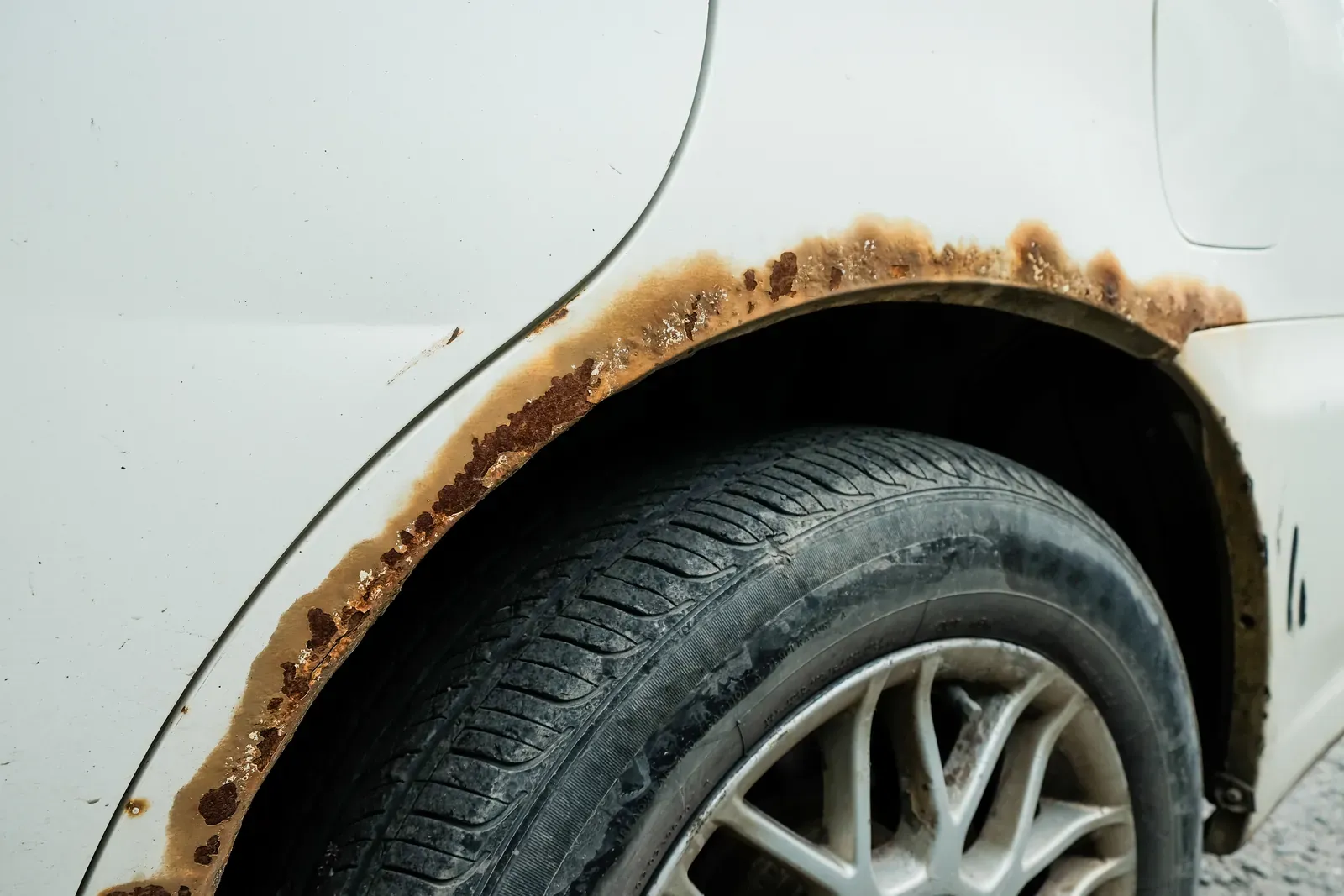
Salted by the region on Highway 7, then salted again at home
Woodbridge gets salted twice. The region does Highway 7, Islington, Weston Road and Rutherford early and heavily because the trucks need them open, and the 427 extension and the 407 are brined before a flake falls. Then the estate streets off Pine Valley Drive are done by contractors who salt the way they plough, generously, and the interlock driveways are salted again by the homeowner. A car that lives here spends December to March with brine packed into the rocker seams and the wheel-arch lips, and the freeze-thaw cycles of February and March push it deeper while the slush melts in a warm garage every night. By April the bubbles show: at the bottom of the rear arch first, then along the rocker behind the front wheel, then at the dogleg ahead of the rear wheel. The work trucks get it worse — box sides, cab corners, the tailgate seam — because they sit outside on a site all winter and get washed less.
Rockers, arches and box sides, and what is under the bubble
A rust bubble is the top of something. Under a bubble the size of a coin on a rear arch there is usually a hand’s width of thin, perforated steel, and under a rocker bubble there is often a hollow section that has been collecting brine for years. That is why sanding and painting over it lasts one winter. The honest repair cuts the rot back until the steel is clean and thick, welds in a new section — a patch for a small area, a full rocker or arch repair panel for a large one — seals the seams, coats the inside of the cavity, primes with epoxy and refinishes in a blended colour. On the aluminum hoods and doors of the European cars, the problem is different: not rot but corrosion creeping under the paint from a chip, which is stripped back to bare metal, treated and refinished, and is small if it is caught early.
- Bubble on an arch or rocker: cut back to clean steel, weld, seal, refinish
- Truck box sides and cab corners: repair panels welded in
- Aluminum panels: strip the corrosion, treat, refinish
- Cavity wax inside the repair so the same seam does not go again
Worth it or not, decided before the drive
Rust is the one repair where we will talk you out of the trip. Send photos of every bubble, plus one underneath each rocker with the phone on the ground, and our estimator writes an estimate that says what is cosmetic, what is structural, and how the total compares with what the vehicle is worth. A contractor’s pickup with a solid frame and a rotten box side is worth fixing; a fifteen-year-old sedan with rockers you can push a finger through is often not, and we say so. Rust is not an insurance claim, so there is no adjuster and no rental through coverage, which means the timing is simply yours: most Woodbridge owners bring the truck in the slow week between jobs, or the family car when they are already headed east on the 407 for a Saturday. One trip in, one trip back, and the refinish carries the same lifetime warranty as our collision paint.
Questions people ask
My truck’s box side has bubbles but the frame looks fine. Worth it?
Usually yes. A pickup with a sound frame and a rusty box is a common Woodbridge job, and repair panels for box sides and cab corners exist for exactly this. Send photos from underneath so we can confirm the frame, and the estimate says how far the rot goes before anyone commits.
Can the box side be done now and the rockers next winter, or does it all have to happen at once?
It can be staged, and for a working truck it often is. Rust moves seam by seam on its own schedule — the box side going does not hurry the rockers — so doing the worst panel now and booking the rest for a slow month is a fair plan. The line we hold is structural: a rocker that has gone from cosmetic bubbles to perforated steel stops being a wait-and-see decision, and the estimate marks each area one or the other so you can stage the work with open eyes.
Can you rust-proof the repair so the same rocker does not go again?
The repaired cavity is coated inside before it is closed, the seams are sealed, and the underside is primed and coated. That protects the repair itself. Whether to oil-spray the whole vehicle each fall is a separate decision, and for a work truck that lives outside on a site we would say yes.