Five months of salt, and where it goes
Etobicoke carries the 401 across the west end of the city and the full length of the 427, and between them those two highways get the brine trucks earlier and more often than any residential street. From November to March that brine is sprayed into the wheel wells of every commuting car and dries into a crust that keeps working when the road is bare. Down on Lake Shore the salt arrives on the car instead: the ramps into the Humber Bay Shores garages are salted all winter, every wet car drips brine onto the deck below it, and a heated garage keeps the slush melted and working instead of frozen and inert. North of the 401, the work trucks and shift cars of Rexdale and the Dixon Road corridor spend the winter parked outside, salted, thawed, salted again, and the freeze–thaw of February and March does the rest. By April the bubbles are visible; by the following winter they are holes.
Rockers, arches, doglegs and tailgates
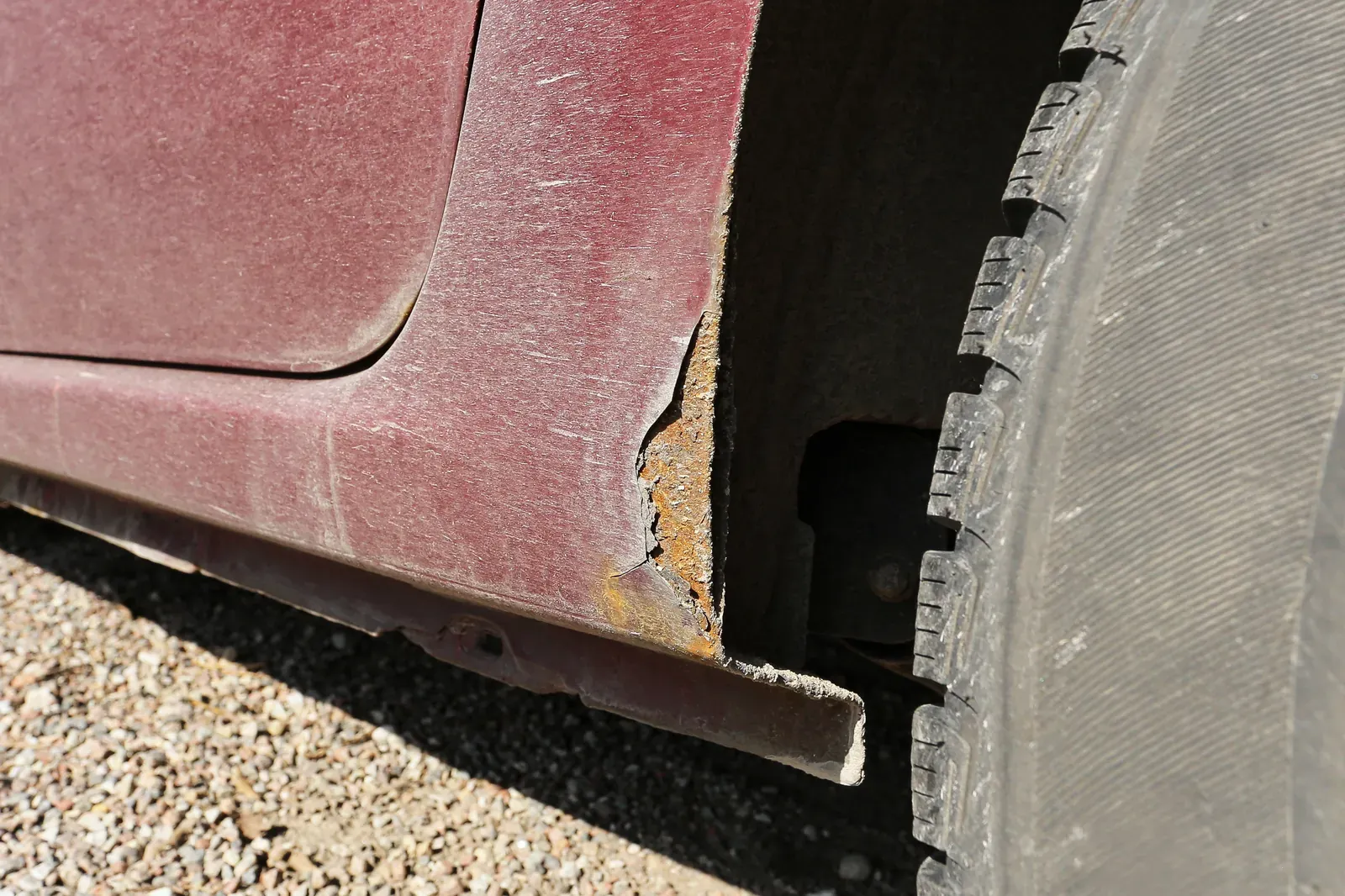
Rust in Etobicoke picks the same spots it picks everywhere else, only sooner. The rocker panel under the doors traps brine inside its box section and rots from the inside out, so the first bubble at the sill usually means a hole behind it. The rear wheel arch collects slush thrown off the tire and goes at the lip. The dogleg, the little panel where the rear door meets the quarter, holds water in a seam and blooms in a crescent. Pickups from the trades lose the bottom of the tailgate and the cab corners; older SUVs go at the rear hatch seam and the quarter behind the bumper. Bubbles under intact paint are early and cheap; flaking paint over brown metal is middle; a hole, or a rocker that gives under a thumb, is late.
The difference between those stages is what we cut, so clear photos matter: one wide, one close enough to see whether the surface is raised or open, and one from underneath if you can manage it.
Cutting it out, and whether it is worth cutting
Real rust repair removes metal. The rotted section is cut back to sound steel, a patch or a full repair panel is welded in, the welds are dressed, the seams are sealed inside and out, the cavity is treated so the brine cannot start the same fire twice, and the panel is primed, painted to the matched code and blended into its neighbours. Grinding and filling over rust is not repair, and we do not do it. Rust is wear rather than an accident, so it is not an insurance claim; it is a cash decision, and our estimator makes it easier by telling you what the car is worth fixing. A rotted rocker on a truck that earns its keep in Rexdale is worth the work. Bubbles on the arch of a car you plan to sell privately are worth fixing because a buyer with a UVIP in hand will find them. A rocker gone soft on a car with little value left may not be, and we say so.
- Rot cut back to sound metal and new steel welded in
- Seams sealed and cavities treated before paint
- Colour blended into the adjacent panels
- Straight answer on whether the car justifies the work
Questions people ask
The bottom of my work truck’s tailgate is rusting along the seam, but the box is fine. Is it worth doing just the gate?
Often, yes. Tailgate skins rot along the bottom hem, where water sits inside the folded seam, and on many trucks the skin or the complete gate can be replaced without touching the box. On a Rexdale truck that earns its keep every day, a solid gate is worth the money — and we will say so if a used gate in your colour is the cheaper route. Rust is not an insurance claim either way, so the estimate is written as a cash job.
What should I check each spring to catch rust early on a car that parks outside in Etobicoke?
Four spots, two minutes: the bottom of each rocker where it meets the pinch weld, the lip of each rear arch, the dogleg behind the rear doors, and the lowest edge of the tailgate or trunk. Raised paint or a gritty edge is the early stage and the cheap one; brown staining or flaking is the middle; anything open or soft has already gone through. Photograph whatever you find — catching an arch early keeps the repair to one panel.
If you fix the rocker, will the rust just come back next winter?
Not if the repair removes the rotted metal rather than covering it. New steel, sealed seams and a treated cavity start the clock over. What brings it back early is the same brine that started it, so a rinse of the rockers and arches after a salted drive on the 427 is the single habit that extends the repair.