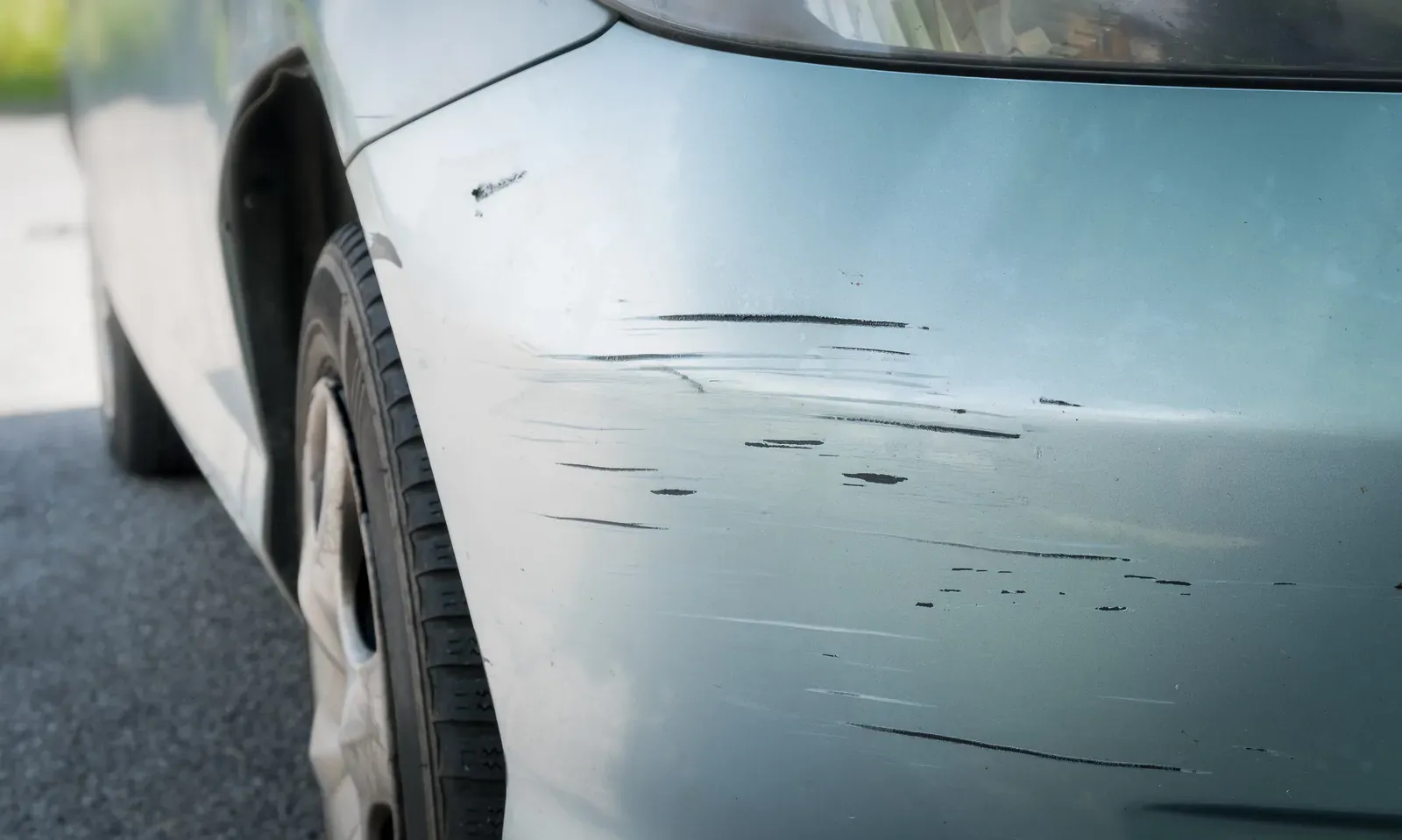
Depth is read before anything is quoted
A scuff that stayed in the clear can be compounded out without paint; a line that cut into colour or primer needs a refinish. Photos taken in raking light tell us which one you have.
Spot repairs that stay invisible
A refinished scratch is blended into the surrounding paint and cleared to a body line or edge, so there is no patch outline six months later when the new clear settles.
Keyed cars handled as a claim
A deliberate scratch down a whole side is vandalism, usually covered under comprehensive with your normal deductible. We photograph it for the file and run the claim with your insurance company.
Plastic and metal treated differently
A scratch in a bumper cover needs flex additive and adhesion promoter; one in a steel door needs primer over bare metal so it never rusts. Each panel gets the process its material needs.
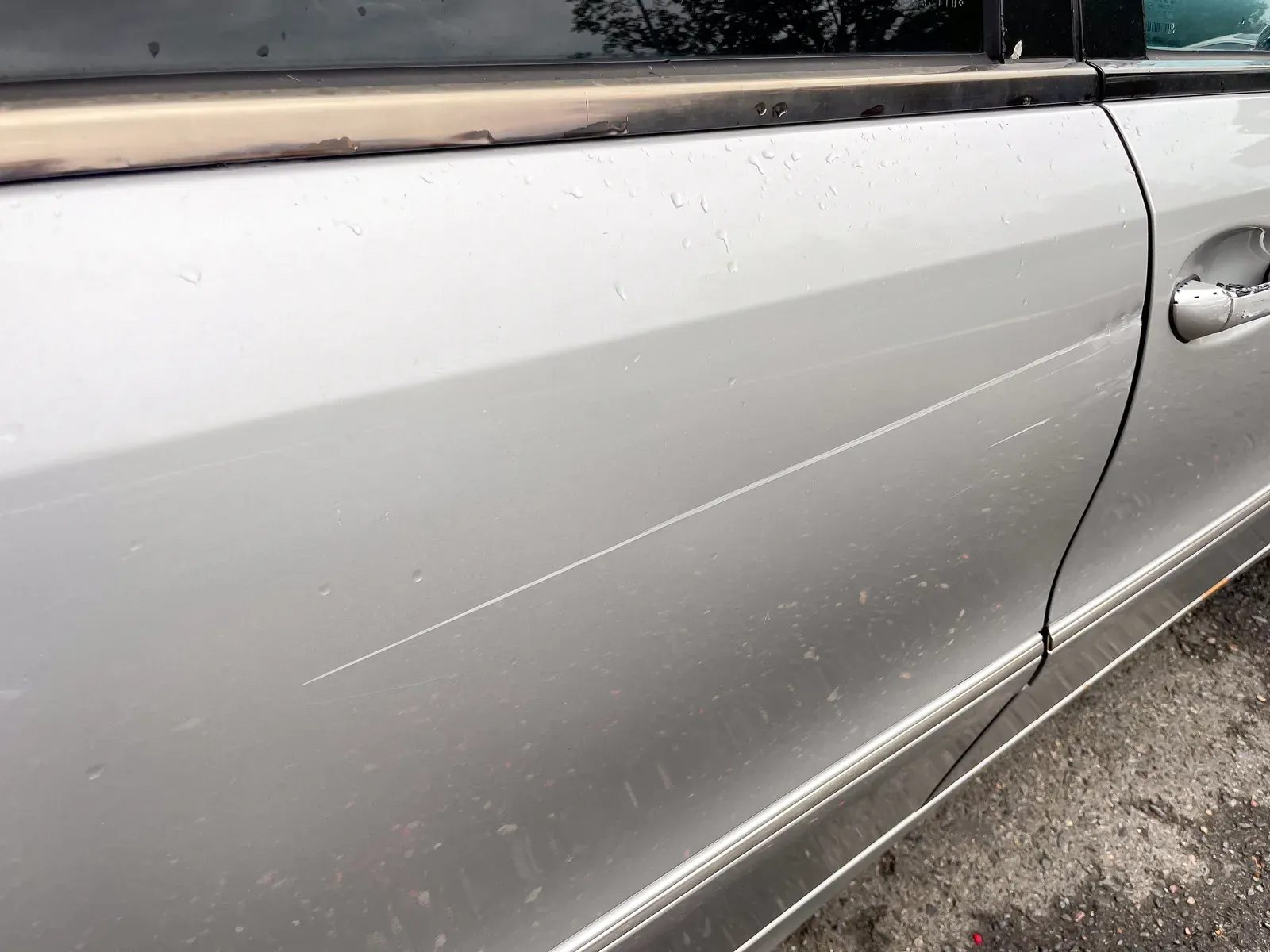 The scratch
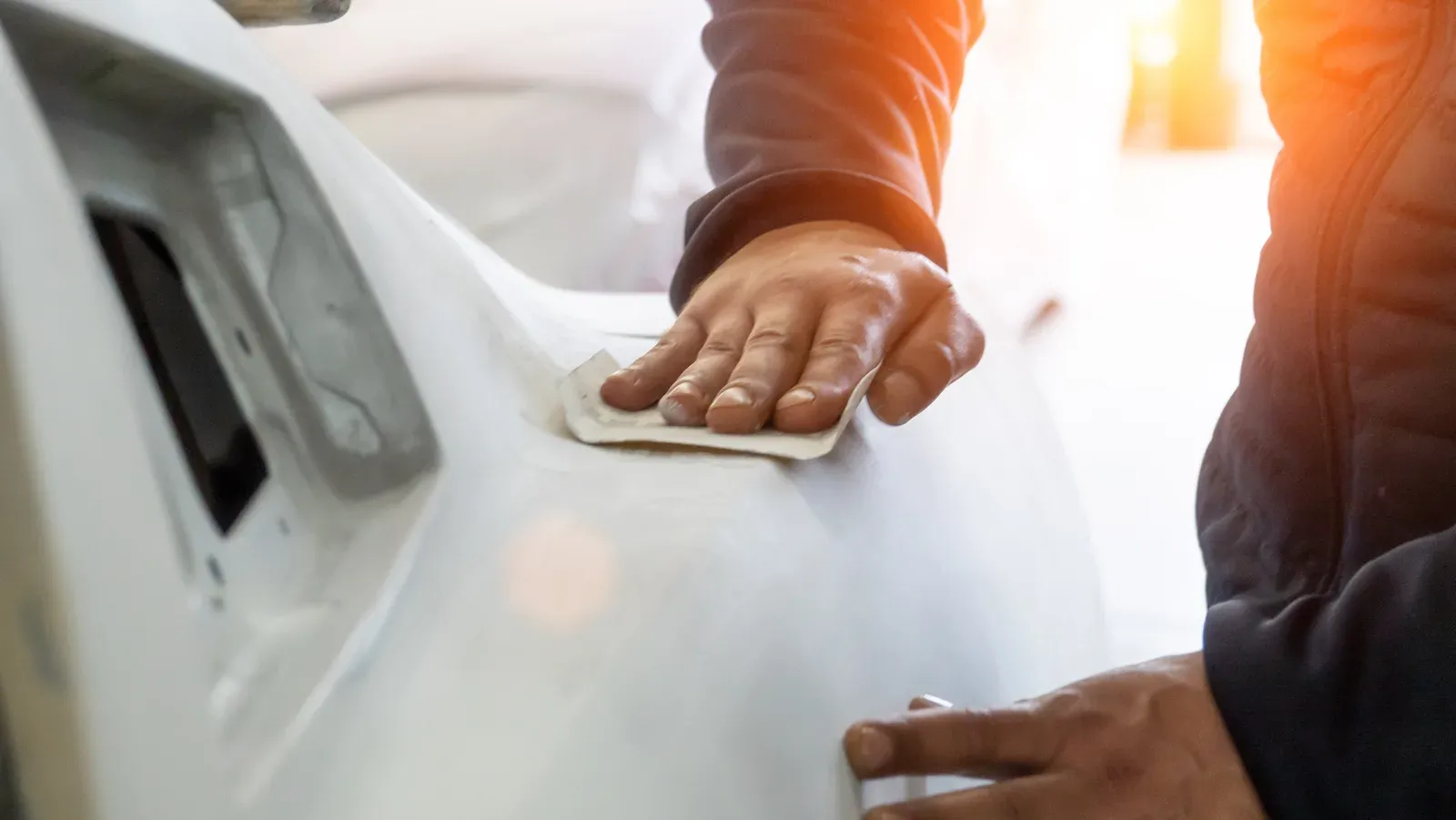 Feathered and primed
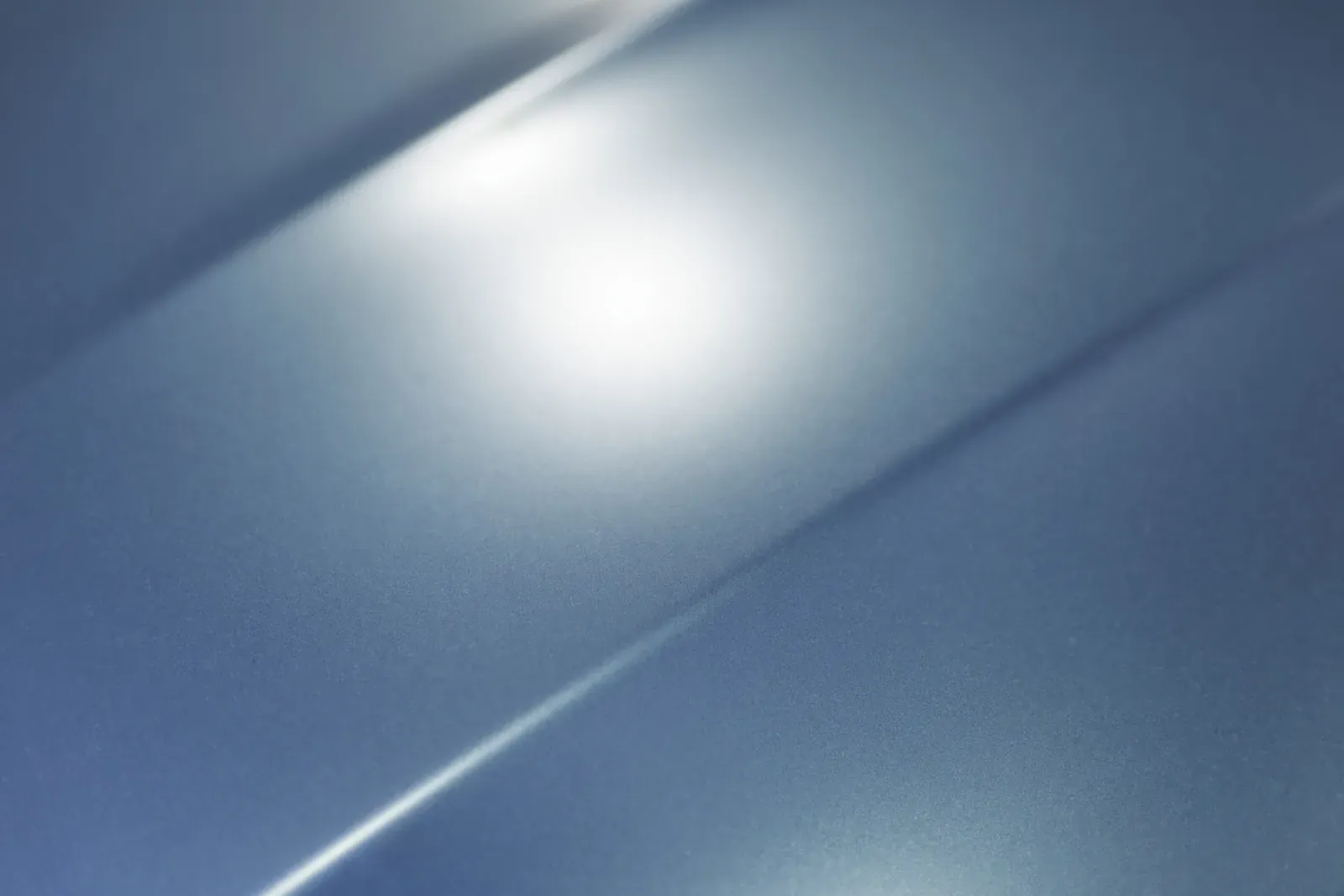 Blended finish
Four layers, and a different repair for each
Factory paint on a modern car is thin, thinner than a sheet of paper in total, and it is built in layers: a clear coat on top that carries the gloss and takes the abuse, a colour coat underneath that is only there to be seen, a primer that bonds everything to the panel, and then the steel, aluminum or plastic itself. A scratch is described by how many of those layers it went through, and that is what sets the repair.
Drag a fingernail slowly across the mark. Gliding over means it sits in the clear coat and has not reached colour; those are the white-looking scuffs from a hedge or a car-wash brush. Catching means the scratch is into the colour or the primer. If you can see grey, silver or black at the bottom, it is through to the panel. Photos taken at a low angle with the sun or a light raking across the panel show all of this, which is how our estimator reads depth from a phone picture.
What we do at each depth
Clear-coat scratches are levelled by machine. The area is wet-sanded with a very fine paper to bring the surrounding clear down to the bottom of the scratch, then compounded and polished back to gloss. There is a limit to how many times a panel can take this, since clear is removed each time, but on a scratch that never reached colour it is a same-day job that leaves no trace.
A scratch into the colour cannot be polished out because there is no colour left to polish. The scratch is sanded to a feather edge, primed if the primer was cut, and the panel is refinished with matched colour blended into the surrounding paint, then cleared and polished. Down to bare metal or plastic, the process is the same plus a proper primer over the exposed substrate, because a touch-up pen over bare steel starts rusting under the paint within a couple of winters.
Keyed cars, long scratches and multiple panels
A key dragged down a car is the worst case, because it is deep, continuous and crosses panel gaps. That means every panel it touched is refinished, and each one is blended into the next, so a scratch along one side can involve the fender, both doors and the quarter. There is no shortcut that looks right; a single panel painted in isolation announces itself from across the lot.
Because keying is deliberate damage, it falls under comprehensive coverage rather than collision, and it does not carry fault. We photograph the full length with a reference for scale, itemize each panel and the blend panels, and send the estimate to your insurance company. Vandalism is reported online or at a police station rather than a Collision Reporting Centre; if you have the report number, it goes in the file too.
Scratches the city hands out
Street parking in Riverdale or the Danforth means door edges and bicycle pedals. Underground garages in North York Centre and downtown condos mean concrete pillars painted at exactly bumper height, and the same corner gets scraped in the same spot every winter when the tires are wet. Brushing snow off with a broom, or scraping ice with the wrong tool, leaves fine swirl scratches across the roof and hood that show up on dark cars in the first sunny week of spring.
Salt is the multiplier. A scratch that reaches primer in January is a rust line by April, especially on rockers, arches and the bottom of doors where slush sits. Fixing a through-scratch before it has a winter to work on it is cheaper and simpler than the rust repair it becomes, which is why we suggest sending a photo the week it happens rather than waiting for the weather to warm.
What sets the time and the cost, without the numbers
The factors are length, depth, how many panels are involved, the material of each panel and the colour. A short clear-coat scuff on a white door is a quick polish. A scratch through to metal across two panels on a tri-coat pearl is several days of work, because the pearl needs a wider blend and each panel goes through prep, colour, clear and cure. We put those factors on the estimate so you can see why one scratch is a small job and another is not.
Timelines follow the same logic. Polishing is done within the day. A single-panel refinish usually takes a few working days with cure time. A full side after keying often takes a week or more. Whether to claim it or pay directly depends on your deductible against the estimate, and we lay both out so you can choose.
Questions people ask
Can a deep scratch be fixed with a touch-up pen?
A pen can seal bare metal against rust for a while, which is worth doing as a stopgap in winter. It will not look right, because the paint sits proud of the surface and the colour is rarely an exact variant. For a lasting finish the scratch needs to be feathered, primed and refinished with a blend.
Which coverage pays for which kind of scratch?
Keying and vandalism usually fall under comprehensive, with your deductible. A scratch from a collision with another vehicle is part of that claim. A scratch you caused yourself against a pillar is collision coverage. For any of these, the estimate against the deductible tells you whether a claim is worth it.
Why do you have to paint the whole panel for one scratch?
The panel is not always fully painted, but the colour must blend out into the surrounding paint and the clear must run to an edge or a body line. Stopping a repair in the middle of a flat panel leaves a visible ring once the new clear cures and settles.
Will polishing thin my clear coat too much?
A single correction on a light scratch removes very little clear. The risk is repeated compounding of the same area over years, which is why we measure before polishing and tell you if a panel has already been cut thin.
Can you fix scratches on a plastic bumper the same way?
The depth test is the same, but plastic needs adhesion promoter and a flexible additive in the paint so the finish does not crack when the cover flexes. Textured, unpainted plastic trim is a different matter and is usually replaced rather than refinished.