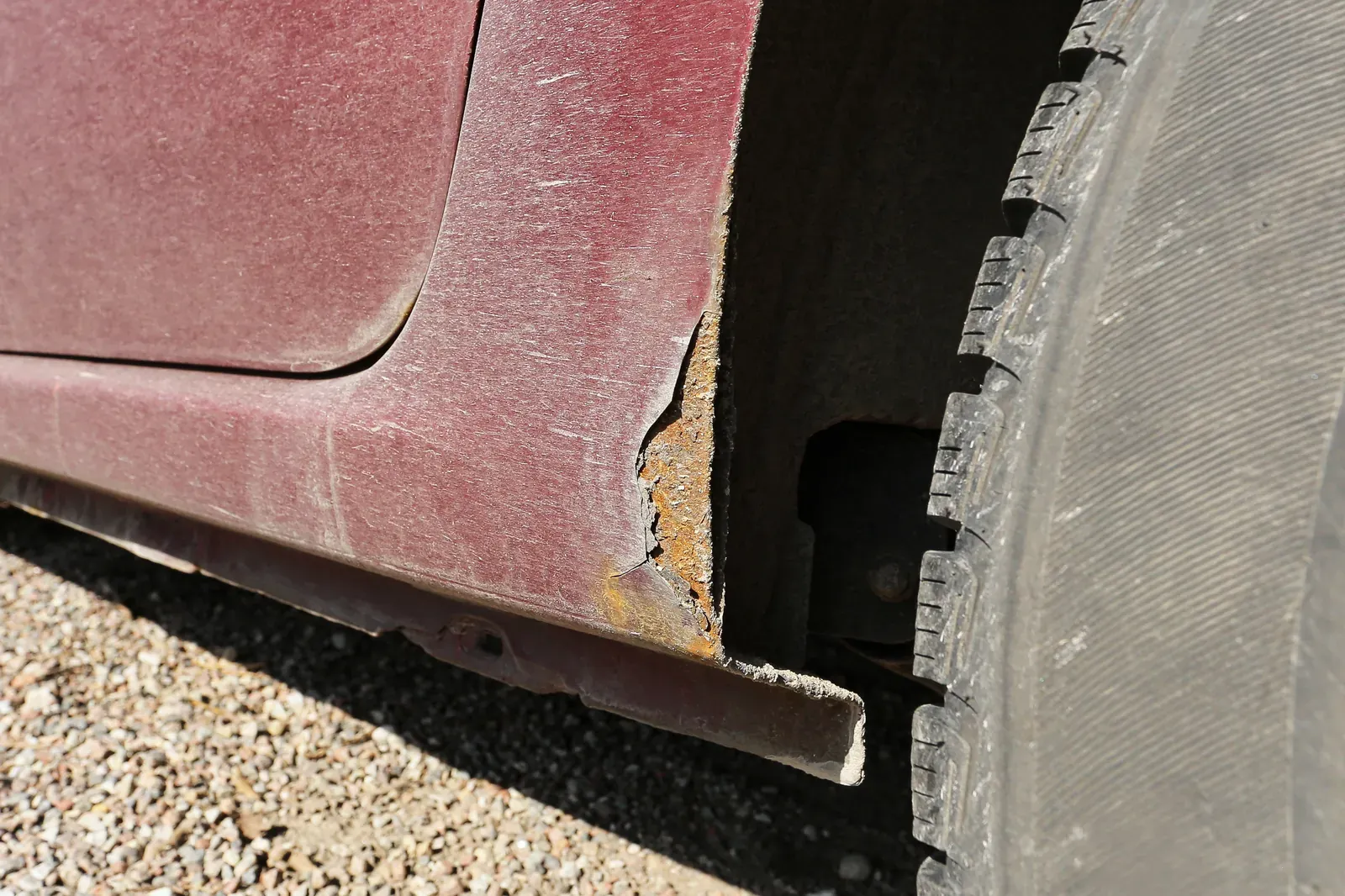
The second car on Doris or Beecroft sits in a windrow for weeks, and that is where the rocker goes
A tower on Yonge comes with one parking spot, and a household with two cars leaves one on the street. Doris and Beecroft, behind the towers, and the side streets off them fill with those second cars, and in winter they stay put for days at a time. The plow passes, the windrow packs against the rocker and the lower door, the sun on a mild afternoon melts the top of it into the seam, and the night freezes it again. The salt in that ridge is in contact with the bottom six inches of the car from December to March. The rocker under the plastic sill cover, the dogleg ahead of the rear wheel and the bottom edge of the rear door are what give first.
The driveway version is older. The bungalows on Kingsdale, Churchill and Hollywood that have not been rebuilt still hold a sedan bought new and kept, and fifteen winters of the Yonge commute — brined ahead of every storm and salted through it — put rust in the rear arches, the tailgate seam and the hood edge. Those are the two Willowdale rust cars: the street-parked second car with its rockers going, and the long-kept family car with its arches going, and they get different advice.
Salt that never dries under a tower, and the rocker that looks fine until the sill cover comes off
The garaged car is not immune, and the reason is worth a sentence. Underground, the air stays a few degrees above freezing all winter and the floor is wet from every car that drives in, so slush packed into a rocker seam stays liquid and salty instead of freezing solid the way it would on a driveway. Brine that stays liquid keeps working. It is a slower story than the windrow, and it shows later, usually as a soft spot under the driver’s door on a car that has never lived outdoors.
Rust starts inside the panel and shows outside last, and on the cars in these garages the outside is hidden anyway: the plastic sill cover along the rocker traps moisture against the steel and hides the bubbles until the cover is removed. The blister you can see on an arch is the paint lifting over a hole that already exists. So before a number is written we take the sill cover and the arch liner off, tap along the seams, and photograph what is behind them, because the estimate depends on how much steel is left. Painting over rust seals the moisture in and it comes back through the new paint within a season or two. The repair is to cut the rusted section back to solid metal, weld in a new section, seal the joins, coat the inside of the cavity, and prime and refinish the outside to match with a blend into the door above it.
- Sill covers and arch liners removed and the steel photographed before the estimate
- Rusted sections cut back to solid metal and new steel welded in
- Cavity coated and seams sealed so a windrow has nowhere to work
- Refinish blended into the door or quarter above, lifetime warranty on the paint
Arches on a kept car are cheap now and expensive next spring; a rotted rocker before a private sale is a different decision
Rust is wear, and no policy covers it, so the estimate is the whole decision. For the long-kept sedan on Kingsdale, bubbling arches on a car you plan to drive for five more winters are worth fixing now while the patch is small, because arch rust runs into the quarter panel if it is left another season. For the street-parked second car, a soft rocker is a structural item: a rocker that has gone through can fail the Safety Standards Certificate inspection a private buyer needs to license the car, so it is fixed before the listing rather than discounted at the sale. A car that needs a rocker, a rear door and a tailgate seam at once may cost more to bring back than it is worth, and we say so from the photos before you spend a trip.
Rust work is booked for the dry months where the calendar allows, so the seam sealer and cavity coating cure before they meet salt. Send photos of every bubble and every soft spot, low and in daylight, and one with the sill cover pulled back if you can do it without breaking clips. The drive is the straight run along Sheppard, and ask about an underbody coating for the same visit if the car is staying on the street next winter.
Questions people ask
The second car lives on Doris all winter and I cannot get it into the garage. What slows the rust down between now and spring?
Two things. Dig the windrow off the rocker and the lower doors after each plow pass so the salt ridge is not in contact for weeks, and run the car through a wash with an underbody spray on the mild days. Neither reaches inside a closed rocker, so have the cavities coated before next winter if the car is staying on the street.
There is a plastic cover along the sill and I cannot see any rust. Does that mean the rocker is fine?
Not necessarily. The cover traps moisture against the steel and hides it, and the rocker often looks clean until the cover comes off. Press gently along the sill from underneath; a soft spot or a crackle under thumb pressure means the metal has gone. Send a photo from low down along the sill and we will tell you whether the cover needs to come off for a proper look.
I am listing my 2010 sedan privately in the spring. Should I fix the arch bubbles first or price them into the sale?
Fix them if the arches are the only rust and the rest of the car is sound, because a buyer negotiates from the worst panel and the discount usually costs more than the repair. A rotted rocker is a different question, since it can fail the safety inspection the buyer needs; that one has to be fixed. Bubbles on a car that also has a soft floor are a case for pricing it in and telling the buyer.