The fourth car in the driveway
Every Vaughan driveway with four vehicles on it has one that is older than the others: the pickup that only goes to the job site, the sedan the teenager inherited, the van that has done ten winters on Highway 7. That is the vehicle that rusts, because it is parked outside, it is washed least, and it is driven on the days the plough has just gone by. Vaughan’s arterials — Jane, Weston Road, Rutherford, Highway 7 — are salted early and often, and the 400 and the 407 throw a brine mist that reaches every seam under a truck by January.
The newer vehicles in the same driveway are not immune, only later. A five-year-old crossover with a stone chip in the rear arch will bubble there first; a pickup with a drop-in bed liner rots behind it where nobody looks; and any vehicle whose door bottom has been scraped by the windrow at the driveway mouth is rusting from the scrape.
Where the salt gets in
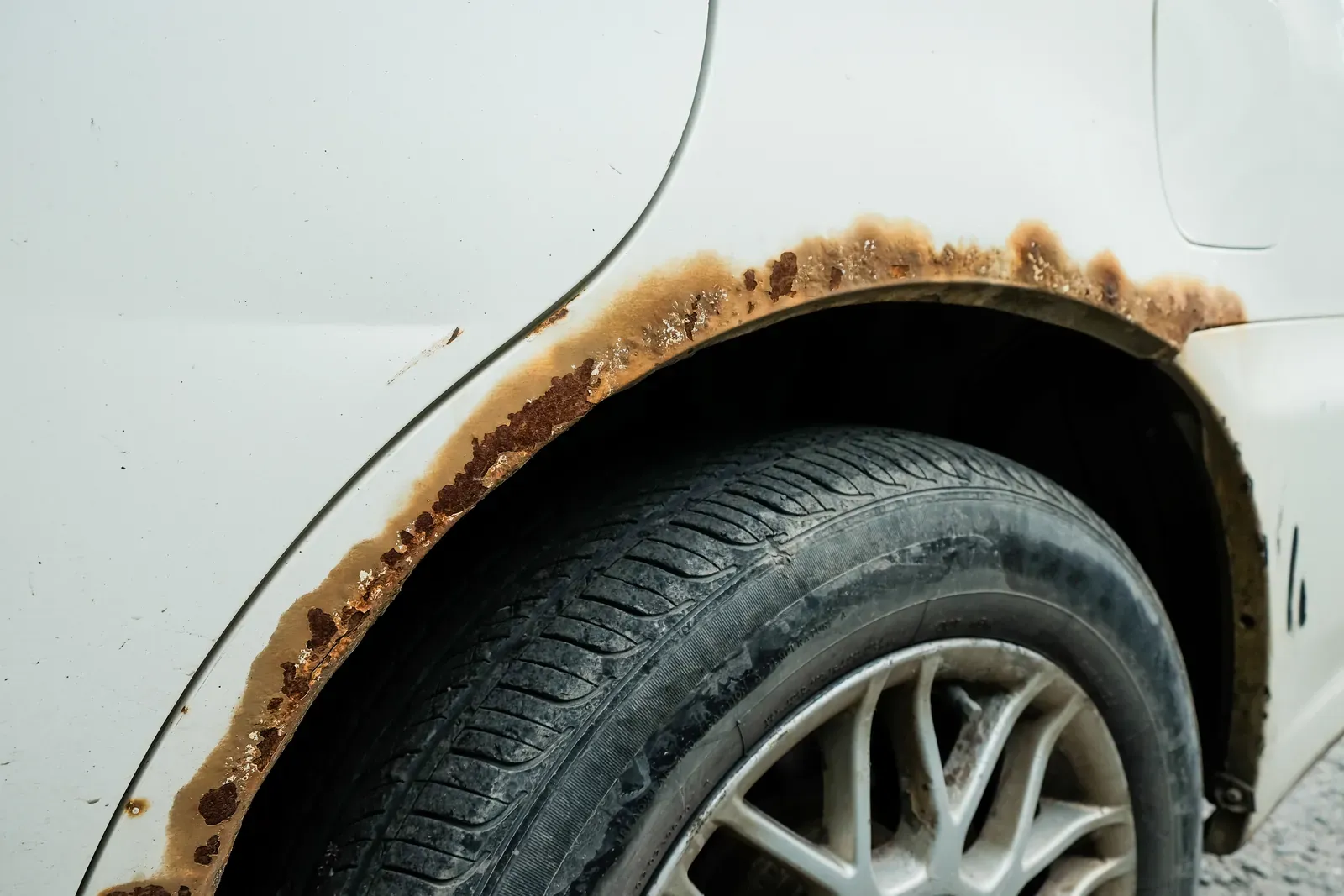
Rust in Vaughan follows the shape of the vehicle and the pattern of the salt. Rocker panels take the spray from the front tires and rot from the inside out, so the first bubble at the bottom of the door is usually the last stage, not the first. Rear wheel arches trap slush in the lip and go from a bubble to a hole in two seasons. Pickups add the cab corners behind the doors, the bed sides at the wheel wells, and the tailgate seam. Cube vans and box trucks from the Weston Road units rot along the rear door bottoms and the step. Doglegs — the piece of quarter panel behind the rear door — go on almost everything.
The sign to watch for is a raised line or a bubble under paint that is otherwise fine, because that is metal lifting the paint from behind. By the time the paint has flaked and brown metal is showing, the panel has lost more than you can see. Press it with a key in the photo you send; if the key goes through, that changes the estimate.
New steel goes in; whether the truck deserves it comes first
Real rust repair removes metal. The affected section is cut back to clean, bright steel, a patch or a factory repair section is welded in, the welds are dressed, the inside of the panel is treated and sealed so the same water cannot restart it, and the outside is primed, painted, and blended into the panel around it under a lifetime warranty on the refinish. What we do not do is grind the bubble, skim filler over the hole, and paint it, because that comes back in a season and you would have paid twice.
Not every vehicle is worth that. An older truck with rockers, cab corners, and a rotten bed floor is a conversation about whether the money should go into it, and our estimator will have that conversation from the photos before you drive it east. Where it is worth doing — a well-kept work van with a couple of years left, a family car with one arch gone — the repair is priced by the section, and undercoating afterwards is offered, not pushed. If you plan to sell the vehicle privately, the buyer will want a UVIP and a Safety Standards Certificate, and a rocker you can push a thumb through will fail the safety, so it is better repaired before the sale than discounted after.
- Rotten metal cut back to bright steel and new sections welded in
- Inside of the panel treated and sealed before it is closed
- Refinish blended into the surrounding panel, lifetime paint warranty
- A straight answer on whether the vehicle is worth it
Questions people ask
My pickup has a drop-in bed liner. Why did the bed sides rust from underneath it?
Grit and water work between the liner and the paint and stay there, so the bed wears through from the liner side outward while the truck looks fine from the street. We cut the rotten sections of the bed sides back to clean metal, weld in new steel, and refinish. If you keep the liner, pull it out a few times a year and rinse under it — or replace it with a spray-in once the repair has cured.
Can you repair the rockers on a ten-year-old van that still runs well?
Usually, and it is often worth it on a vehicle that is otherwise sound. Rockers are repaired in sections — the outer skin, and the inner if it has gone too — and the estimate from photos will say how much of each. A van with a solid frame and drivetrain and two years of work left is a better candidate than one that also needs a bed floor.
The windrow at our driveway mouth scraped the door bottoms two winters ago and now they are bubbling. Door repair or door replacement?
It depends how far the rot has run inside the fold. A scrape that opened the paint at the door hem lets water into the seam, and the bubbling you see is the hem corroding from the inside. Caught early, we cut back the lower skin, weld in new steel, seal the hem and refinish. Once the inner frame of the door has gone, a good replacement door shell is usually cheaper than fabricating the bottom. Photos of the door bottom from below decide it.