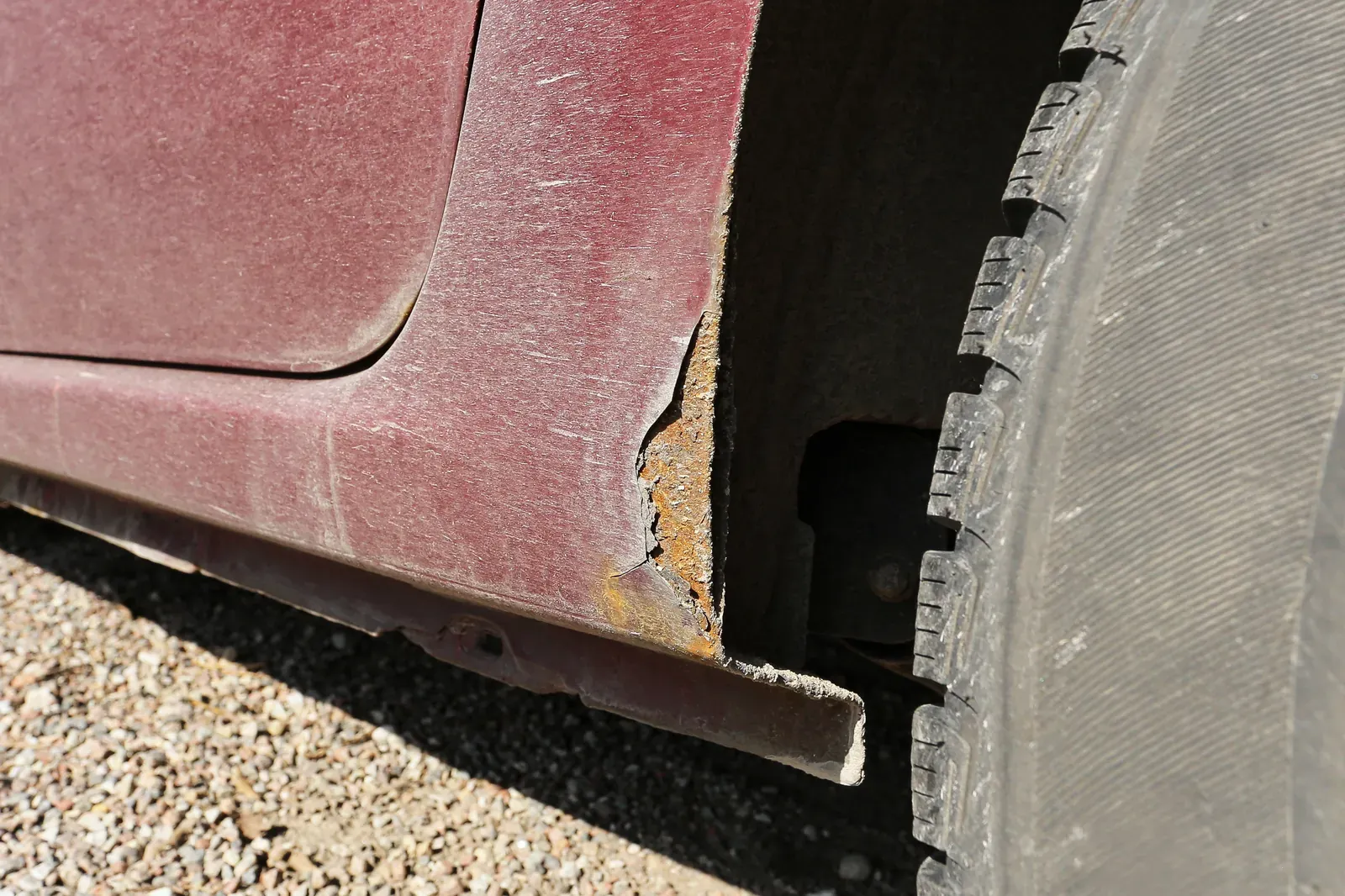
Yes, when the structure underneath is sound and the car has years left
Rust is worth repairing when two things are true: the metal behind the visible rot is still solid, and you expect to keep driving the car for several more winters. A bubbled rocker on a car you plan to hold onto is a good repair. The same rocker on a car you are selling in the spring is a harder case, and we will say so at the counter.
The test is not how bad the surface looks. Bubbles under the paint look alarming and are often shallow. What matters is what the panel sounds and feels like when you press on it, and what we find when the paint comes off. Surface scale on a solid rocker is a modest job. A rocker that gives under your thumb has been rotting from the inside, and the repair grows accordingly.
Where we tell people not to bother: a car whose floor, subframe mounts or suspension pickup points are already gone, or a car worth less than the repair that you are not attached to. Those are honest conversations, and they happen before any work starts, not after. Bring the car by, or send photos of each spot, and you will get a straight read on which of the three it is.
Salt rust is wear, so it is not an insurance claim
Your insurance policy covers sudden events. Rust is the opposite of sudden. It is the slow work of road salt, slush and the freeze–thaw cycle over years, and no insurance company in Ontario treats it as a claim. That means the repair comes out of your own pocket, and you do not need to call anyone before booking it.
The upside is that nobody else gets a say. There is no adjuster, no deductible, no rating consequence and no argument about like-kind parts. You decide how far to go. Some owners fix the one arch that shows and live with the rest. Others want the whole lower body done once, properly, so it is off the list for the life of the car. Either is a reasonable choice, and the estimate lays out both so you can pick.
One exception people ask about: rust that started at a collision repair someone else did badly. If bare metal was left unsealed under the paint, the failure belongs to that shop’s warranty, not to your insurance company. Bring the old invoice and we will tell you what we see and whether it looks like a workmanship problem or plain age.
What a real rust repair involves
A proper repair removes the rust rather than covering it. On a rocker panel or a wheel arch we cut the rotten section back until we reach clean, bright steel, then weld in new metal, either a fabricated patch or a replacement section for that panel. The welds are ground, the seams are sealed, the inside of the panel gets a rust-inhibiting coating, and only then does primer and paint go on.
Skipping any of those steps is how rust comes back. Filler over rust, paint over filler, and the bubbles reappear the following spring, usually bigger. That short-cut repair is cheaper on the day and costs more over two years, because the second repair has to undo the first before it can begin.
- Cut the rotten steel back to sound metal, not just the bubbled paint.
- Weld in new steel, then grind and dress the seam flat.
- Seal every seam and coat the inside of the panel where salt collects.
- Prime, paint and blend into the neighbouring panel so the colour reads as one.
- Undercoat the repaired area so the next winter starts on a clean surface.
What it costs, in factors rather than figures
The price follows the amount of steel that has to be replaced, not the size of the bubble you can see. A single arch with a small patch is at the low end. Both rockers plus the doglegs behind the rear doors, which is the usual GTA pattern after a decade of salt, sits at the other end. Paint work adds to it, since a rocker repair often means blending into the door and the quarter panel to make the colour match.
Timing matters too. Rust repair is easiest in a dry spell, and the shop is quieter in late summer than in March, when the pothole and salt damage arrives all at once. If the bubbles are showing now, three photos are enough for a written estimate, and from them we can usually tell whether it looks like surface rust or something deeper. For the bigger picture on why the GTA eats cars this way, the guide on road salt and rust in the GTA goes into where it starts and how to slow it.
If you are selling instead of keeping the car
A different answer applies. Visible rust knocks more off a private-sale price than the repair tends to cost, because buyers read bubbles as a car that has been neglected everywhere else too. Fixing the arches before the listing photos usually pays for itself, and it makes the Safety Standards Certificate easier if the rust was anywhere near the structure. Rust that is purely cosmetic and far from anything structural is a judgment call; some sellers price it in and move on.
What we would not do is a quick paint-over to get through a sale. It will bubble again for the next owner, and in Ontario a buyer who was told the car was rust-free has a legitimate complaint. Do the repair properly or disclose it, and let the price do the rest.
Questions people ask
Does a rust repair come with the paint warranty?
Yes for the refinish. The lifetime warranty on paint and refinish covers the painted repair against peeling and fading. Rust returning in a different spot on the car is new wear, not a warranty issue, and we will tell you where else the car is likely to go next.
Can you just paint over the bubbles for now?
We can, but we would rather not. Paint over rust looks fine for a season and then bubbles again, and the second repair has to remove the first. If budget is the issue, doing one panel properly beats doing three panels badly.
The rust is only showing on one arch. Can you repair just that panel?
Yes, and many owners do exactly that. The caution is that salt reached the whole car, so we point out where the next spot is likely forming, usually the opposite arch or the rocker below, and you decide whether to do it now or budget it for next year.
How do I stop it coming back?
Wash the underside through winter, keep the drain holes in the doors and rockers clear, and consider an undercoating once the repair has cured. The guide on whether rust-proofing is worth it in Toronto weighs the options.