Twice across Steeles a day, then a wet driveway or a warm garage
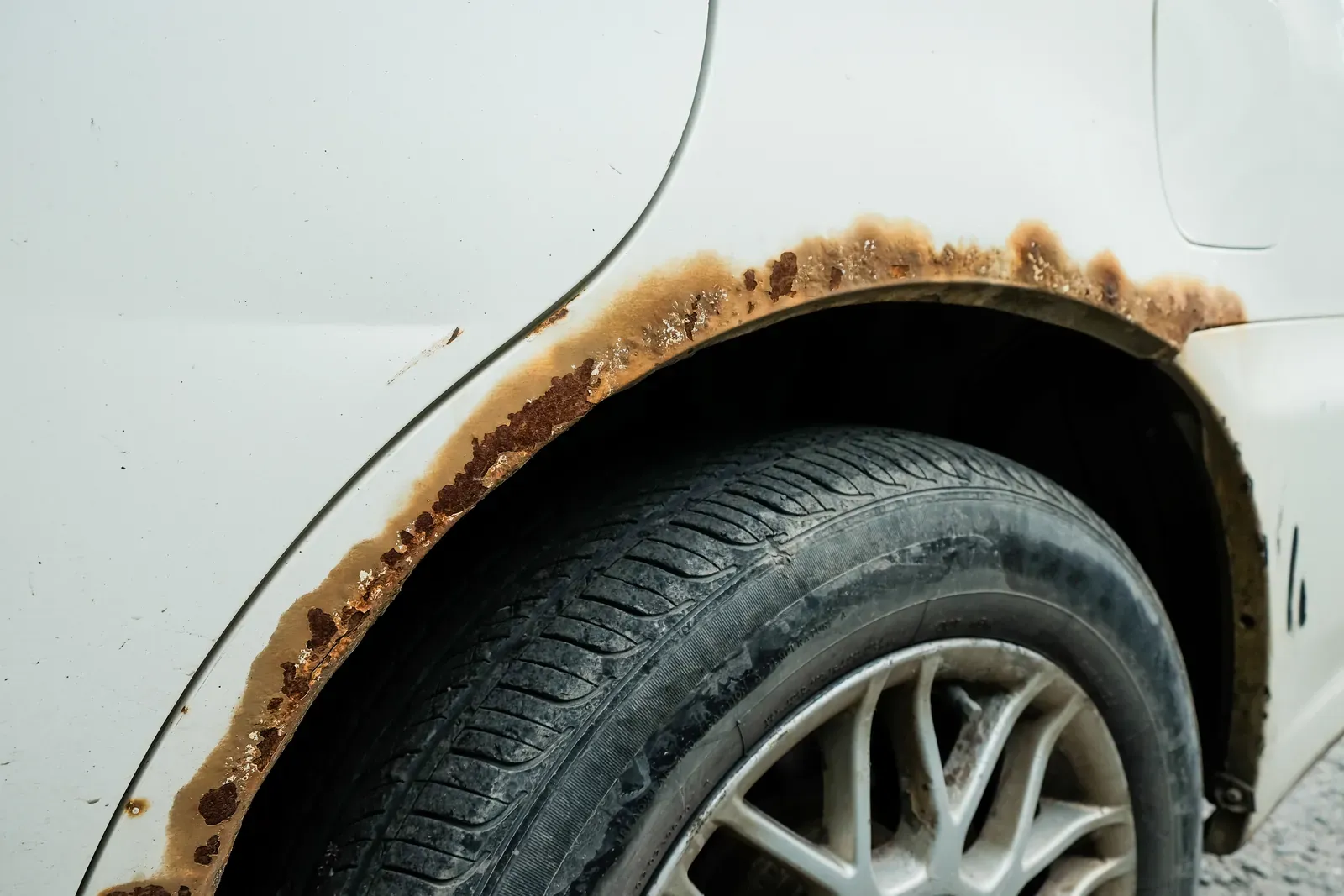
Every Thornhill car that works in Toronto crosses Steeles twice a day, and Steeles, Yonge, Bayview and Bathurst are regional roads that are treated early and often through the winter. Each trip south throws slush into the wheel wells and along the rockers, and every freeze–thaw cycle from January to April drives that brine deeper into the seams. Then the car parks, and this is where Thornhill differs from the city. A driveway on a ravine lot stays wet under the canopy long after the street has dried. A shared townhouse garage stays warm and damp, which is worse, because salt keeps working above freezing and a car that never cools never drains. By the third winter the stone chips along the lower doors have turned into the rusty freckling you see on wheel arches all over Thornhill by April.
Pothole season adds the second attack. February and March on Steeles and John open the pavement, and each strike throws gravel and salt at the rocker and the dogleg ahead of the rear wheel, where the drain holes clog and water has nowhere to go.
The ten-year sedan on Royal Orchard is the car rust repair exists for
Rust arrives on cars that have been kept, and the ten-year-old sedan on Royal Orchard that has been serviced on schedule and handed down to a teenager is the car this work exists for — along with the minivan that has done every Promenade run for a decade and the second car that lives on the street because the garage holds the first. These are vehicles with years left in them, and a rusted arch or rocker is the one thing that makes them look finished when they are not.
It also matters where it shows. Bubbles on a rear wheel arch, a soft rocker under the driver’s door, a dogleg that flakes when you press it, the seam at the bottom of a tailgate: each of these is a known repair with a known outcome. Rust that has reached a subframe mount or the floor under a seat is a different conversation, and our estimator has it from the photos rather than after the car has made the trip.
Rot cut back to bright steel, sealed inside and out, then the same salt kept off it
Proper rust repair removes the rust. The affected steel is cut back until the metal is bright, a patch or a replacement rocker section is welded in, the welds are dressed and the seams are sealed inside and out. Epoxy primer goes on before any filler is used for shaping, then colour matched to your code and blended into the panel, and the underside is coated so the same salt does not restart the process. The refinish carries our lifetime warranty on paint.
What we do not do is grind the bubbles, skim filler over them and paint, which looks right for one winter and comes back worse. Rust is almost never an insurance matter, since it is wear rather than a loss event, so the estimate is a cash number written so you can decide with your eyes open. If the panel is past saving, or the car is not worth the work, our estimator tells you that from the photos and saves you the drive down Leslie.
- Rot cut back to bright metal, new steel welded in
- Seams sealed and epoxy-primed before any shaping
- Colour matched and blended, underside coated
- A straight no when the panel or the car is past it
Questions people ask
My car lives in a heated underground garage all winter. Why is it rusting faster than my neighbour’s on the driveway?
Because it never freezes. Salt corrodes steel fastest when it is wet and above zero, and a warm garage keeps the slush in the wheel wells and seams melted all night while the car on the driveway sits frozen and inert until morning. The garage car also gets rinsed less, since nobody hoses a car indoors. Rinse the wheel wells and rockers at a wash bay after a salty week, and the difference narrows.
The dogleg on my SUV gets chipped by gravel on Steeles and John every pothole season. Is a stone-guard film worth it?
On a dogleg that has been repaired, yes. The film takes the strike instead of the fresh clear coat, and it goes on cleanly over a cured refinish. On a dogleg that is already chipped to metal, the film seals salt in rather than out; the chips need to be cleaned, primed and refinished first, and the film goes on after the paint has cured.
Can you rust-proof the car after the repair so it does not come back?
We coat the repaired area and the underside as part of the job, and we can recommend an annual treatment after that. Nothing stops salt entirely on a car that commutes on Steeles, but a sealed repair plus a coated underside is what keeps it from returning in the same spot.
Will the rear arch repair on my Royal Orchard sedan show a line where new steel meets old?
It should not. The patch is welded in, the weld is dressed flat, and the seam is sealed on both sides before primer, so there is nothing for a line to form on. The colour is blended into the quarter panel rather than stopped at the repair, which is the same way a collision repair hides its edges. If a line does show while you own the car, the lifetime warranty on paint covers the refinish.