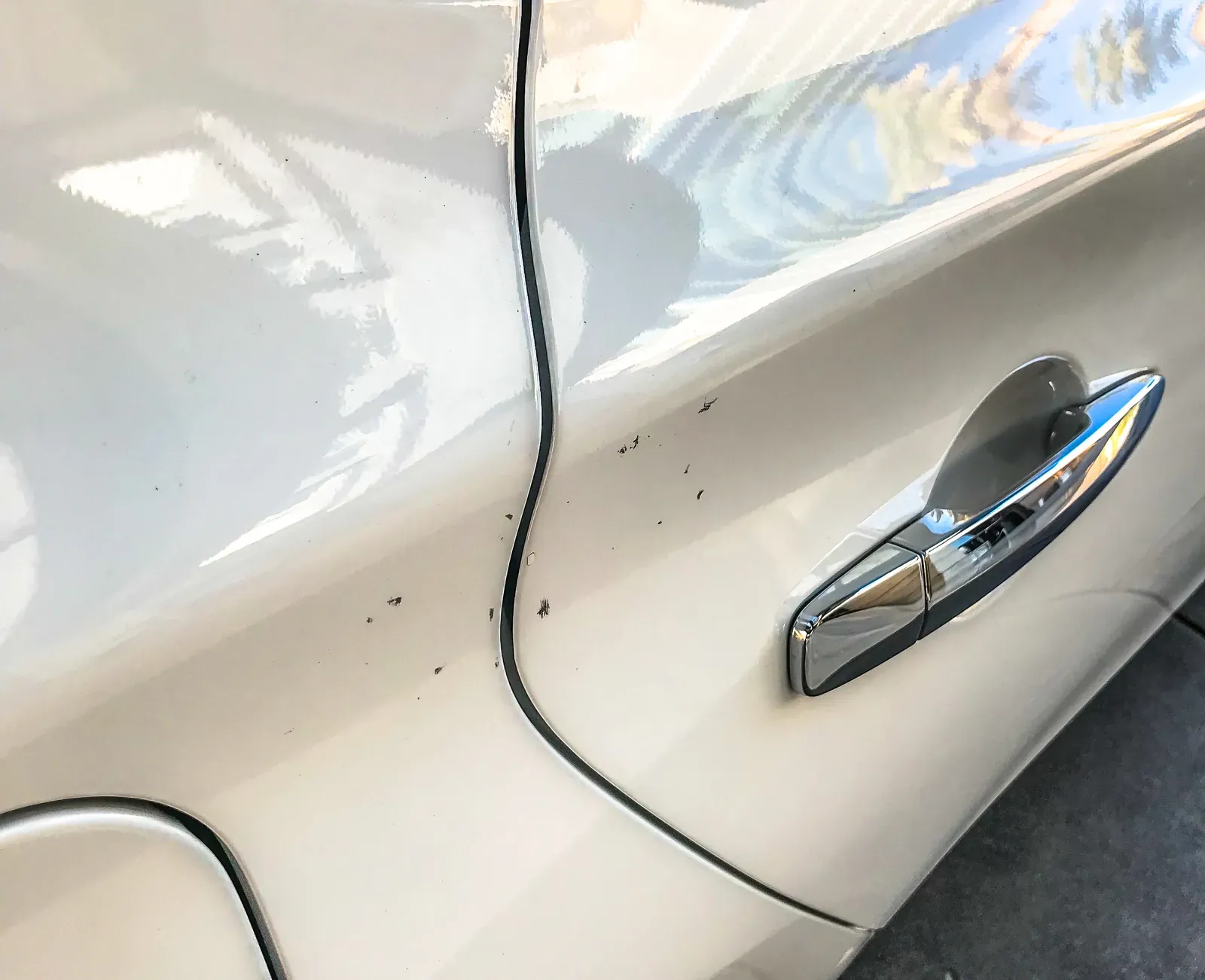
From your phone to a written sheet, without a visit
The process starts with your phone. You photograph the damage and send the pictures to us with the year, make and model of the car and a line about what happened. The owner looks at them, identifies which panels and parts are involved, and writes up the preliminary estimate that day, with operations, parts and paint listed the way an insurance company expects to see them.
You get that sheet back by email or text. From there you can open a claim and give the insurance company our estimate, book a drop-off date, or simply sit with the number for a while. Nothing is charged for the estimate and nothing obliges you to proceed.
For drivers coming from the far side of the 404 or the 401 this is the whole point. You do not spend an evening driving to Sheppard and Don Mills to be told what a photo could have told us, and when you do come in, the parts are often already ordered.
What to photograph so the estimate is close the first time
The three pictures each do a different job. The wide shot of the whole side of the car shows which panels are involved and whether the body lines still run straight through the damage. The mid-distance shot from two or three metres back shows the size and position of the damage on the panel. The close-up shows depth: whether a scratch is through the clear coat, whether a dent has a crease, and whether plastic has cracked or just scuffed.
Wet cars and underground garages are the two things that ruin an otherwise good set. Water fills scratches and makes them vanish, and garage lighting flattens dents so they read as shadows. If that is all you have, send them anyway and mention it; we will ask for one more picture rather than guess.
- Shoot in daylight, outdoors if you can, with the damage facing away from the sun so there is no glare
- Keep the phone level with the damage rather than shooting down at it, which hides depth
- Include the odometer and the door-jamb sticker if you can, for the trim level and paint code
- If a light, sensor or camera is near the hit, add a straight-on picture of it
- If anything is hanging, rubbing or making a noise, say so in the message
What photos can see and what they cannot
A photo estimate is reliable for what is visible: scuffs, scratches, dents, cracked covers, broken lights and mirrors, and which neighbouring panels will need paint blended into them. Our estimator has looked at enough bumpers to know from the location of a hit which brackets usually break behind it, and those go on the sheet as likely items.
What photos cannot see is what the bumper cover or the door skin is hiding. Bent reinforcement bars, cracked absorbers, pushed headlight mounts and bent radiator supports only show up when the parts come off. That is why the sheet is called preliminary: once the car is in the shop and the cover is removed, any extra work is written up as a supplement and approved by the insurance company before it is done. The answer on supplements explains that step.
For a pay-out-of-pocket job we say plainly on the sheet what the photo cannot confirm, so you know which line items are firm and which could move.
From photo estimate to booked repair
If you go through insurance, the preliminary estimate goes to the adjuster with your claim number and we handle the back and forth about part types and blend time directly. If you are paying yourself, you approve the sheet and we order parts. Either way we book a drop-off date that lines up with the parts arriving, so the car is not sitting in our lot waiting.
On drop-off day the estimate is confirmed against the car in person, the rental is picked up if one is arranged through your coverage, and you leave with a written range for the repair time. We speak English and Mandarin, so the photos and the sheet can go back and forth in whichever is easier for you.
When the car cannot be driven, the photo estimate is what keeps the claim moving while the car stands still. Shoot it where it is — the driveway, the tow operator’s yard, the corner of the lot it was pushed into — including a wide shot that shows how it sits and one of anything leaking or hanging underneath. Our estimator writes the sheet from those, the adjuster gets it with your claim number, and we coordinate the tow to Sheppard and Don Mills as soon as the claim is open. Because the estimate is already in the adjuster’s hands, the car arrives to parts on order rather than to a bay where it waits to be looked at, and storage charges at a yard never get a chance to build.
Questions people ask
Can I send a video instead of photos?
Yes, a slow walk around the damage in daylight works well, especially for long scratches. Stills are still useful for the close-up because video compresses fine detail.
Will the insurance company accept a photo estimate?
Yes. Insurance companies routinely write their own estimates from photos now, and ours is laid out the same way. They may still send an appraiser or ask for teardown photos before final approval.
How far off can a photo estimate be?
For visible cosmetic damage it is usually very close. For a corner hit with parts behind the cover, expect the number to move once the teardown is done, and we say so on the sheet.
Do you write photo estimates for cars outside Toronto?
Yes. Drivers from Richmond Hill, Pickering and further out send photos first and drive in once for drop-off, which is how most of our claims from outside the city start.