Measured before anything is pulled
The car is clamped to the bench and every control point is read by the laser system first. That printout tells us what actually moved, so nothing gets pulled on a guess.
Pulled in stages, not in one heave
Structural steel goes back to its shape only up to a point. We work the pull in small increments, re-measuring between them, so the metal returns without being overstretched.
A second printout for the file
When the numbers are back within specification the system prints a post-repair report. It goes to your insurance company and you get a copy for the glovebox.
Suspension and alignment checked afterward
A bent rail usually takes a control arm, a strut tower or a subframe mount with it. Once the structure is true we check the geometry and do a four-wheel alignment so the car tracks straight.
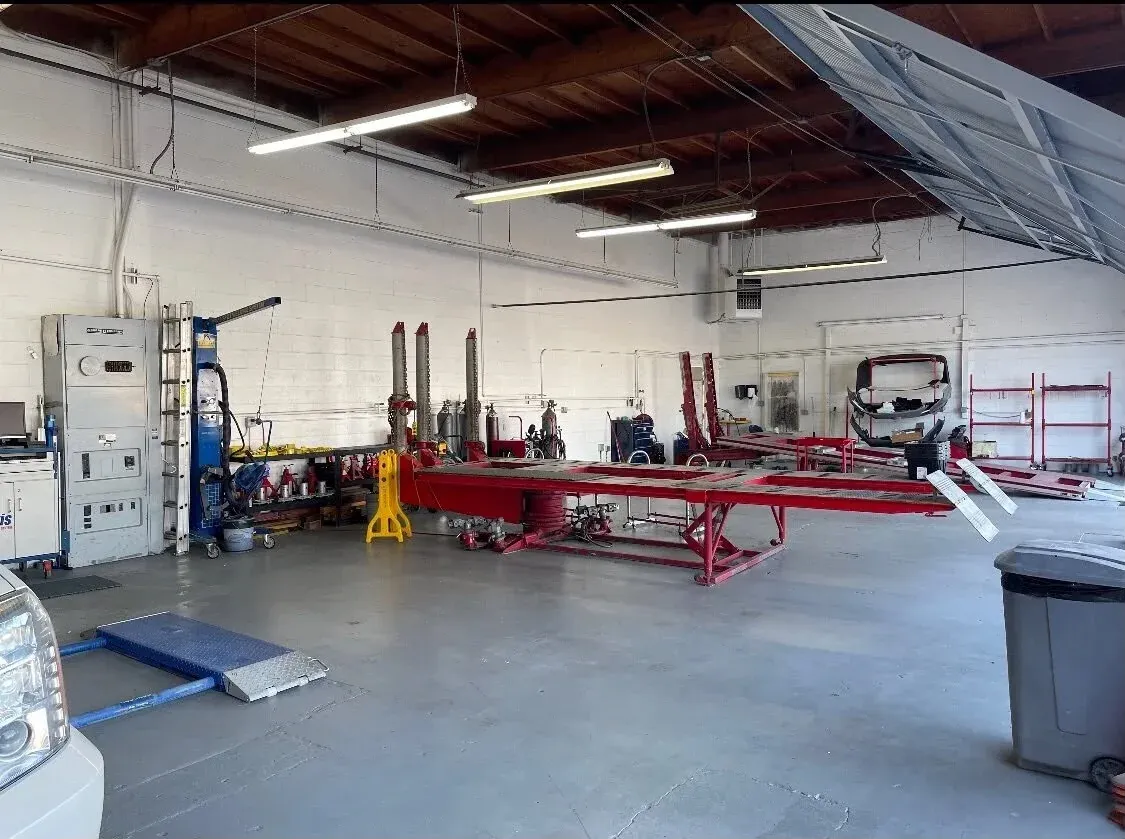 On the bench
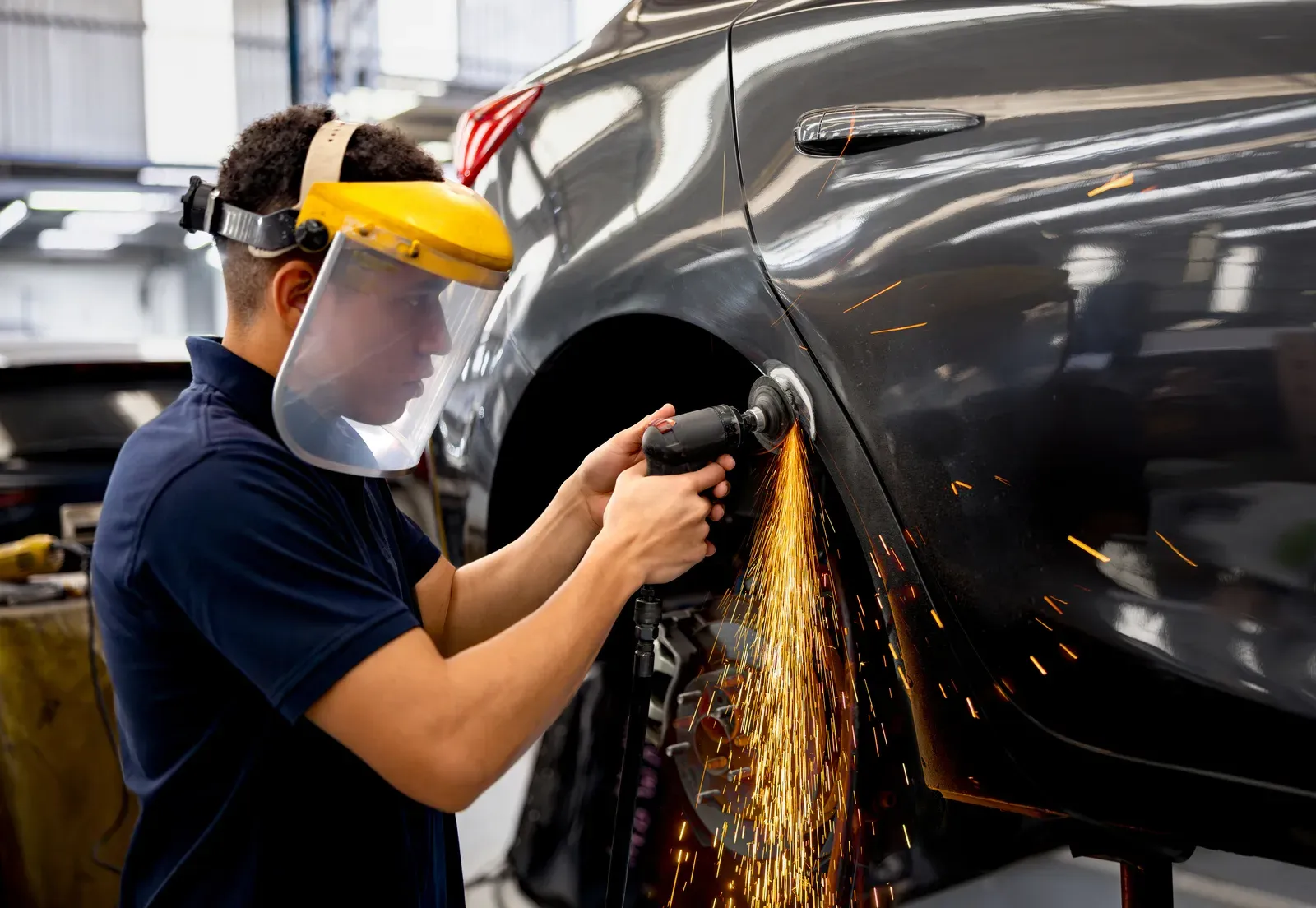 Reading the structure
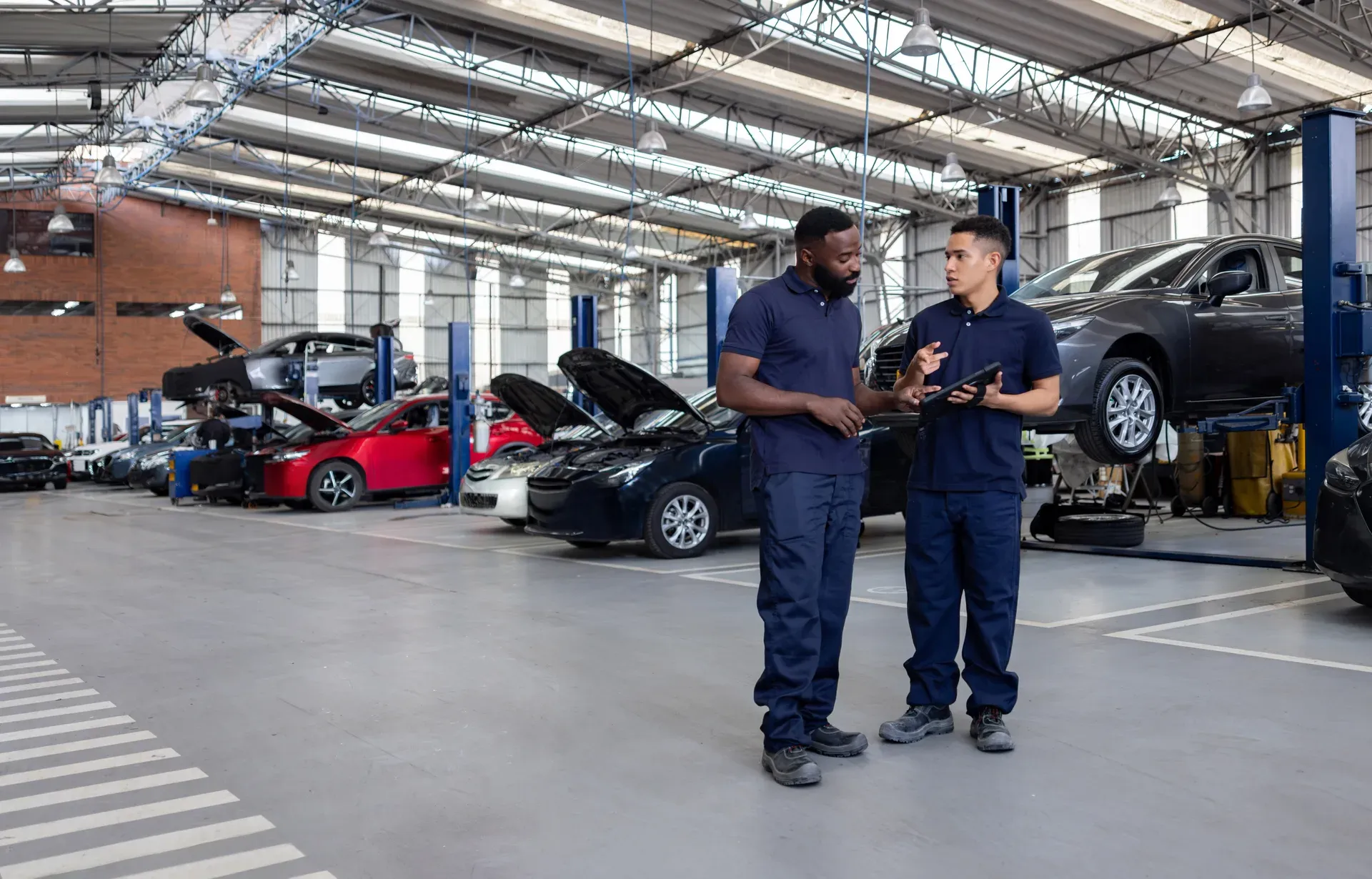 Post-repair check
What frame straightening means on a modern car
Almost everything on the road today is unibody: there is no separate ladder frame under the body, and the floor pan, rails, pillars and roof form one welded shell that carries the load. When a car is hit hard enough, that shell deforms in a predictable order. The bumper beam and crush zones absorb the first part of the impact by design; past that, energy travels into the front rails, the apron, the strut towers and sometimes the firewall. Frame straightening is the work of bringing those points back to where the factory put them.
The word ‘frame’ still gets used because the tolerances are the same idea: a set of reference holes and dimensions the manufacturer publishes, typically within a few millimetres. If the rails sit outside those numbers, doors will not close evenly, the hood gap runs wide on one side, tires wear on one shoulder, and the car pulls under braking. More importantly, the next collision will not be absorbed the way the engineers intended, because the crush path has already been used up or bent out of line.
How the job runs at the shop
The car comes in on a flatbed or under its own power, and the first hour is spent stripping what is in the way, usually the bumper cover, headlights, a fender and sometimes the radiator support, so the structure can be seen and clamped. It then goes onto the bench. Anchoring clamps grab the pinch welds at four points and the measuring targets hang from the reference holes underneath. The laser head sweeps them and the software overlays the readings on the factory data sheet, showing how far each point has moved in length, width and height.
From there our estimator writes the structural part of the estimate with those numbers in hand, which is where a supplement usually comes from on a frame job: a crushed rail hides a torn mount or a cracked bracket until it is exposed. Pulling is done with hydraulic towers chained to the damaged area, a little at a time, with a re-measure between pulls. Where a section is kinked or torn rather than bent, it gets cut at the manufacturer’s sectioning point and a new piece is welded in. Seam sealer, cavity wax and primer go back on before any panel is refitted, because bare welds rust fast in this climate.
Why GTA collisions send so many cars to the bench
The 401 through North York and Scarborough carries some of the heaviest traffic in the country, and the collision pattern that produces is the rear-end with a speed difference: a car doing 100 km/h into one that has stopped for the merge at the 404 or the DVP. That kind of hit loads the rear rails and the trunk floor, and on the car in front it loads the front structure twice, once from behind and again into the vehicle ahead. Sideswipes on the 404 merge at Highway 7 twist the structure diagonally, which is harder to see from the outside and shows up as a diamond reading on the bench.
Winter adds a different set. A black-ice slide into a curb at the bottom of a ramp bends the lower control arm and the subframe mounting point rather than the body panels, so the car looks fine and drives crooked. Pothole season in March and April does the same to the front crossmember on lower vehicles. Any of those can be a frame job wearing a bumper-scuff disguise, which is why we measure whenever the wheels no longer sit square in the arches.
Insurance, safety and what you get back
A frame pull is almost always an insurance repair, because the labour and the parts sit well above where most people would pay out of pocket. The measurement printouts are the language the adjuster works in: the before reading justifies the structural hours on the estimate, and the after reading closes the file. If a rail is beyond the manufacturer’s repair limits, the numbers also make that case clearly, and the conversation becomes one about a total loss rather than a repair, which is a discussion we would rather have early than after the car is half apart.
When the structure is back within tolerance the rest of the repair is ordinary bodywork: replacement panels hung and gapped, paint blended into the adjacent panels, and any bumper-mounted radar or windshield camera checked, since that work may require recalibration. You leave with the two printouts, the alignment sheet, and a car that sits, steers and closes the way it did before the morning it went wrong.
Questions people ask
Can a car with frame damage really be fixed, or should I expect a write-off?
Most bent structures can be pulled or sectioned back to specification; the deciding factors are whether the damage stays within the manufacturer’s repair limits and whether the repair cost sits below the vehicle’s value. The bench measurement answers the first question within a day of the car arriving, and that number goes to your insurance company for the second.
How do I know if my car has frame damage after a collision?
Uneven panel gaps, a door that needs a shove to latch, a steering wheel that sits off-centre while driving straight, and tires that suddenly wear on one edge are the everyday signs. None of them are proof on their own; the laser measurement is. If there was a hard hit at either end, ask for the car to be measured before the estimate is finalized.
Does frame straightening weaken the metal?
Pulling a bend back cold, in stages, keeps the steel within its working range. Where a section has been stretched past that or has cracked, it is not straightened at all; it is cut out at the factory sectioning point and replaced with new steel, which is what the manufacturer’s repair procedures call for.
How long does a frame repair take?
A single pull on an otherwise light hit often comes and goes within a week; a job that needs a rail sectioned, new panels and paint usually runs two to three weeks, longer if a part is on back-order. Our estimator gives you a range once the car is measured and updates it if a supplement changes the plan.
Will my car drive the same afterward?
That is what the post-repair measurement and the alignment are for. If the reference points are back within tolerance and the geometry is set, the car tracks straight and the panels line up; if it does not, the job is not finished and the car does not go back to you.