The rocker that fails a safety inspection is how most Pickering rust finds us
Pickering keeps its second car until it is sold privately, and a private sale in Ontario needs a Safety Standards Certificate before the buyer can plate it. That inspection is where the rust surfaces. A rocker panel that looked like a line of bubbles from the sidewalk turns out to be perforated when the mechanic presses it, and a perforated rocker or floor is a structural item that fails the certificate. So the rust conversation usually arrives with a deadline attached: a buyer waiting, a UVIP already bought, and a question about whether the car is worth the metal.
The answer depends on what is under it. If the floor, the rails and the arches are solid, a rocker section is a sensible repair that gets the certificate and several more winters. If the floor pan under the seats is soft or the rear subframe mounts have gone, we say so from the photos and the car is not worth the drive. Photograph each rocker low and straight on, inside each rear arch with the wheel turned, and the underside where you can manage it, and the first opinion comes back before you commit to the 401.
Bayly Street pickups rust at the tailgate seam; 401 sedans rust at the arch lip and the dogleg
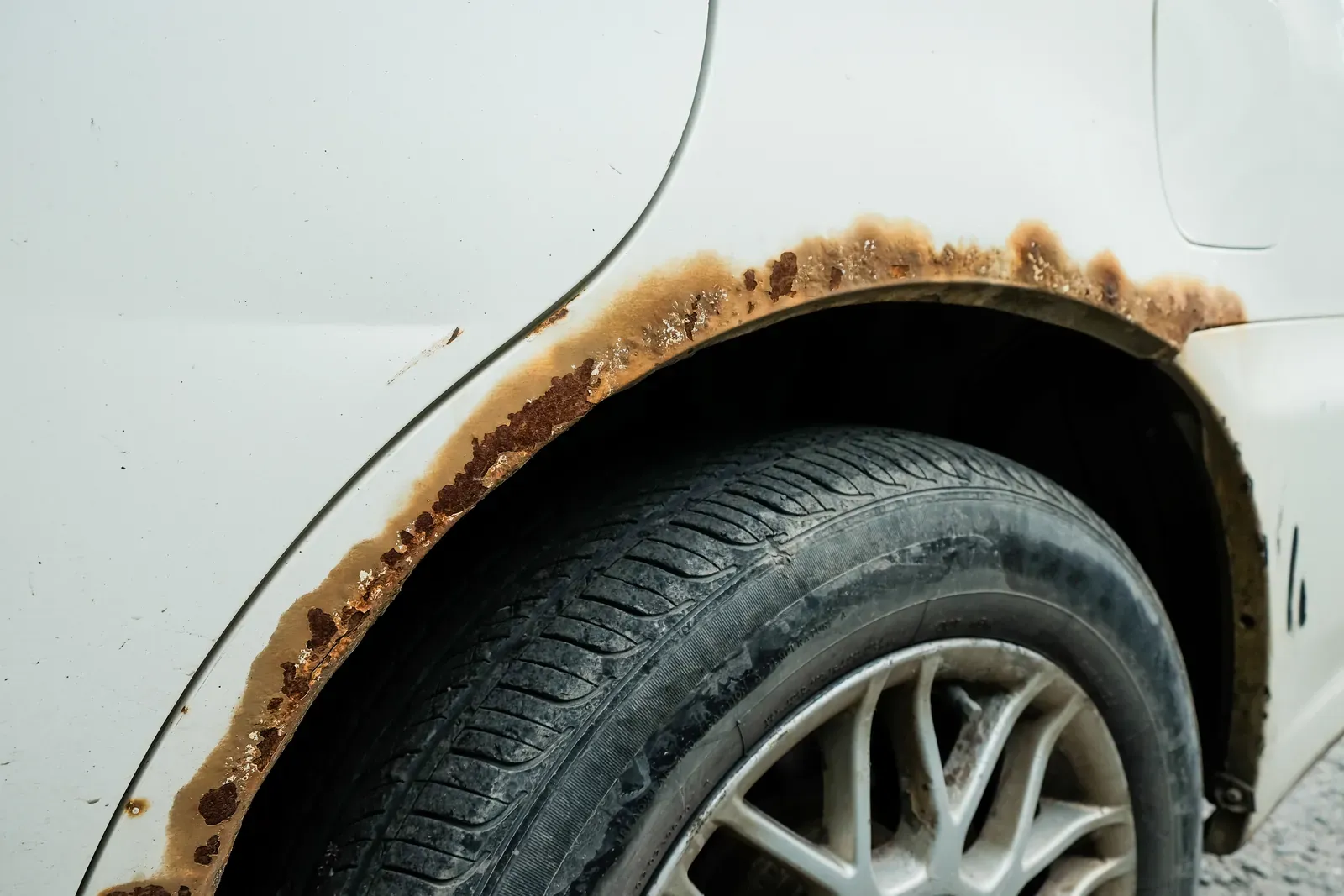
Where a Pickering car rusts says what it does. The pickups that serve the nuclear station and the Bayly Street industrial strip rot at the bottom seam of the tailgate, the cab corners and the bed sides over the rear wheels, from the inside out, because those are double-skinned panels that hold water. The sedans and small SUVs that do Whites Road to the 404 five days a week rust at the rear arch lip, where the liner clips hold salt against a folded double layer of steel, and at the dogleg behind the rear door, where the spray off the collector lanes lands and never dries. Hatchbacks and vans go at the tailgate seam and around the rear glass.
Pickering’s winter is the ordinary Durham winter — salt on Kingston Road and Brock Road from the first freeze, brine on the 401, windrows at the driveway mouths and potholes on Bayly in March — and the cars that take the worst of it are the ones in Bay Ridges and West Shore that sleep outside because the garage is full of everything except the car. What every rust spot has in common is that the bubble is the small part; the metal under it has always gone further than the paint shows.
The inside of the rocker gets coated before the door goes back on, and that decides how long it lasts
A rust repair that lasts does not begin with sandpaper. The rotted section is cut back until the steel behind the cut is clean and full thickness, because pitted steel that looks solid is already thin. A patch panel or a full rocker section is welded in, the welds are dressed, the seams are sealed, and before the panel is closed up its inside is coated so the rust does not return from behind. On an arch that means the wheel and the liner come out; on a rocker the door usually comes off. Then primer, colour to your code, a blend into the door or quarter beside it, and the lifetime paint warranty on the refinish.
Rust is wear, so there is no claim number; the estimate is out of pocket and written against the car’s value. If the car is being sold, the repair is worth doing properly before the inspection rather than after a fail, because a cosmetic fill is the thing a mechanic’s screwdriver finds first. Because the job runs several days, the drop-off from Pickering is one trip and the pickup date is set when the metal is in. Have the underside coated the same visit, and wash the wheel wells through the winter after a 401 run in slush.
- Rocker and floor checked from photos before a Pickering driver commits to the drive
- Steel cut back to full thickness, new section welded, seams sealed
- Panel interior coated before the door or liner goes back on
- Estimate written against the car’s value, with the safety inspection in mind
Questions people ask
The buyer’s mechanic failed the safety on the rocker. Can it be fixed in time to keep the sale?
Often, if the rocker is the only structural rust. A rocker section is usually a few days in the shop once the metal is in, and the repair is what the inspector wants to see: new steel welded in rather than filler over a hole. Send the photos, tell us the date, and we say whether it can be done before it. If the floor has gone too, the repair grows, and it is fairer to tell the buyer than to rush it.
A quote I got for “treat and paint” on the arches was a fraction of yours. Why not do that?
Because it is back within a year. Sanding the bubbles and painting over them leaves the rust under the new paint, and the arch lip is a double layer that has rusted from the inside, so the paint lifts again the following spring. If you are selling and the buyer knows what they are getting, a cosmetic fix might be all that makes sense, and we quote it as exactly that rather than calling it a repair.
My pickup has a rust line along the bottom seam of the tailgate. Is that a new tailgate or a repair?
A repair, usually, if it is caught at the line stage: the seam is opened, the rust cut out, new metal welded in and the seam sealed from inside. Once the lower skin has perforated across its width, a replacement tailgate is often cheaper than the hours, and on a newer truck the camera and the handle move across. On a hatchback the same seam is a smaller version of the same job.