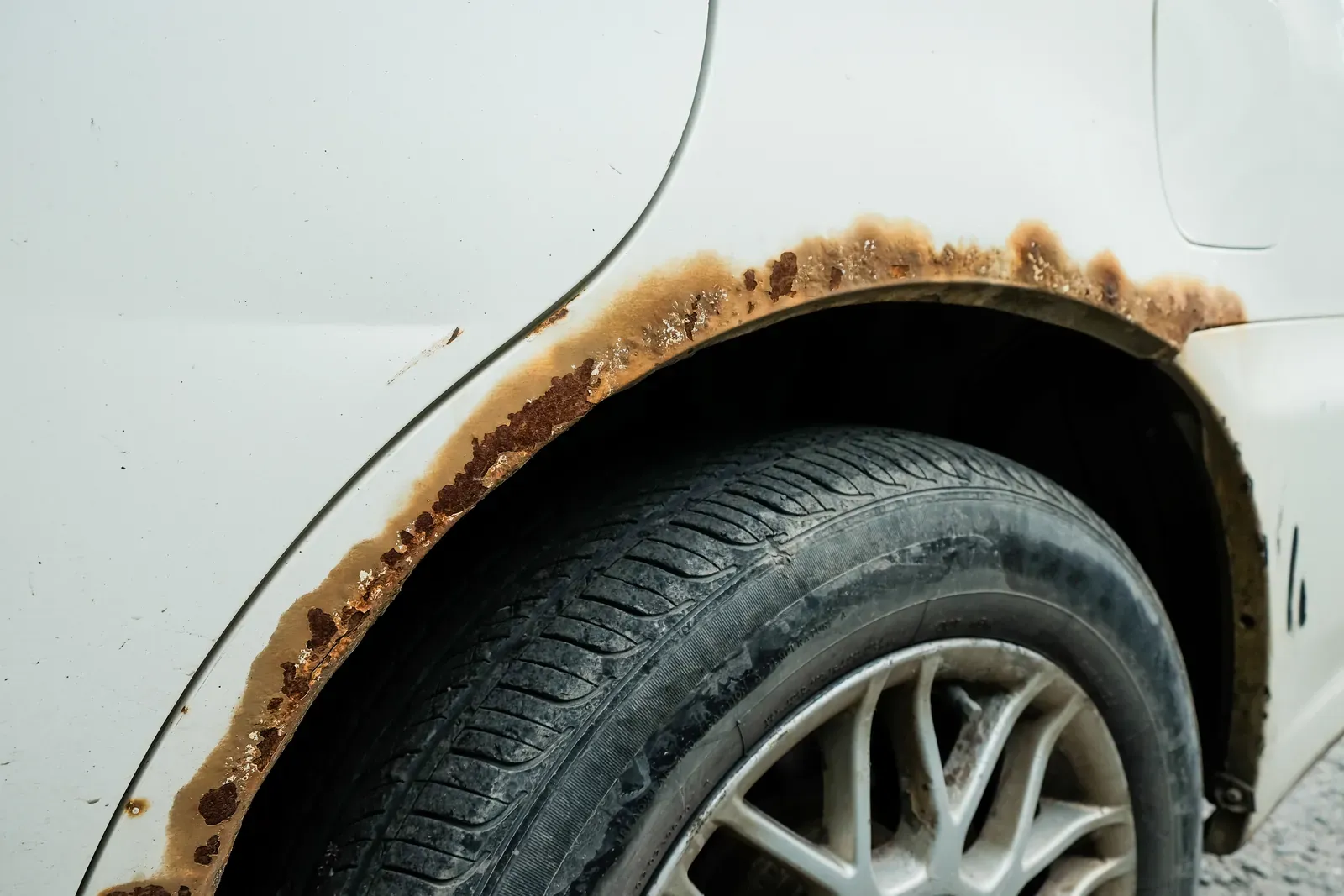
Rust is not a claim, it is a decision
Nobody’s insurance company pays for road salt. Rust counts as wear rather than an event, so the question a Leaside owner faces is the plain one: is the car worth it. Usually the answer has less to do with age than with what else is true about the car. A well-kept ten-year-old wagon with a good engine, tidy paint and a bubbling rear arch is a strong candidate, because the arch is the only thing wrong with it. A car with rust in the rockers, the floor and the subframe mounts is a harder conversation, and we will have that conversation honestly rather than sell the work.
The other factor is what you are planning. A car you intend to keep another five winters benefits from having the rust cut out now, before it spreads from the arch into the quarter. A car you are about to sell privately needs a UVIP and a Safety Standards Certificate, and a rotted rocker can fail the safety inspection. A lease return gets judged on appearance. Our estimator asks which it is before writing the estimate.
Why a Leaside car rusts faster than the garage suggests
The garages are the reason. The original single-car garage behind a Leaside house was built for something the width of a 1930s coupe, and most of them now hold bicycles, a lawnmower and a workbench while the cars stay outside. Outside on a mutual driveway means parked in the slush that runs off two roofs and two cars, and outside on the street means parked beside the windrow that the plough leaves along Millwood or McRae, soaked in brine from Bayview and Eglinton every day for four months. The salt sits on the rockers, in the seams behind the wheels and under the door bottoms, and stays wet.
So the rust shows up in a predictable order: the rear wheel arches first, where the inner and outer panels meet and the mud stays damp; the rockers under the doors; the dogleg ahead of the rear wheel; the lower edges of the doors and the tailgate seam. On the SUVs the neighbourhood favours, the rear arch and the lower liftgate are the first to bubble. On the older sedans, the rockers go soft before anything shows on the outside.
The cut goes wider than the bubble, and the salt calendar sets the booking
Rust that has bubbled the paint has already gone through the metal. Grinding it back and painting over the hole lasts a season. A proper repair cuts the affected metal out past the visible edge to clean steel, welds in a new section — a patch panel for an arch, a full rocker where the original has gone soft — seals the seams so water has nowhere to sit, primes with an epoxy that bonds to bare metal, and refinishes the panel with the colour blended into its neighbours. The inside of the repair is coated too, because the rust started from there.
Timing matters more for rust than for any other job. Spring, once the salt is off the streets, is the natural moment to look under the arches and get a repair done before summer parking under the trees. Autumn is the deadline: rust repaired before the first salt starts the winter sealed, rust left until March has grown. Send photos of every bubble you can find, the estimate names surface versus through-metal for each, and the car comes up Leslie for a couple of days or, for a rocker, closer to a week. The refinish is warranted for life.
Questions people ask
Paint has lifted along the dogleg of a wagon that winters on the street off McRae. How big a job is that?
Lifted paint means the rust is coming through from the inside of the panel, so the repair is a cut-and-weld rather than a sand-and-touch-up — but a dogleg patch caught early is one of the smaller versions of the job, with the blend confined to the lower quarter. Left through another winter it typically climbs the arch and works along the rocker seam, and every panel it reaches adds to the bill. Send a close photo and one from a metre back and we will size the patch from that.
Is rust repair worth doing on a twelve-year-old car?
If the rest of the car is sound, often yes. The question is not the age but what the car would cost to replace with something you trust as much, and whether the rust is confined to a panel or has reached the structure. An arch and a rocker on a car you know is a reasonable job. Rust in the floor and subframe mounts is a different conversation, and our estimator will tell you which it is from the photos and a look underneath.
Will the rust come back after the repair?
Not in the repaired area if the metal was cut back to clean steel, sealed on both sides and primed properly — that is what the lifetime warranty on the refinish stands behind. It can appear elsewhere on a car that keeps wintering on a salted street, because the rest of the body is the same age. Washing the underside through the winter and an annual look under the arches in spring is the maintenance that pays.