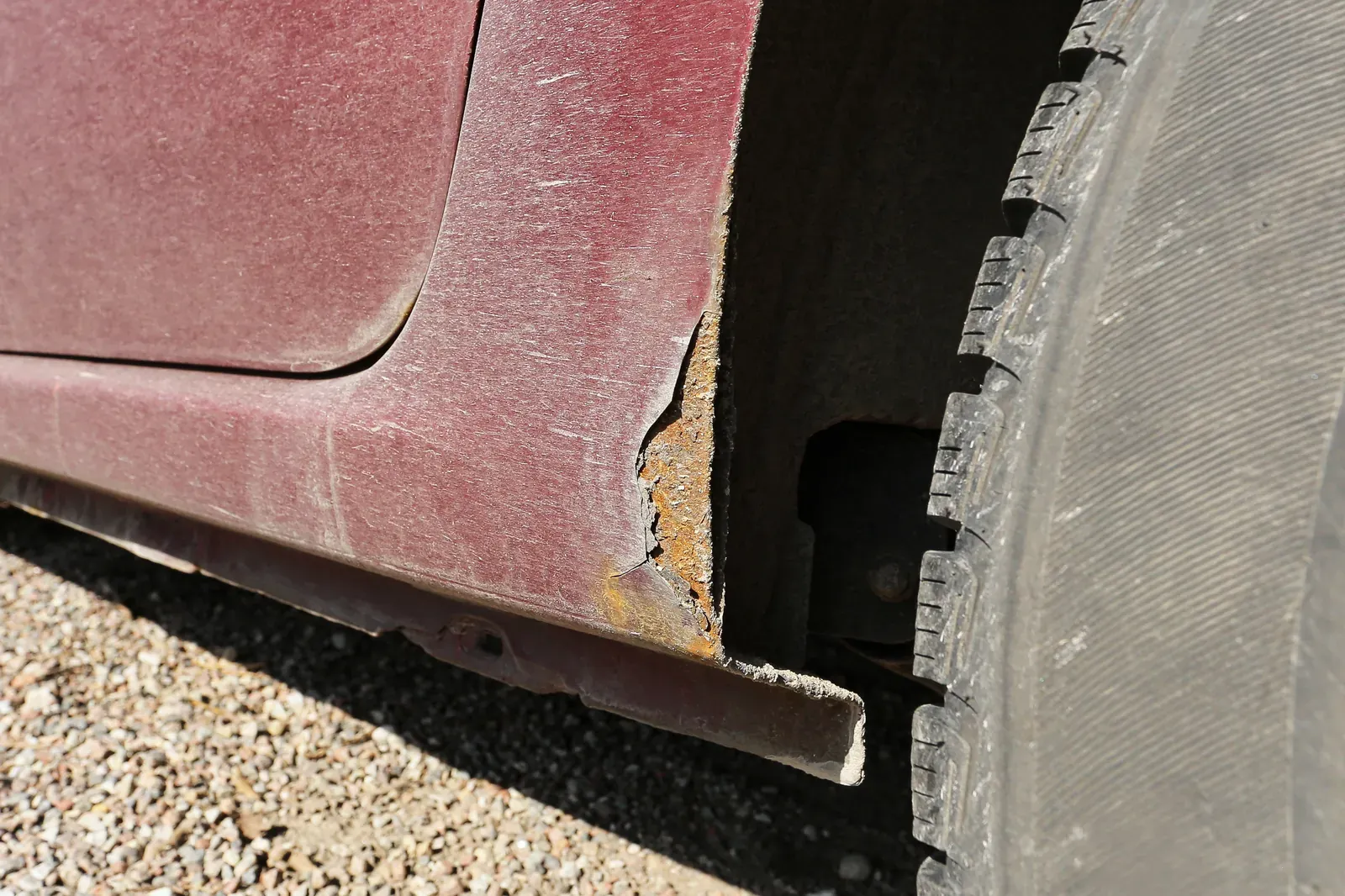
A car that never dries
Rust needs salt, water and time, and a Beaches car supplies all three. The salt is road salt, thrown up off Lake Shore and Kingston Road onto the rockers and into the arches on every winter trip. The water is the lake’s: fog on mild mornings, damp that hangs in the side streets, a windrow that thaws against the car in the afternoon and freezes again at night. And the time is the Beaches habit of leaving the car where it is. A car driven every day at least gets warm and sheds its slush. A car that sits from Sunday to Thursday on Balsam or Silver Birch, with brine packed along its rocker and no hose within reach, sits wet the whole time.
So the rust here starts inside the seams, where the steel is least protected, and a bubble on the arch is the last stage rather than the first: the panel behind it has been thinning from the seam outward for two winters and is lace by the time the paint lifts.
Where it shows, and what is really under it
The same places on almost every car on the street: along the rocker on whichever side the plow piles against, at the lip of the rear arch where the tire flings brine, and in the dogleg where the rocker and the arch run together behind the rear door. Sanding the bubble and filling over it holds for one winter and then cracks, with the rust spreading behind it the whole time, so we do not do that and do not call it a repair.
The repair that lasts removes the metal that has gone. The section is cut back until the steel is bright, a replacement piece — a factory or aftermarket patch panel where one exists, a fabricated one where it does not — is welded in and the welds dressed flush, the seams are sealed inside and out, and the bare steel gets an epoxy primer before colour and clear are blended into the panel beside it. With the cavities behind it treated, a rocker done this way will outlast the rest of the car.
- Cut back to bright steel, welded, sealed inside and out
- Epoxy-primed, then colour and clear blended into the neighbour
- Cavities treated afterward so the next windrow finds nothing
Paying for it in the right order
There is no insurance side to rust; it is wear, and it is paid directly. That makes the order of work a budget decision, so the estimate is split by area — rocker, arch, dogleg — with a figure for each, and you decide whether it is all at once or a section a season. Whether the car deserves the work is answered from photographs before it moves: a tight shot of the worst area, a wider one for context, and one taken lying down looking along the sill. A bubbled arch above a floor that is still solid is a routine section on a car worth keeping, and a low-kilometre Beaches car is usually worth keeping. Rot that has climbed the rocker to where the seat belt bolts through it is a different conversation, and if the shell is not safe to put back on the road, that is what you hear, before any money changes hands.
Late October, before the first salt truck runs Lake Shore, is the ideal booking; failing that, the day you notice the bubble. Drop the car by the parkway on a week you can walk and take the 501, let us treat the cavities while it is here, and drive it home sealed against the next winter.
Questions people ask
The rocker on my 2010 hatchback is soft under the driver’s door. Is the car finished?
Soft is not the same as gone. If the inner sill and the floor behind the rocker are still solid, the outer section is cut out and replaced and the car carries on; it is rot in the floor pan or at a seat-belt anchor that changes the answer. Lie down with your phone and photograph along the underside — that picture decides it.
Does living a block from the lake really make rust worse? It is fresh water.
The lake does not supply the salt; the road does. What the lake supplies is the damp — fog, humidity and slow thaws that keep the brine wet against the steel for days instead of hours. A car that is parked most of the week never warms up enough to dry, and that is what moves the clock forward.
I have no hose and no heated garage. Anything I can do after the repair?
Two habits. Book a cavity oil spray with the repair and repeat it each fall, and when the lower doors go white, find a wash with an underbody jet — there are coin bays along Kingston Road. Parking a few car lengths from where the plow dumps its pile helps more than it sounds.