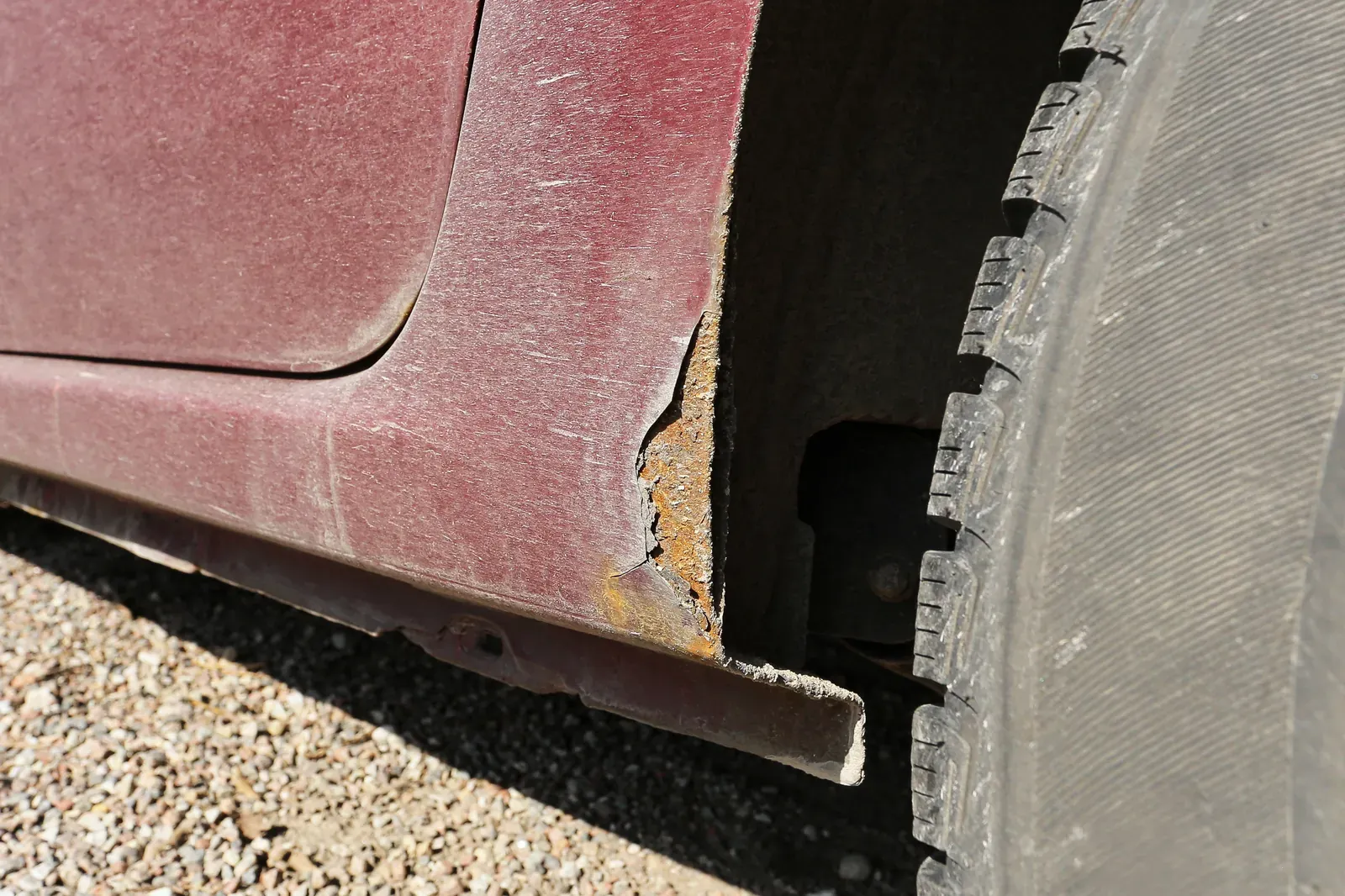
Salt from the interchange, and garages that never dry
The 404 and 401 are brined before every storm and salted through it, and a car that commutes through the interchange every day spends the winter driving through a fine mist of it. The spray lands on the rockers behind the front wheels, packs into the rear arches, and settles in the dogleg ahead of the rear tire, where the seam holds moisture for weeks. The bus loop at Don Mills station and the curb lanes on Sheppard get the heaviest salt in the neighbourhood, and every car parked along them gets a share.
Then the car goes home to a garage under a tower on Sheppard East and the salt never comes off. Underground garages stay a few degrees above freezing all winter, which is exactly the temperature at which brine works fastest. Nobody rinses a car in a parkade in January. Henry Farm driveways are colder but not much better: snow packed against the rocker melts and refreezes daily through March. By the time a bubble shows on the arch, the metal under it has been going for two or three winters, and the bubble is the small end of the problem.
Cut it out, weld it in, seal it
Surface rust on a chip or a scratch is a refinish job: grind to bright metal, treat, prime, paint. Rust that has bubbled or perforated is not, and no amount of filler over it lasts a season. The rotten section is cut back until the steel is clean and solid, a patch or a replacement rocker or arch section is welded in, the seams are sealed, the inside of the cavity gets a wax coating so the new metal does not rust from behind, and the outside is primed, blocked and refinished in colour blended into the door or quarter beside it.
Not every car deserves it, and we say so. A rocker rotted through on an older car may have taken the floor seam or the jacking point with it, and a rust repair that reveals structural rust is a different conversation, including whether the car will pass the Safety Standards Certificate needed to license it for a buyer. If you are selling privately, a rusted rocker is the first thing an inspector puts a screwdriver into. If you are returning a lease, a bubbled arch is a chargeback. Three photos, including one taken from low down along the bottom of the rocker, tell us which situation you are in before you spend anything.
- Rusted metal cut back to clean steel, never filled over
- New rocker, arch or dogleg sections welded in and seam-sealed
- Cavity wax inside, primer and blended refinish outside
- Straight advice when the rust has reached structure or the car is not worth it
Rust is rarely a claim, so timing is yours
Insurance policies treat rust as wear rather than an event, so almost all rust repair is paid directly. That has one advantage: nothing forces the date. The best windows are late spring, after the last salt has been rinsed off the roads, and early fall, so the new metal is sealed before the brine trucks are out on the 404 again. Before a safety certificate or a lease return, the deadline sets itself.
The job takes longer than a dent, because welding, sealing and refinishing each need their own time, so plan on the car being with us for a stretch rather than an afternoon. At the home shop that is easy: drop it at Sheppard and Don Mills, walk to the station, and pick it up when our estimator calls. One warning from experience: rust always looks smaller in the photo than it does under the car, so the estimate from photos is a starting figure and the firm number comes once the rocker has been probed.
Questions people ask
The dogleg ahead of the rear wheel has gone brown but the rocker looks fine. Repair one or both?
Price both, repair what the probe confirms. The dogleg seam fails first because it catches spray from both sides, and the rocker behind it often follows a season or two later — but often is not always, and cutting sound metal helps nobody. We probe both on the hoist, and the estimate separates them so you decide with real numbers.
How do you decide between a patch panel and a full rocker section?
By what the probe finds past the visible edge. Rust that stops within a hand-span of the bubble takes a patch; rust that runs the seam takes a section, because welding a patch into metal that is thinning around it just moves the failure line along. The estimate names which one it prices, so you are never comparing a patch quote against a section quote without knowing it.
Will the rust come back after you fix it?
Not in the repaired section if it is done properly, which means clean metal, welded steel, sealed seams and cavity wax behind the panel. The refinish carries our lifetime warranty. What we cannot promise is the rest of the car: the other rocker had the same winters. We will tell you what else is starting so you can plan.