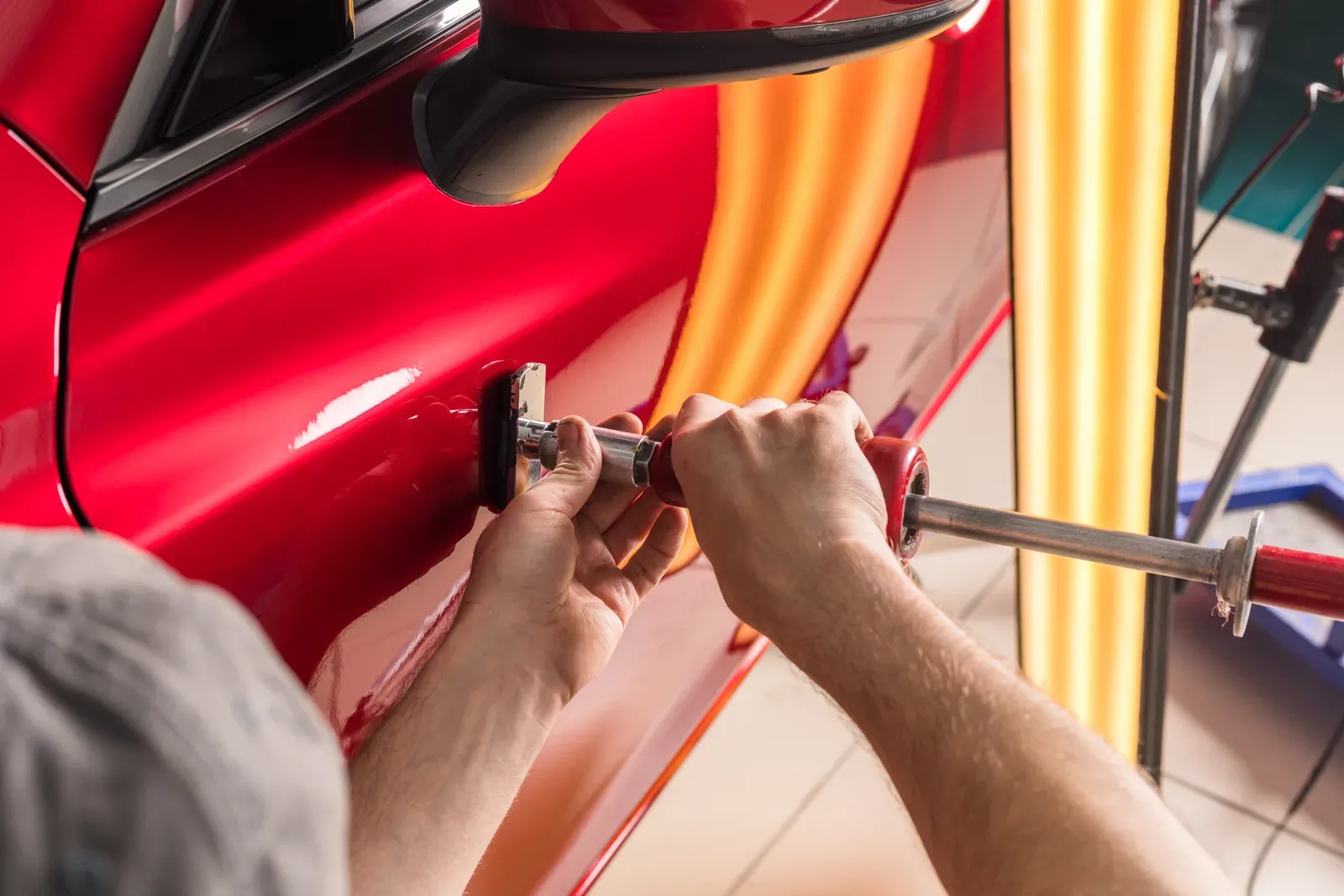
No repaint when the paint is intact
A dent with unbroken factory paint is massaged out from the back of the panel. The original finish stays, which matters for lease returns, resale and anyone who does not want a blended panel on a two-year-old car.
Photos tell us which repair it is
Shoot the dent straight on and at a low angle with a straight line reflected across it. The way that line bends tells our estimator whether the metal is stretched or just pushed, before you drive anywhere.
Straight answers on creases and edges
Some dents will not come out cleanly without paint: sharp creases, dents on a body line, aluminum panels pushed too far. We say which one yours is rather than promising paintless and delivering filler.
Timed to your day
Most paintless work is done while you wait or within the day. Filler and refinish jobs get a window at drop-off, with a rental through your coverage if the dent is part of a claim.
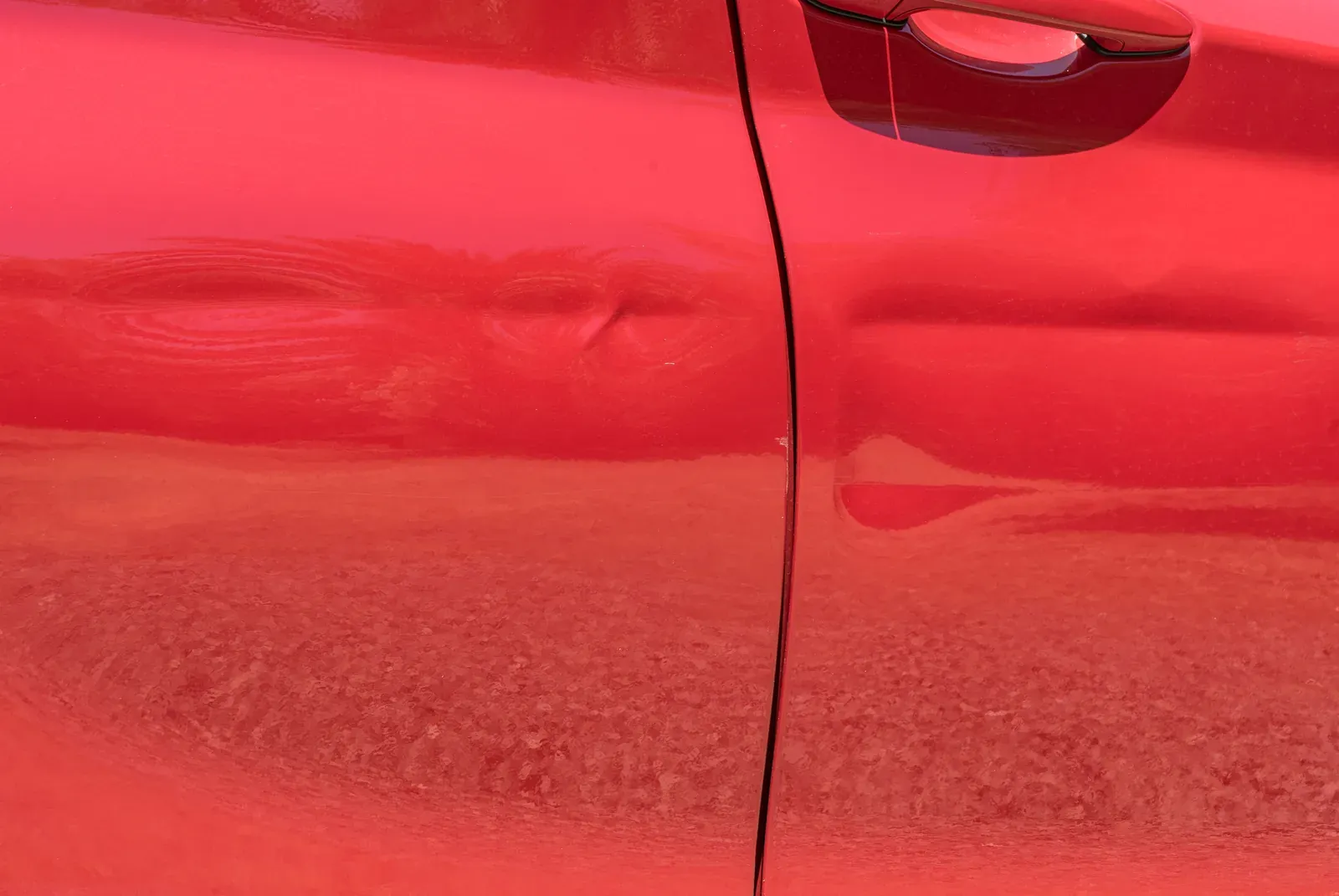 The dent as it arrived
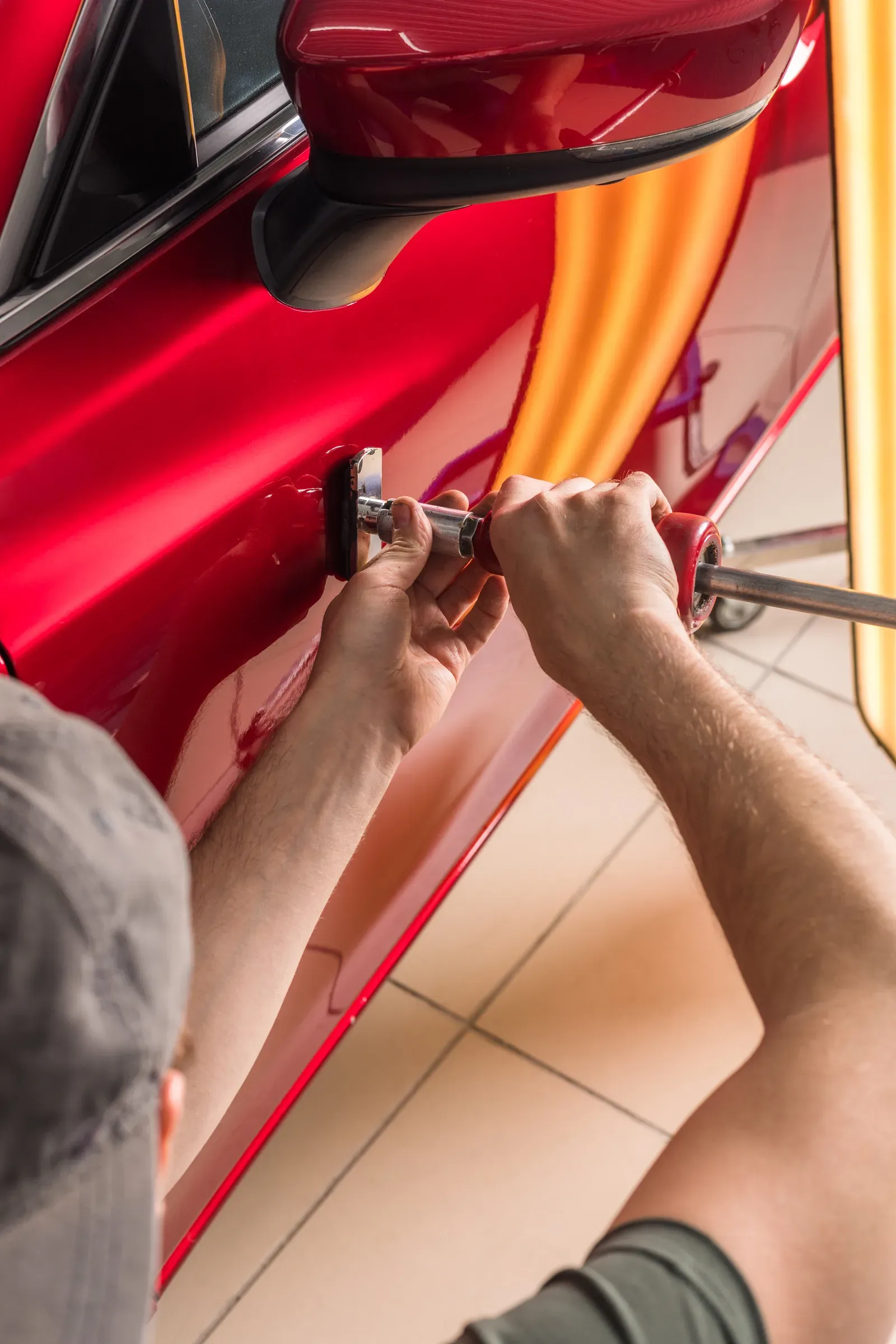 Working it from behind
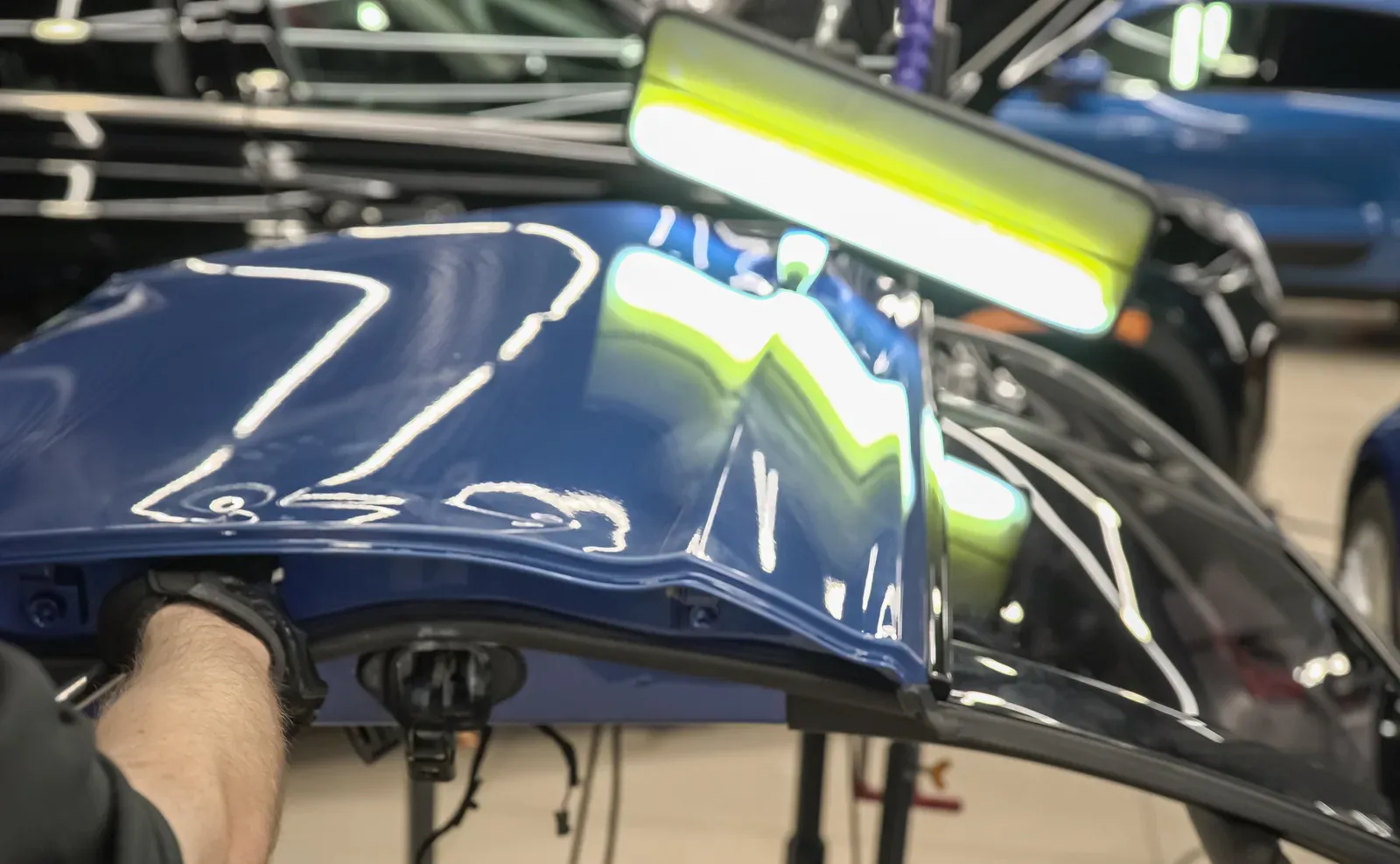 Panel finished
The paint, not the dent, picks the repair
Every dent is really two possible jobs, and the paint decides which. Steel and aluminum panels are formed with a memory of their original shape, and a rounded, shallow dent with the clear coat still glossy over it can usually be pushed back to that shape without touching the finish. Once the paint has cracked, flaked or been scraped through, the metal has to be worked, filled and refinished, because there is no way to restore a broken clear coat except to replace it.
The second factor is where the dent sits. A soft dent in the middle of a door or a quarter panel has room to move. The same dent on a body line, at a panel edge or over a double-skinned section like a hood brace is a harder pull, and sometimes an honest answer is that filler will look better than a paintless attempt that leaves a ripple.
How paintless dent removal is done here
Paintless dent removal is slow, quiet work. The panel is lit with a striped reflection board so every high and low spot shows as a bend in the lines. The technician gets behind the panel, through a window opening, a wheel well or a removed trim piece, and uses steel rods to push the low spot up in small increments while watching the reflection. High spots around the rim of the dent are tapped down with a plastic knockdown. The dent disappears when the lines run straight again.
Where there is no access from behind, a tab is glued to the outside of the dent and pulled with a slide hammer, then the glue is released and the residue cleaned off. Aluminum hoods and doors, which more and more vehicles use, are softer than steel but have little spring-back and work-harden as they are pushed, so they are worked more slowly and sometimes gently heated. None of this involves sanding, filler or paint, and the factory finish leaves exactly as it arrived.
When the dent needs filler and paint
If the paint is broken or the metal is stretched, the repair moves into conventional bodywork. The dent is pulled or hammered as close to shape as the metal allows, then ground to bare steel and skimmed with a thin layer of filler, sanded flat with a guide coat and primed. That panel is then refinished with the colour matched to the car and blended into the panels beside it, so the door does not look like a new door.
For a dent with a crease that runs across a body line, or one at a corner where the metal has folded, replacing the panel can be the more sensible route, especially on a newer car where a used or new door is readily available. We price both paths on the estimate when it is a close call and let you and the insurance company decide with the numbers in front of you.
Where GTA dents come from
Most of what comes through the door was not a crash. Door dings from the tight spaces at Fairview Mall and Pacific Mall, a shopping cart rolling across a lot on Steeles in a wind, a hockey bag swung into a fender, a bicycle handle in a condo garage. Hail shows up some summers and leaves dozens of small round dents on a roof and hood that are almost always paintless work.
Winter has its own set. Snow windrows at the driveway mouth push a rocker in, and ice falling off a garage roof or a truck ahead on the 401 leaves a dent in a hood that looks worse than it is. Because salt is everywhere from December to April, any dent that has broken the paint should be dealt with before spring rather than after, or it comes back as a rust bubble.
Insurance, the deductible and how long it takes
A small dent is often below the deductible, and for those we simply give you a written estimate and you decide. Hail, a hit-and-run in a lot or a dent that comes with a scrape from another vehicle is usually a claim, and we run it with your insurance company the same way as any collision. Paintless work on a hail-damaged roof is itemized by dent count and size on the estimate, which is what the adjuster expects to see.
A single paintless dent usually takes an hour or two. A hail roof with many dents can take a day or more. Filler-and-paint work runs a few working days because the finish has to cure between steps, and a panel replacement depends on parts availability. We give the window when the car arrives, not after.
Questions people ask
Where does paintless dent removal hit its limits?
No. Paintless dent removal needs unbroken paint, metal that has not been stretched, and access behind the panel. Sharp creases, dents on edges and anywhere the clear has cracked need filler and refinish. Send photos and we will tell you which one you have.
Will a paintless repair show?
On a soft dent worked by an experienced hand, no. On a large or complex dent there can be a faint texture visible under a fluorescent light at a certain angle, and we tell you before starting if we expect that so you can choose a refinish instead.
Should I file a claim for a single dent?
Compare the estimate with your deductible. If the repair costs less than or close to the deductible, paying directly is usually the better choice, and no claim appears on your record. For hail or a hit in a lot with real damage, a claim makes sense and we handle it.
Is there a difference between dents on aluminum and steel?
Aluminum is softer than steel but holds its set — it does not spring back the way steel does, and it work-hardens if pushed too often — so paintless work on an aluminum hood or door takes longer and has narrower limits. It is still routinely done here; the estimate reflects the extra time.
Can you fix a dent on a leased car without affecting the return?
Yes, and paintless repair is the ideal answer for lease returns because the factory paint stays untouched. Where a refinish is unavoidable, the blended panel is done to a standard an inspector will not flag, and you keep the invoice for the file.