Found at the sale, the lease return or the safety
Brampton cars change hands a lot. A household with four drivers cycles vehicles through — the reliable commuter handed down to the newest licence, the older one sold privately with a UVIP, the lease that comes due every few years — and every one of those moments involves someone looking underneath. The mechanic writing the Safety Standards Certificate finds the rocker soft under the driver’s door. The lease inspector marks the bubbles on the rear arch. The buyer’s cousin kneels down in the driveway with a flashlight. That is usually when the call comes, and it comes with a deadline attached.
It is also when honesty pays. A rocker and an arch on a car that will do three more winters is a repair worth making; a floor and subframe mounts going at the same time on a car about to be sold is money that will not come back. Our estimator says which from photographs of the rockers from underneath and the arches from behind the wheel, and names the repair type on the estimate so you know what a certificate or a clean hand-back will cost.
A city with no garages and a lot of salt
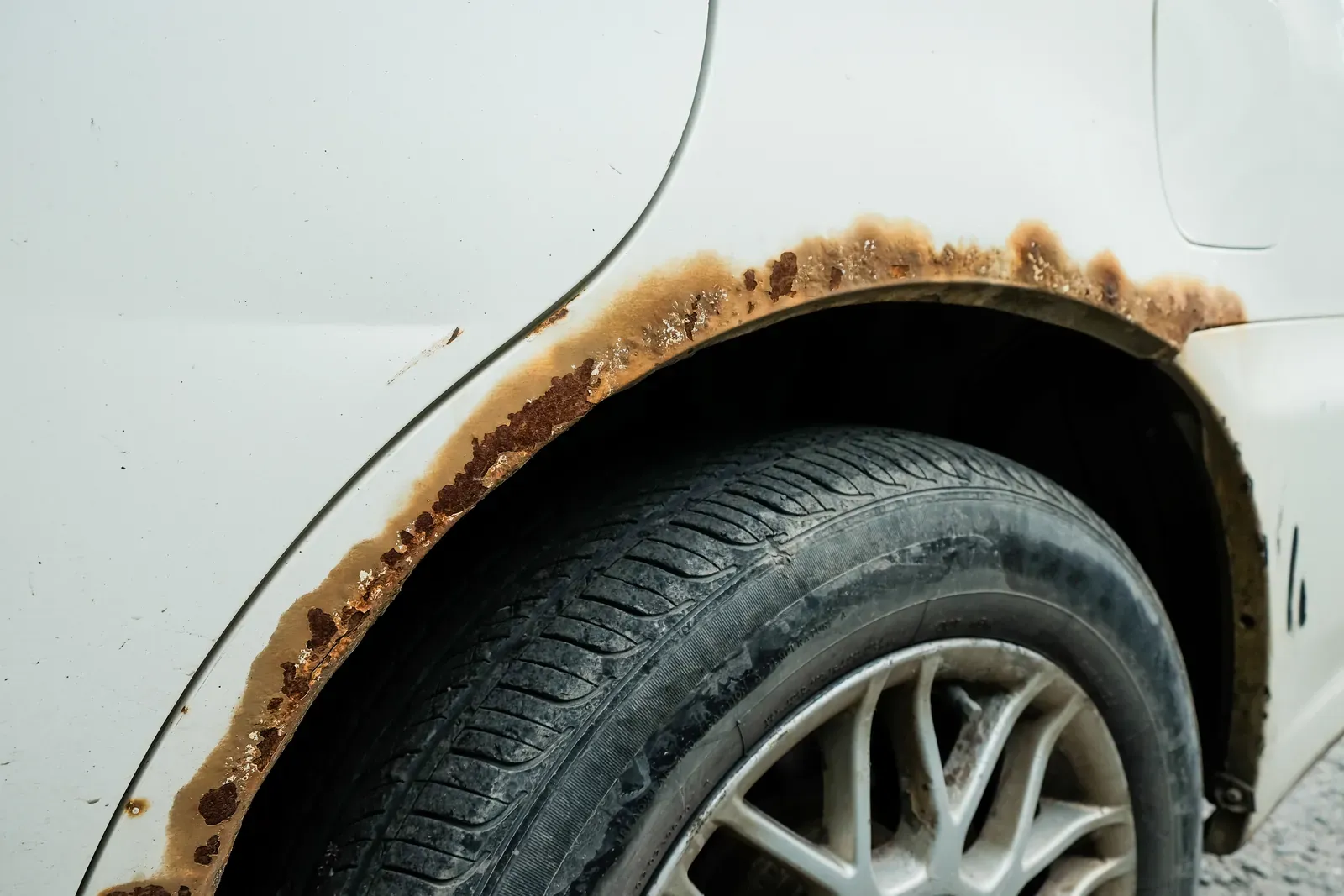
Brampton salts hard and parks outside. The 410, Steeles, Bovaird and Queen get brine ahead of a storm and rock salt through it, and the trucks on Steeles grind it into a spray that coats the next lane. The car then goes home to a driveway, not a garage — the garage is full — and sits with that mixture packed into the rocker seams, the rear arch lips and the doglegs ahead of the rear wheels for four months, freezing and thawing through February and March. By the time a bubble shows on the paint, the steel behind it has been thinning for a couple of winters.
Pickups and cargo vans have it worst. Cab corners, the bottoms of the doors and the tailgate lip go early on a truck that lives at a logistics yard on Airport Road, and a work van washed only when it rains carries salt on its rockers until May. On passenger cars the rocker under the driver’s door and the rear arch on the side that meets the windrow are the usual first casualties.
The repair that lasts starts with a saw, not a sander
A rust repair that lasts starts with removing every bit of rotten metal, not with filler. Surface rust that has not gone through is ground to clean steel, treated, primed and refinished. Where the steel has perforated, the panel is cut back to solid metal, a new section — a rocker patch, a full rocker, an arch repair section — is welded in, the welds are ground, the seams sealed and the cavity coated so salt has nowhere to sit. Then primer, colour, clear and a blend into the neighbouring panel, with the lifetime paint warranty behind it because the metal under the paint is right.
Corrosion is treated as wear by every insurance company, so this is a direct-pay job with no rental attached, and the drop-off should be planned for a week the car is not needed. Spring and summer are the right seasons, once the salt is off the 410 and the car can leave into dry weather. If the deadline is a sale or a lease return, tell us the date and the visit is planned backwards from it; otherwise, pickup is a good moment to ask about coating the underside before next winter.
- Surface rust only: ground back to bright steel, treated and refinished
- Holes in rockers, arches or doglegs: rotten steel cut out, new sections welded
- Seams sealed and the cavity coated so brine has nowhere to sit next winter
- Colour and clear blended into the panel; lifetime warranty on the paint
Questions people ask
The mechanic failed my safety for a rusted rocker. Can you fix it in time for the sale?
Usually, if you tell us the date. Send photos of the rocker from underneath and from the door sill, and our estimator writes the estimate with a realistic range — a patch and refinish is a few days; a full rocker section with welding and sealing is longer. Book it as early as you can, and have the mechanic recheck after the repair so the certificate is clean.
My pickup works out of a yard on Airport Road every day. How long is a rocker repair off the road?
A ground-and-refinished patch of surface rust is a few days; a rocker section that has to be cut out, welded and sealed runs longer, and our estimator puts the range in the written estimate rather than guessing at the counter. Corrosion is treated as wear by every insurance company, so there is no rental attached — pick the truck’s slowest week, tell us the date it must be back, and the booth is scheduled backwards from it.
Is rustproofing worth it on a car that lives on a Brampton driveway?
For a car parked outside and driven on salted roads daily, an annual underside treatment is a reasonable defence, especially after a rust repair has left the metal clean. It does not undo rust that already exists, and it is not a substitute for rinsing the underside on a mild day in February. Ask at pickup and we will tell you what makes sense for that specific car.