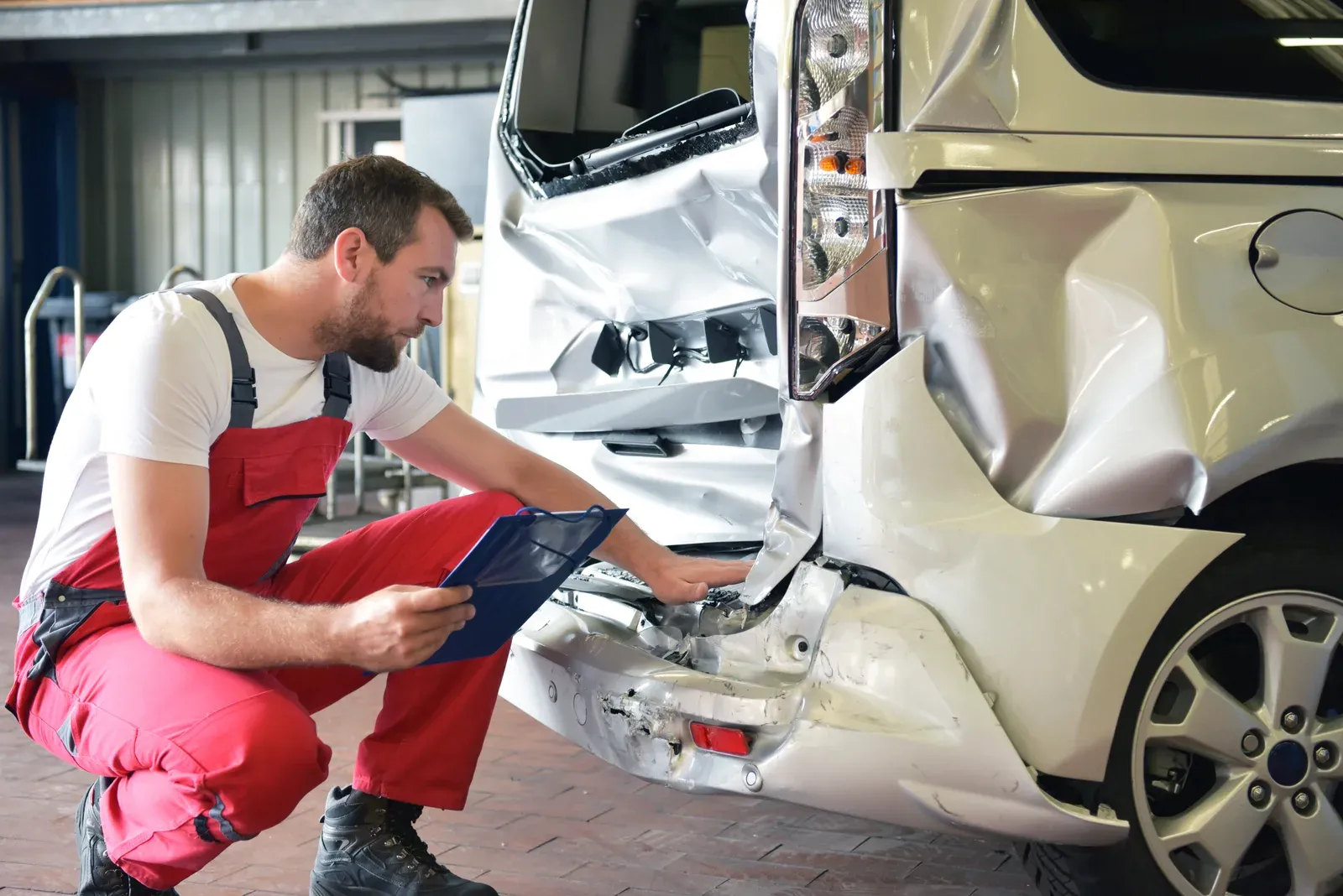
The estimate starts from your phone
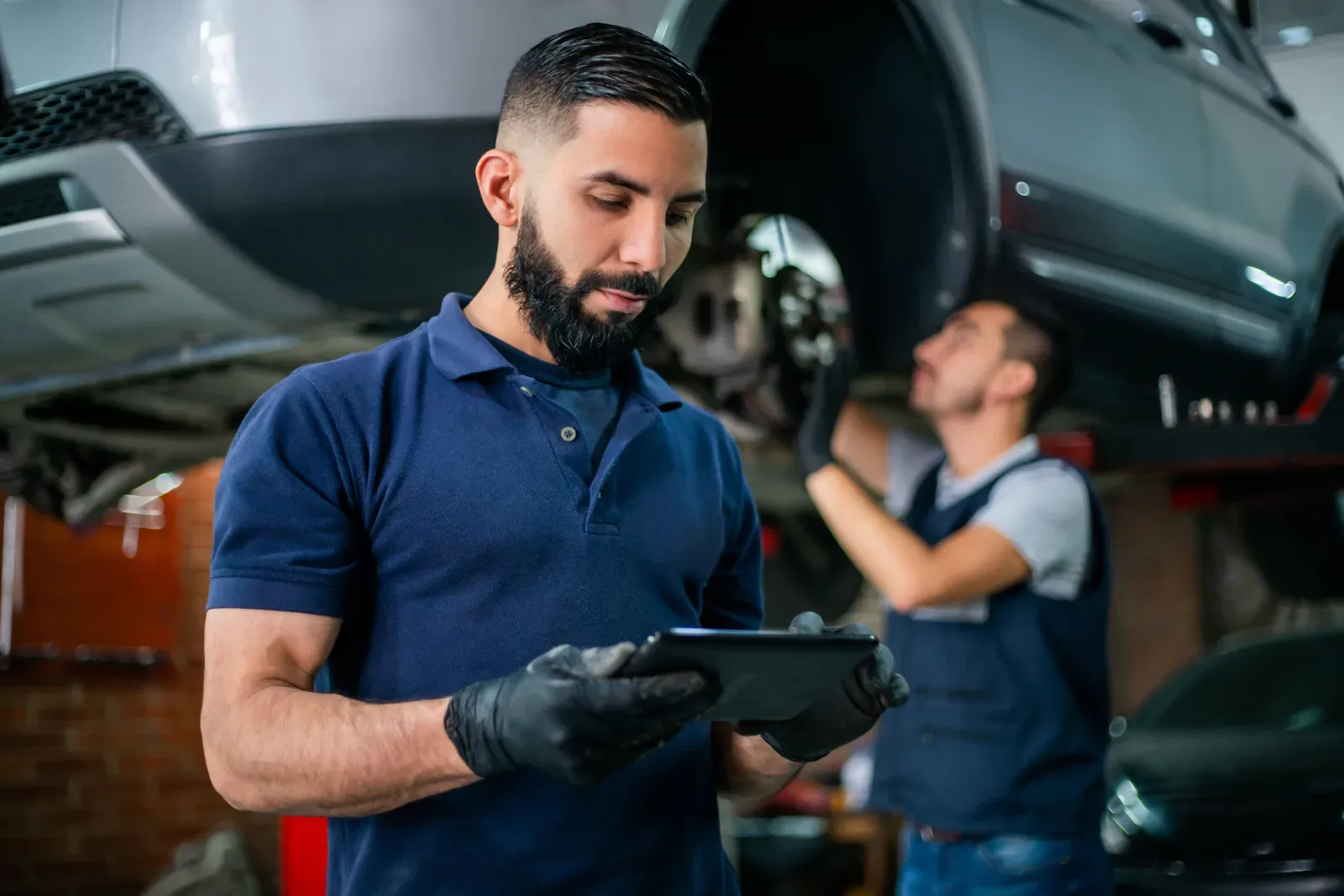
Send a wide shot, a close-up and the licence plate corner. Our estimator reads them and returns a written estimate before the day is out, so you know where you stand before the car moves.
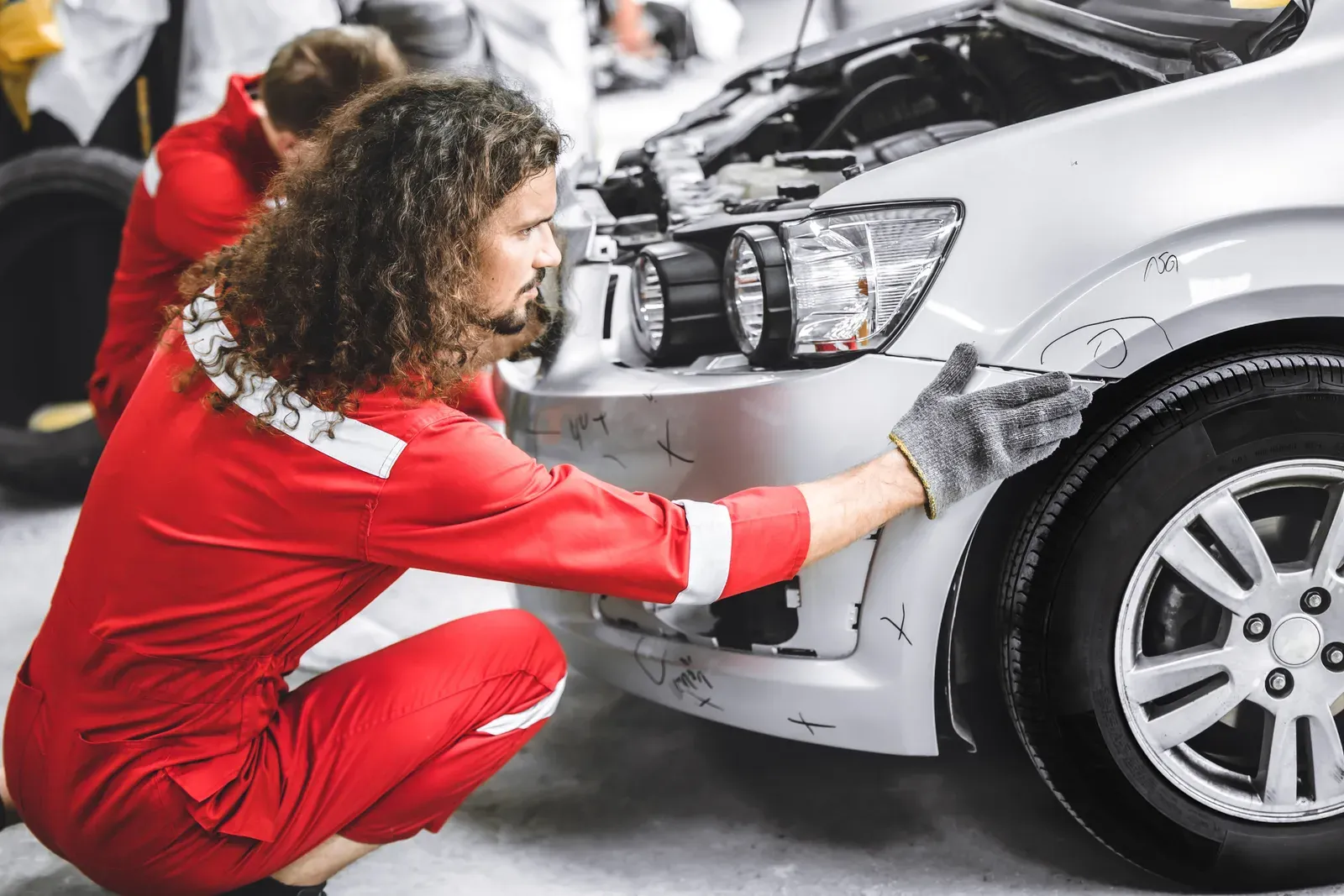
Teardown before the numbers are final
The car comes apart around the damage before anyone commits to a parts list. What the photos hid becomes a supplement to the insurance company, not a surprise on pickup day.
OEM parts where safety is involved
Bumper beams, airbag components and structural pieces are written for original parts. Where the insurance company writes for a like-kind alternative, we say so and explain the difference.
Paint you will not find later
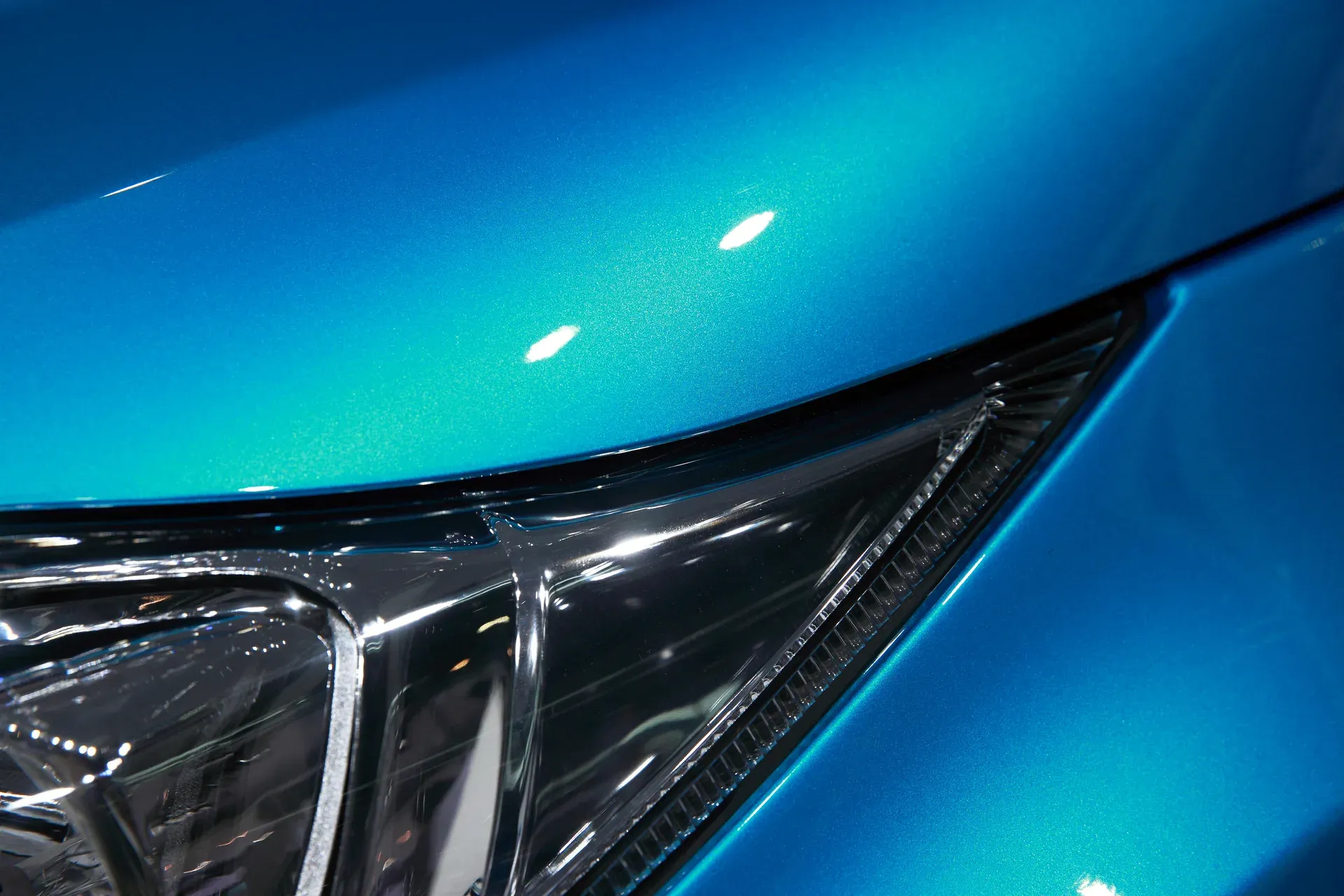
New panels are blended into the ones beside them and finished under a lifetime warranty on the paint and refinish, so the repaired door reads the same as the rest of the car in every light.
 Teardown
 Writing the estimate
 Reassembled and polished
What the first two days look like
A collision repair here starts before the car does. You send three photos, our estimator writes a preliminary estimate the same business day, and if the vehicle cannot be driven we help coordinate the tow so it arrives at Sheppard and Don Mills rather than a storage yard charging by the night. That first estimate is a starting point, and we say so on it: it covers what a camera can see, and it opens the claim with your insurance company so a rental can be arranged through your coverage while the car is still on the truck.
Once the car is in the bay, the damaged area is stripped: bumper cover off, headlights out, fender unbolted, inner liners removed. This is the teardown, and it is the single most useful hour of the whole repair. A bumper that looked scuffed often hides a cracked absorber, a bent reinforcement bar or a radiator support pushed back a few millimetres. Everything found is photographed and added as a supplement, which is the normal, expected mechanism for updating an estimate rather than a sign that something went wrong.
What gets measured before anything gets ordered
The teardown is also where the structure is checked. Panel gaps are measured with a gauge, not by eye, because a hood gap that runs wider on one side is the earliest sign a rail has moved. If there is any doubt, the car goes on the bench and the reference points are read against the manufacturer’s data. Wheels are checked for position in the arches, and a quick alignment reading tells us whether a control arm or knuckle took part of the hit.
Modern cars add a second list. Radar behind the grille, cameras in the mirrors and windshield, parking sensors in the cover, and seatbelt pretensioners or airbag modules if anything deployed. Each one is noted on the estimate, and any that sit in the damaged zone are flagged for a possible recalibration once the bodywork is complete, since that step may be required for the driver aids to work as designed.
Parts, paint and the way it goes back together
Structural and safety parts are written for OEM wherever a like-kind alternative would change how the car behaves in the next impact. Cosmetic pieces such as a mirror cap or a cover clip are a different conversation, and we have it with you rather than deciding quietly. When replacement panels arrive they are test-fitted bare, gapped against the adjacent panels and only then sent for paint, because a door that fits in primer will still fit after colour.
Paint is matched from the code on the door jamb, checked against the car itself, and sprayed on a test card before it goes near a panel. New colour is carried into the neighbouring panels and cleared edge to edge so there is no hard line to catch the sun. Reassembly is the reverse of the teardown, with new clips, fresh seam sealer where metal was disturbed and cavity wax inside any panel that was opened up.
Collisions the GTA produces, and what they do to a car
The shop sits just off the 404 at Sheppard, minutes from where the 401, the 404 and the DVP hand traffic to one another, which means the collisions we see are the ones those roads generate. Rear-ends in stop-and-go on the DVP tend to be low speed but stacked, with the car hit from behind and pushed into the one ahead. Merge sideswipes on the 404 at Highway 7 drag damage along the length of the car. A black-ice slide on a ramp in February usually lands on a curb, and the bill is in the suspension, not the paint.
Winter changes the repair itself as well as the accident. Salt gets into every seam a collision opens, so bare metal is primed the day it is exposed rather than left overnight. Cars that live in condo garages come in with the collision damage plus a pillar scrape from the same week, and it is often sensible to fold that into the same paint session while the panels are already off.
The claim, the file and an honest timeline
Your insurance company receives the photo estimate, the teardown photos, the supplement and, where the bench was used, the measurement printout. Ontario drivers choose their own shop, so the claim runs the same way whether or not the adjuster mentioned a preferred facility, and whether we are talking in English or Mandarin.
Timelines depend on parts more than labour. A single-panel repair with paint usually runs a few working days once the car is in. A front-end hit with a structural pull, several replacement parts and a recalibration often takes two to three weeks, longer if a part is on back-order. We give you a realistic window at teardown, and if it moves, you hear about it from the shop rather than from the rental counter.
Questions people ask
Do I have to get an estimate from the insurance company’s shop first?
No. In Ontario you choose where the car is repaired, and the insurance company cannot require a preferred shop. Send us the photos, we write the estimate and open the claim, and the adjuster reviews it the same way they would any other.
What happens if you find more damage after the estimate?
It is documented with photos and sent to the insurance company as a supplement. Supplements are the normal way an estimate is updated once the car is apart, and they do not restart the claim or come out of your pocket beyond the deductible you already had.
Can I get a rental while the car is being repaired?
If you are not at fault the rental is generally covered, and if you carry the loss-of-use endorsement it is covered regardless. We time the rental to the drop-off so you are not paying for days the car is still waiting on parts.
Will the repair show up when I sell the car?
A properly repaired car has panels that gap evenly, paint that reads the same as the factory finish and a clean structural measurement. The claim itself may appear on a history report; the repair quality is what a buyer or lease inspector actually looks at.
Do you handle the tow if the car cannot be driven?
We coordinate it. Tell the tow operator the car is going to Crash Consultant at Sheppard and Don Mills; you choose the destination in Ontario, and getting it here directly avoids storage fees at a yard.