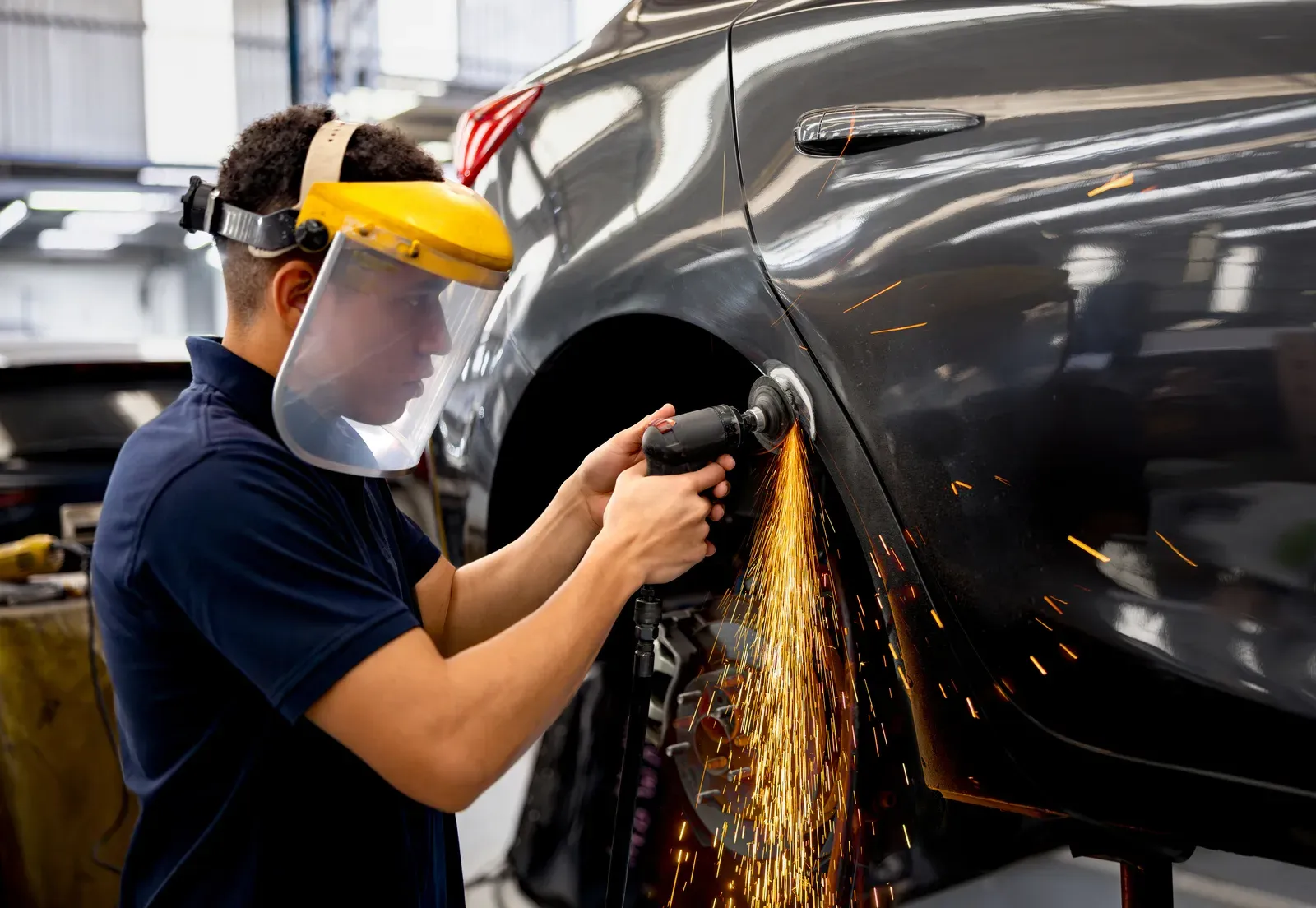
Columbus Road in January
Whitby stops being a suburb about two kilometres north of Brooklin. Past Winchester Road the concessions run between open fields with nothing to hold the snow, and when the wind gets up on Columbus Road, Ashburn Road or Thornton Road North the ploughed lane and the ditch become the same shade of grey in the space of a kilometre. A wheel that drops off the edge at seventy loads the whole corner of the car sideways. The car usually comes out under its own power. The strut tower, the rail behind it and the subframe mount may not have come back to where they were. Deer near Heber Down and along Lake Ridge Road north add the front-end version in November, with the radiator support and the upper rails taking the hit.
Back in town the structural jobs are faster and flatter: a rear-end on the 401 in a snow squall at Thickson that folds the rear rails into the trunk floor, or a March pothole on Highway 12 or Rossland deep enough to bend a control arm and nudge the rail it bolts to. None of these look serious from the outside. All of them can move the structure by a few millimetres, and a few millimetres is enough.
What a bent car cannot tell you on its own
A car with a shifted unibody rarely announces it. It drives. The steering wheel sits a few degrees off after the alignment shop has done its best, a door needs a second slam, the hood gap is wider on the passenger side, a front tire wears its inner edge in a season. Each of those is a symptom; none is a measurement. The only way to know what moved is to put the car on a bench and check every factory reference point against the manufacturer’s figures, which produces a sheet showing each point and its deviation in millimetres.
That sheet decides everything. If it is clean, the problem is suspension and you have a cheaper week ahead. If it is not, the structure is pulled back in stages, with a fresh measurement after each stage and a final sheet at the end that matches the first one point for point. Then the panels, the refinish blended into the neighbours, a four-wheel alignment, and any recalibration of cameras, radar or the steering-angle sensor that the procedure asks for — because a car that was aimed straight before the ditch has to be aimed straight after it.
- Before-and-after measurement sheets in millimetres, kept in your claim file
- Structure pulled in stages on the bench, never estimated by eye
- Alignment and driver-aid recalibration done after the numbers are right, not before
- A total-loss conversation had early if the sheet says so, not after the parts are ordered
Getting it here from a ditch north of Brooklin
Do not drive it. A car whose corner has moved can steer fine for forty kilometres and then not, and the 401 through Scarborough is the wrong place to learn which. Let us coordinate the flatbed instead — in Ontario you name the drop-off point, the operator is provincially certified and the invoice is itemized — and give the driver our corner beside Fairview Mall. We take it from there, whether the car is nose-down off Ashburn Road, on your driveway in Brooklin, or sitting at Durham’s reporting centre on Rossland Road after the police looked at it. Your rental is arranged for the time you arrive behind the truck, so the tow and your own trip are the same afternoon.
Now and then the numbers end the conversation. Ontario does not fix a percentage for a write-off; the insurance company weighs what the car was worth the day before against what it costs to repair, and what the salvage would bring back. If that comparison goes against the car, you hear it from us first, with the figures, and with a plain account of what keeping the car on a rebuilt title would mean. A ditch slide is a single-vehicle collision claim on your own policy; a deer strike is comprehensive with no fault assigned. In both cases the measurement sheet is part of the claim.
Questions people ask
I slid into the ditch on Ashburn Road and drove home. Does it really need to be measured?
Measure it if the car feels different in any way than it did on the way out. The usual tells are a steering wheel that no longer sits straight, a pull the alignment shop cannot cure, a new clunk over bumps, or a door and hood gap that changed. A ditch pushes on the strut tower and the rail sideways, and the paint does not show it. A photo of the wheel in its arch from the front and the side is a good start.
The car was rear-ended on the 401 in a snow squall and the trunk will not close. Is that frame damage?
Quite possibly. A trunk lid that no longer meets its latch means the opening has changed shape, which means the rear rails or the quarter panels moved. On a unibody car that is structural, and it needs the bench before anyone orders a bumper. The hit is a DCPD claim on your own policy for the share you were not at fault for, and the measurement sheet goes into it.
If the car is written off, do I still pay for the tow to your shop?
Normally the claim covers the tow and the teardown that produced the estimate, because those are the costs of finding out. You receive the actual cash value less your deductible, and if you want to keep the car you can usually negotiate to buy it back at its salvage value. We explain the offer and what a rebuilt brand would mean before you sign anything.