It usually arrives on a truck
Frame work from Vaughan almost never drives in. The vehicle that needs it was hit hard enough on the 400 at the 407, or at the Highway 7 ramps, or in a T-bone at a Jane Street signal, that a wheel points the wrong way or a door will not close, and it left the scene on a flatbed. The first decision, made at the roadside with the tow operator, is where that flatbed goes. In Ontario that is yours to make, not the operator’s and not your insurance company’s, and it is worth making once — a car towed to a storage yard and then towed again to a shop pays for two tows and loses days.
Tell the operator Sheppard and Don Mills, beside Fairview Mall, or call us and we coordinate the tow from the scene, your driveway, or the reporting centre lot after you have filed. The 407 is the quick route east for a flatbed too, and the toll on a tow is a small line on a large claim. A rental through your coverage is arranged for the day you come to meet the car.
Vaughan’s trucks and Vaughan’s crossovers
Vaughan sends us two kinds of structure. The first is the crossover and the sedan, which are unibody: there is no separate frame, and the rails, the strut towers, the rockers, and the pillars together are the structure. A hard hit moves that structure a few millimetres in ways a photo cannot show, and the symptoms are gaps — a hood that sits high on one corner, a door that rubs its striker, a tailgate that meets the bumper on one side only. The second is the pickup. Contractors’ half-tons and three-quarter-tons from the Weston Road yards ride on a ladder frame under a separate cab and box, and a frame hit on one of those shows up as a bed no longer square to the cab, or a steering wheel that sits off-centre while the truck rolls straight.
Both are measured the same way and pulled differently. Unibody structure is pulled in small, controlled steps, because the high-strength steels that protect you in a crash do not like being pulled twice. A ladder frame tolerates a pull better but is checked for cracks and kinks that turn a section into a replacement rather than a straighten, and on newer aluminum-bodied trucks the cab and box are treated as a separate repair from the frame beneath them.
The control-point readings decide the repair, not the eye
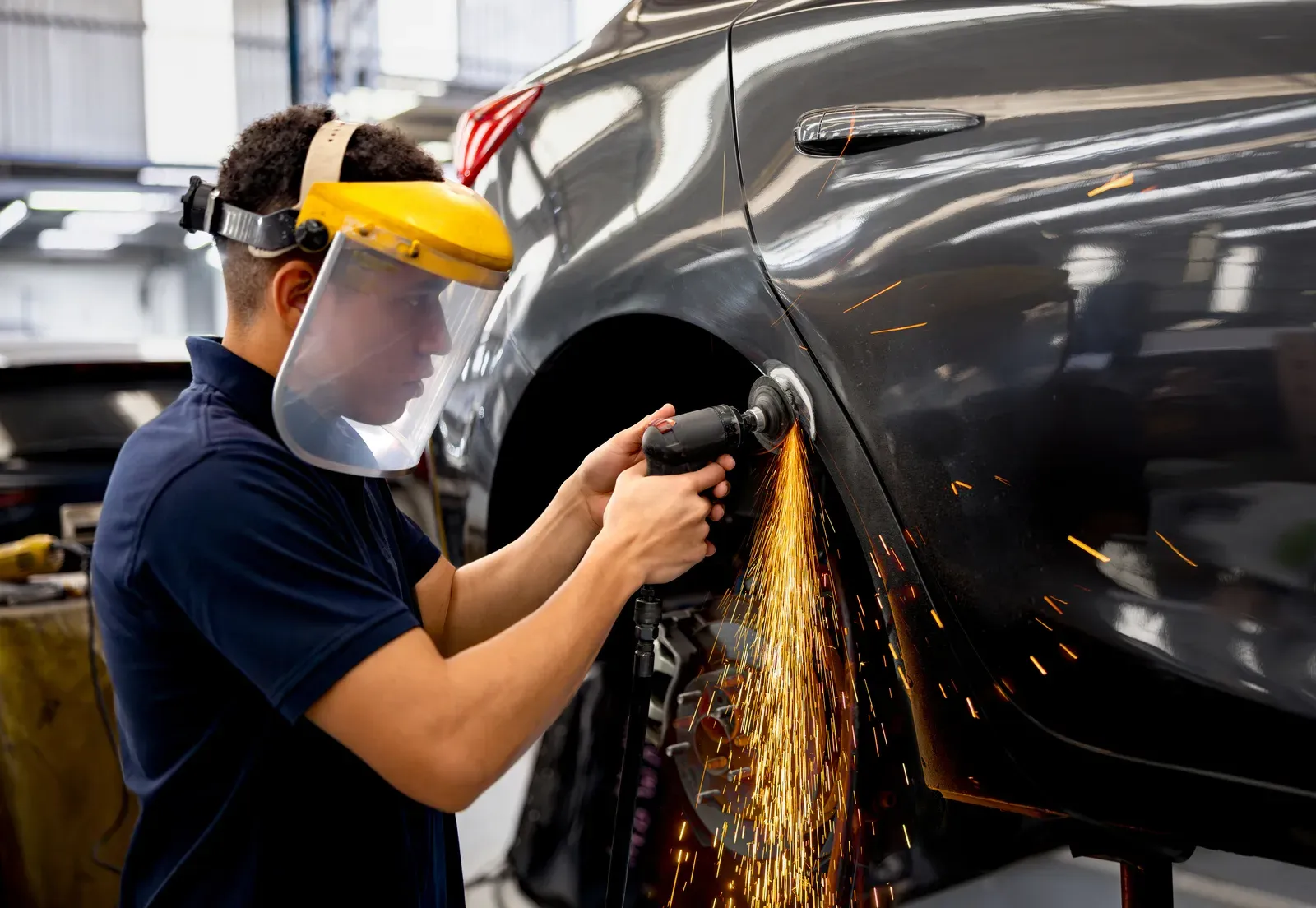
The vehicle goes on the bench and is measured against the manufacturer’s specifications at the fixed control points before anything is removed. That measurement is the honest answer to whether the structure moved and by how much, and it goes to your insurance company alongside the teardown photos. Then the pull: anchored, drawn back in steps, measured after each one. Then a final measurement that is kept on file. Only then do the panels, the suspension, and the paint follow, and if the work touched a bumper, the windshield, or a mirror, driver-assist recalibration may be needed before the vehicle is handed back.
Sometimes the measurement says stop. When the repair cost approaches the vehicle’s actual cash value less salvage, the insurance company will call it a total loss, and there is no fixed percentage in Ontario that decides it — it is a comparison, and we walk you through it in plain terms, in English or Mandarin, before anyone signs. An older third car with a bent rail is sometimes better let go; a two-year-old crossover with the same rail is almost always worth the pull.
- Measured against factory specifications before and after the pull
- Unibody and body-on-frame handled with different pull strategies
- Structural parts OEM where safety is involved; recalibration checked
- A frank total-loss conversation when the numbers say so
Questions people ask
My pickup drives straight but the steering wheel is off-centre after a hit on the 400. Is that frame damage?
It can be. An off-centre wheel with the truck tracking straight often means a front frame section or a suspension mount moved, and an alignment alone will hide it rather than fix it. It needs to be measured on the bench, which means a photo estimate first and a flatbed or a careful drive east second.
My truck has an aluminum box and cab on a steel frame. Does a frame pull put the aluminum at risk?
Mostly no, because the two are separate repairs. The steel ladder frame is measured and pulled on the bench like any other; the aluminum cab and box are assessed on their own terms, because aluminum is softer than steel, does not spring back, and work-hardens if it is worked twice — so a damaged aluminum panel is repaired gently or replaced rather than dragged along with the frame. The body mounts between the two are inspected and replaced where the hit tore them.
Can the tow truck take the car to you directly from the 407?
Yes. You choose where a tow goes in Ontario; give the operator the address at Sheppard and Don Mills and ask for an itemized invoice. If it is easier, call us from the shoulder and we will coordinate the tow ourselves.