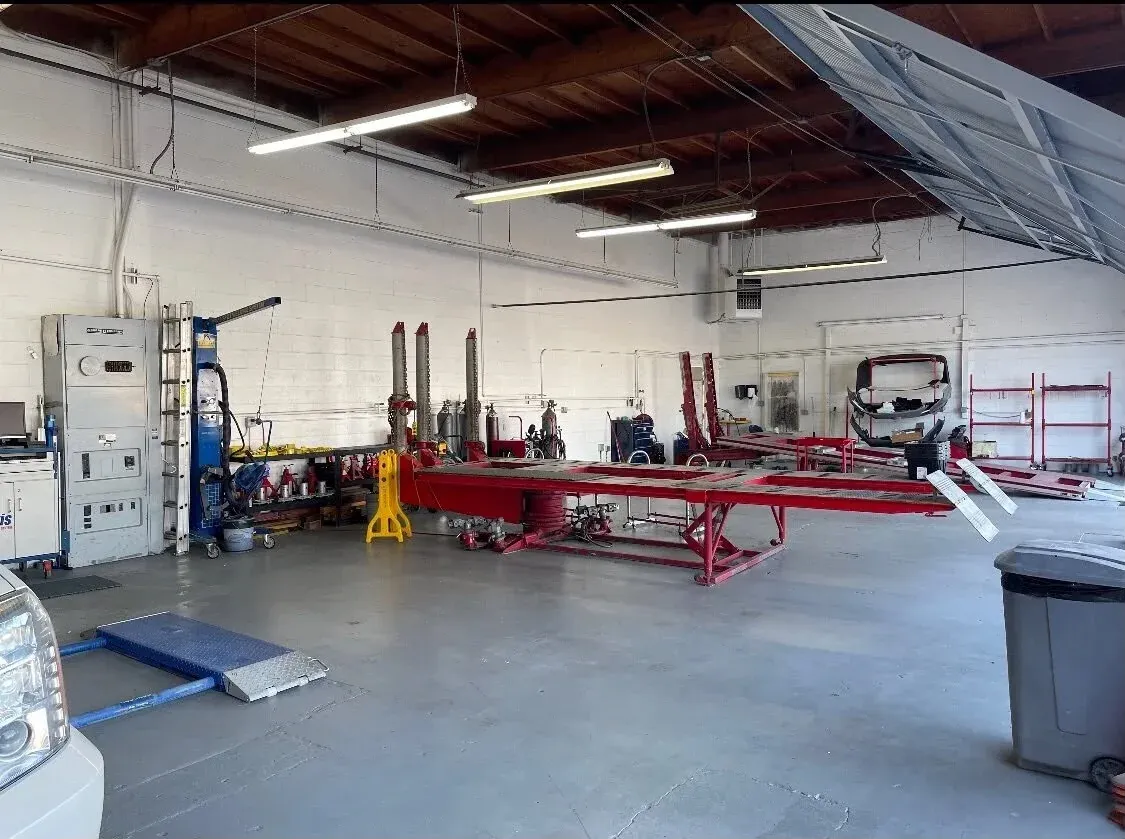
Getting a bent car out of a building
The hardest part of structural work downtown is often the first ten metres. A car that took a hard hit on the Gardiner and limped home now sits on P3 under a condo tower with a posted clearance no full-size tow truck can get under. The wheel that was pushed back into the arch will not roll straight; the rail is bent; the car should not be driven and physically cannot be driven out. This is a solvable problem, but only if we know the details before a truck is dispatched: the garage level, the clearance height on the ramp sign, whether the car rolls and steers, and whether the building needs notice to open a gate.
Under Ontario’s towing rules you name where the car goes, the operator is provincially certified, and the invoice is itemized. Tell the driver the car goes to Crash Consultant at Sheppard and Don Mills, or tell us and we coordinate it. A car that stopped on the DVP shoulder or in a Collision Reporting Centre lot is simpler — it is already outdoors — and we help arrange that tow too.
What the bench measures, and why twice
Nobody can see a bent unibody. A trunk lid that has to be slammed, a fender-to-door gap you can fit a finger in at the top and not the bottom, a wheel that is centred on the alignment rack and off-centre on the road — those are the car reporting that its geometry moved, and the only way to know how far is to measure it. The car goes on the bench and its control points are read against the manufacturer’s specification, which produces a map of what moved and by how much. The pull happens in controlled increments, and the same points are read again afterward. Both sets of numbers stay in your file and go to your insurance company.
Only after the geometry is right does anything else happen: replacement panels, refinishing, and recalibration of the cameras and radar that were aimed against a straight body. Refinishing a body that is still out of square wastes the paint. On a car that will spend its next winter on the Gardiner at speed, the airbag timing and crash paths that live in that geometry are the whole point.
- Baseline measurement against factory data before any repair decision
- Pulls in documented increments, re-measured after
- Before-and-after reports in your file and with your insurance company
- Sensor and camera recalibration after the structure is corrected
When the numbers argue against the repair
Structural hits are the ones that reach the total-loss conversation. Ontario sets no percentage at which a car is written off; the insurance company weighs what the repair costs against what the car was worth the day before, less what the salvage would bring. On an older car that lived on downtown streets, the cash value may be lower than you expect, and a rail repair may cross it. We would rather tell you that from the measurements, before the work begins, than discover it halfway through a pull. If the car is worth saving, we say so with numbers; if it is not, we walk you through the offer and what happens if you want to keep the car.
If another driver caused the hit, DCPD means your own insurance company pays under the Fault Determination Rules, and our estimator runs that file from the tow-in to the road test. Rental through your coverage is timed so you are not between cars for the weeks a structural repair takes.
Questions people ask
After a hit on the Gardiner the car drives but pulls left and the door catches. Is that frame damage?
Possibly. A pull that survives an alignment and a door that no longer latches cleanly are two classic signs that the structure around them moved. The only way to know is to measure the control points against factory data. We measure first, then tell you whether it is a suspension job or a structural one.
Can a tow truck even get my car out of a CityPlace garage?
Usually, with the right equipment. A full-size flatbed does not clear most condo ramps, but operators with low-clearance gear do this every week. Give us the level, the clearance posted on the ramp, and whether the car rolls, and we help arrange an operator who can do it. Ontario lets you name the destination.
Will a structural repair show up when I sell the car?
A documented one answers questions instead of raising them. You get the before-and-after measurement reports, and the same documentation sits with your insurance company. A buyer reading the UVIP and asking about the repair gets evidence that the geometry was corrected, not a shrug.