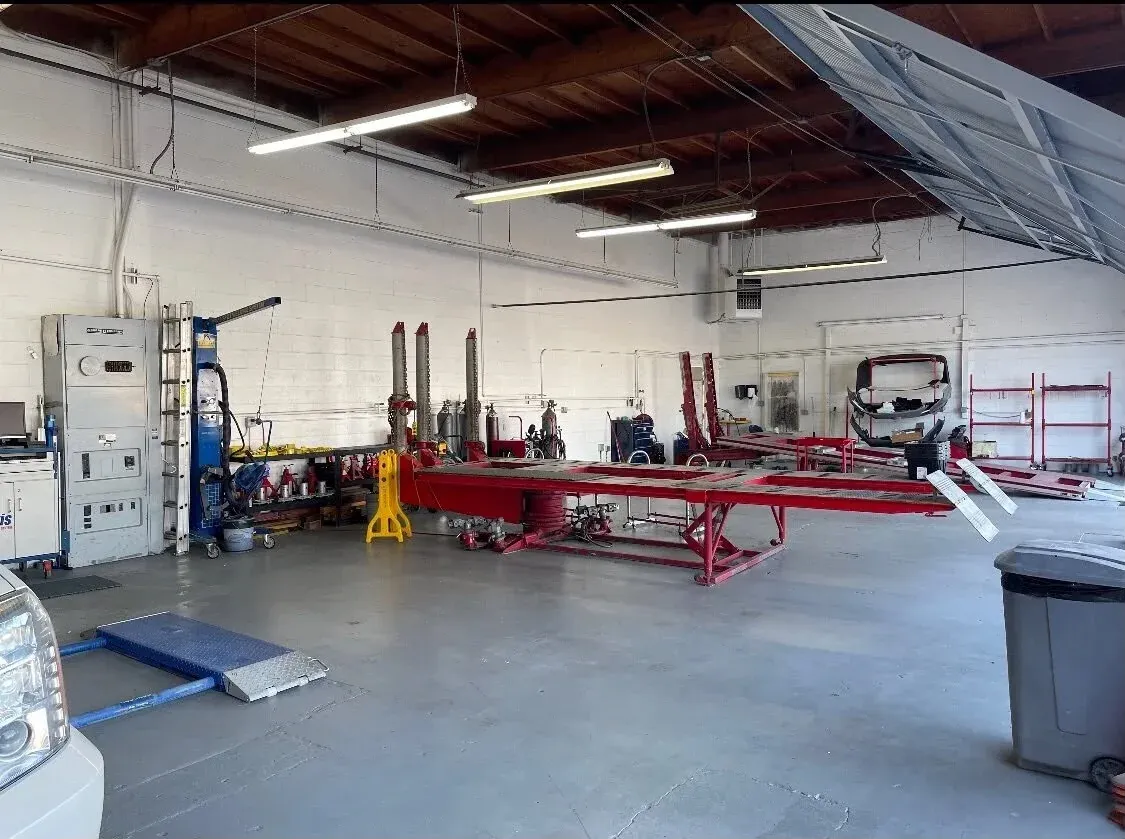
From the shoulder of the 400 to our floor
A car with structural damage rarely drives away from the scene, so the first decision is made on the shoulder. The tow operator will ask where the car is going, and the answer can be Crash Consultant at Sheppard and Don Mills rather than a yard in Vaughan, because Ontario leaves the destination with the owner. Say it before the car is loaded, ask for the itemized tow invoice, and if nobody was injured but the damage looks past the provincial reporting threshold, the reporting centre visit happens on the way or the next morning. Send us photos from the roadside if you can; the claim opens from them.
Structural work is where the total-loss question lives, and it is worth understanding early. There is no fixed percentage in Ontario. The insurance company weighs the repair cost, including anything found at teardown, against the vehicle’s actual cash value less what the salvage would bring, and decides. Our job is to give them an accurate repair number and to argue for the repair where it is sound, and to tell you plainly when a write-off is the better outcome for you. The rental through your coverage runs while that decision is made, and we coordinate the dates so you are not without a car in a household that needs three.
Measure, pull, measure again
Nothing is pulled on a hunch. The car is anchored on the frame machine and its control points are measured against the manufacturer’s specifications, which shows exactly where the structure moved and by how much. That printout is the plan and the evidence for the supplement. Hydraulic towers then pull the structure back in the reverse of the direction it was pushed, a little at a time, with the measurements repeated between pulls until every point is within tolerance. A rail that was kinked rather than bent, or a section the manufacturer says must not be heated or pulled, is cut out and a new section welded in at the factory seam.
Only then does the bodywork begin. Doors and fenders are hung and their gaps checked against the straightened structure, suspension mounting points are confirmed so the alignment will hold, and the panels are repaired or replaced and refinished with the colour blended into the neighbouring panels. Where the collision involved the front, the driver-assist cameras and radar may require recalibration once the car is back to its factory geometry, and a wheel alignment closes the job.
- Control points measured against factory specifications before any pull
- Measured again between pulls until every point is within tolerance
- Sections replaced at factory seams where the manufacturer forbids pulling
- Panel gaps, alignment and driver-assist calibration confirmed after
Pickups, three-row SUVs and the new unibodies
The Maple fleet is heavier than the city average, and that shapes the structural work. The pickups that go to the sites on Teston are body-on-frame, so a rear hit at the Major Mackenzie crossing can twist a ladder frame that looks fine from above and is checked from below. The three-row SUVs on the school runs and the sedans commuting down the 400 are unibodies, where the rails, the aprons and the floor are one welded structure and the energy from a crash travels further than the crumpled corner suggests.
The newest cars in the subdivisions add a third case. Their structures use high-strength and ultra-high-strength steels that are meant to be replaced, not straightened, in specific zones, and the repair procedure for each model says which. Following that procedure is what keeps the car crashing the way its designers intended the second time, and it is the reason a straightened unibody done properly is as safe as it was, while one that was pulled everywhere is not.
Questions people ask
How would I know the frame is bent after the collision?
The signs are indirect: a door that no longer closes cleanly, a hood or trunk that sits crooked, uneven gaps between panels, tires wearing on one edge, or a car that pulls to one side after the crash. Any of those after a hit on the 400 or at a Maple intersection means the structure should be measured before the bodywork starts.
If the car needs frame work, will the insurance company write it off?
Not automatically. The decision compares the repair cost with the vehicle’s actual cash value less salvage, and a measured, documented straightening is often well inside that. A newer SUV with a bent front rail is usually repaired; an older sedan with the same damage may not be. We give the insurance company an accurate number and tell you which way it is likely to go.
Is a car with a straightened frame safe to drive on the 400 again?
When the structure is measured back to factory specifications, sections the manufacturer says to replace are replaced, and the driver-assist systems are recalibrated, yes. The measurements before and after are yours to keep, and they are what a future buyer or an inspector will want to see.