January drifts, March potholes, November deer
Winter on the concession roads north of Stouffville Road is not the winter Toronto gets. There is nothing between the fields and the pavement, and the wind lays snow across Warden, McCowan and Ninth Line faster than the plough comes back, so the edge of the road disappears. A wheel that drops off that edge at speed loads the whole corner of the car sideways into the ditch. The car often drives out. The strut tower, the rail behind it and the subframe mount may not have come along straight. Spring follows with the potholes: by March the sideroads and the shoulders of Highway 48 have opened up, and a strike hard enough to bend a control arm can also nudge the rail it bolts to.
Autumn brings the deer, and a deer at seventy kilometres an hour on Bethesda or Bloomington is a structural event at the radiator support and the upper rails, not a bumper job. None of these look like a collision from the outside. All of them can move the structure a few millimetres, which is enough.
A few millimetres at the strut tower is the whole story
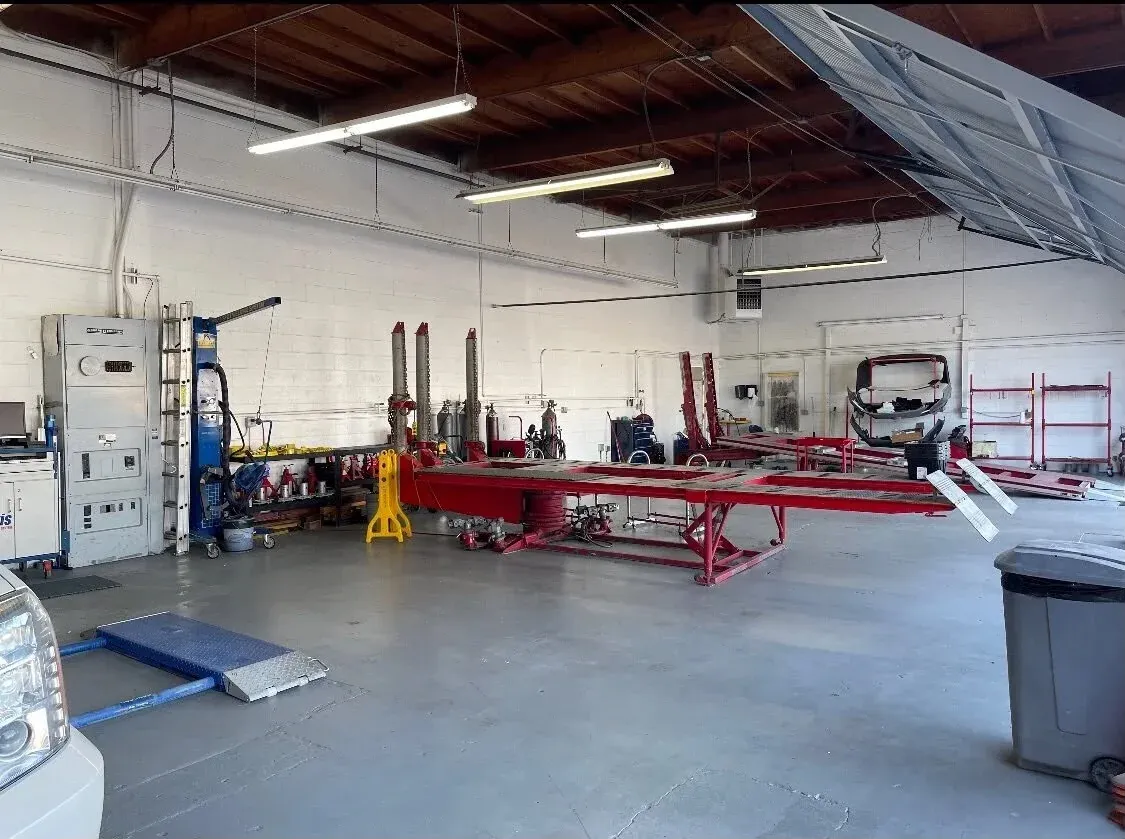
The unibody is the skeleton everything else trusts. Suspension geometry, the order the crumple zones collapse in, and the timing of the airbags all assume the reference points are where the factory put them, so a shift of a few millimetres is a safety matter. A suspect car here is measured first: each factory reference point is checked against the manufacturer’s specification and printed as a map of what moved and how far. The pull follows on the bench, in small documented increments, and the same points are measured again afterward so your file — and your insurance company — has the before and the after.
Body panels, blended refinish and any recalibration of cameras, radar or steering-angle sensors the procedure calls for come after the numbers are right, followed by a four-wheel alignment and a road test. Most cars announce the problem before it is measured: a door that latches only with a shove, a hood gap wider on one side, an alignment that drifts back out, a tire wearing on one edge.
- Reference points measured against the manufacturer’s data before anything is decided
- Pulled back in documented increments, then measured a second time
- Driver-assistance recalibration arranged wherever the procedure requires it
- An honest call, early, when the geometry says the car is not worth repairing
Getting a bent car out of a ditch north of town
A car with suspected structural damage should not drive the 404, and from the sideroads it often cannot. Ontario’s towing rules put the destination in your hands — the operator is provincially certified, the invoice itemized, the drop-off point yours. Name Crash Consultant at Sheppard and Don Mills, and we coordinate from our end whether the car is nose-down in a ditch on Bethesda, in your driveway in Ballantrae, or in the lot at the Collision Reporting Centre. The photo estimate is written before the truck arrives and the rental through your coverage is ready when you get here, so the tow and your own trip down happen the same day.
Sometimes the measurement says stop. Ontario has no statutory percentage; the insurance company sets the car’s actual cash value against the repair cost and the salvage return, and when that math points to a total loss you hear it from us before work starts, with the numbers and an explanation of what keeping the car would involve.
Questions people ask
I slid into the ditch on McCowan north of Stouffville Road and drove out. Does it need measuring?
Yes, if anything feels different — the steering wheel off-centre, a pull, a new noise over bumps, or a door or hood gap that changed. A ditch slide loads the corner of the car sideways, and the strut tower and rail can shift without a mark on the paint. Measuring against factory data is the only way to know; an alignment shop can only tell you the wheels are out.
Is a deer strike likely to be structural?
At sideroad speeds, often. The animal hits the radiator support and the upper rails the hood latches to, and those are structural on a modern car. Photos of the front end with the hood open tell us a lot. Deer damage is a comprehensive claim on your own policy with no fault against you, and the measurement report goes into that claim.
If the car is a write-off, what happens to it and to me?
The insurance company compares the actual cash value with the repair estimate and the salvage value; there is no fixed percentage in Ontario. If it is a total loss, you receive the cash value less your deductible, and you can usually negotiate to keep the car at its salvage value if you want it. We walk you through the offer and what a rebuilt brand would mean before you decide.