A left turn at Bayview and John, and what it does to the front rail
Take the structural hit Thornhill sends us most often. A car turning left from John onto Bayview, a southbound car coming through on the amber, and the impact lands on the front corner at an angle. The cover and the headlight take the first of it, but a corner hit does not stop at the corner: the load runs into the upper apron and down the front rail behind the wheel. The rail on that side shortens by a few millimetres and kicks inward, and the apron buckles where the strut tower meets it. None of it is visible with the fender on.
The clues arrive later and quietly: a hood that needs a second push to catch, a headlight that lights the ditch on Bayview instead of the lane, a tire that whispers against the liner on full lock into the driveway, a fender gap you can slip a coin into at the top and not at the bottom. The car drives down Leslie without complaint, which is how a corner hit gets written up as a bumper and a fender when it is a rail and an apron.
What is measured, what is pulled and what is sectioned on that corner
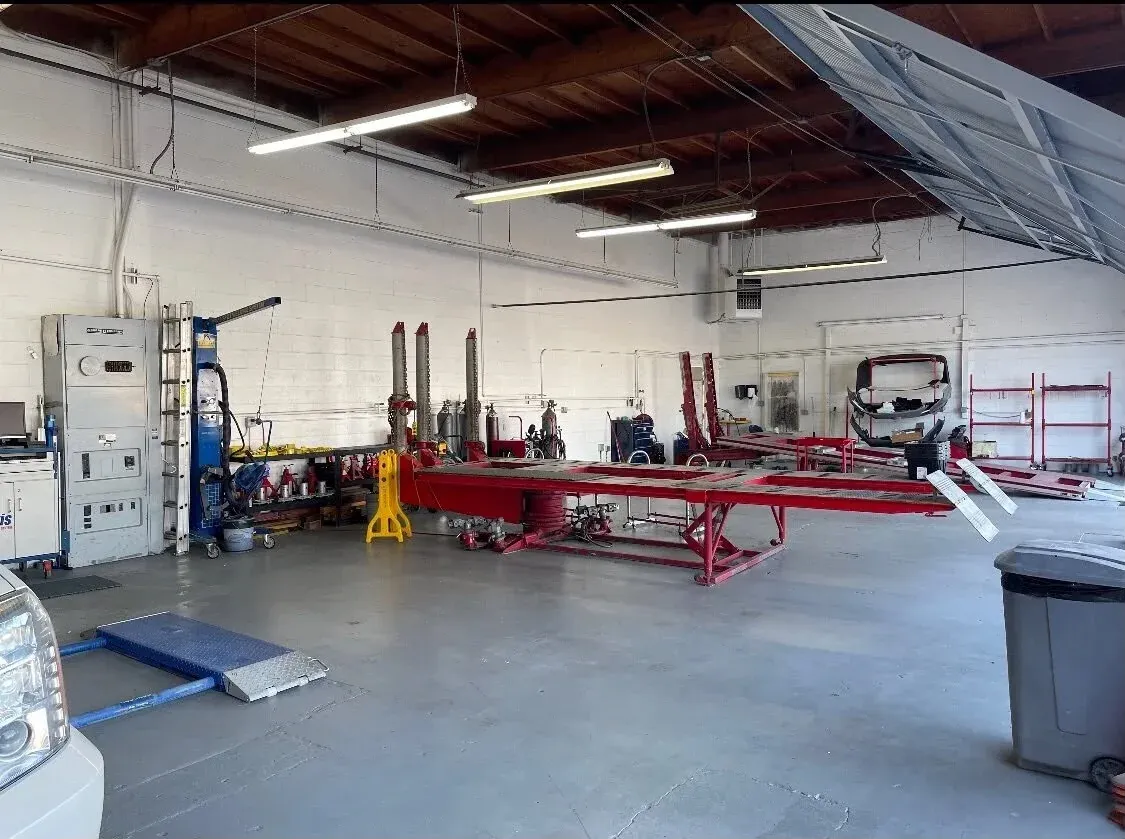
Nothing gets pulled until it has been measured. On the bench, the reference points on the rails, the strut towers and the door apertures are read against the manufacturer’s published dimensions, which turns a suspicion into a printout: this point is 6 millimetres rearward, that one 3 millimetres high. On the Bayview and John corner the reading usually shows the rail tip pushed back and inward and the apron lifted at the tower. The correction is made in held stages so the steel returns to shape instead of being dragged past it, and then every point is read a second time. Both printouts go to you and to your insurance company.
What gets pulled and what gets replaced follows the manufacturer’s repair information rather than preference. A rail that has moved without kinking is pulled back. A rail that has folded, or one made of the high-strength steel many newer cars use ahead of the tower, is sectioned at the cut line the manufacturer specifies and a new section welded in, since that steel cracks rather than straightens. Where crash structure is replaced we request OEM parts. Panels, refinishing and any sensor calibration wait until the second reading is right, because a straight fender on a bent rail solves nothing.
- Rails, towers and apertures read against published dimensions first
- Pull held in stages, then every point read a second time
- High-strength rails sectioned at the specified cut line
- Panels, paint and calibration only after the geometry passes
The tow from the Markham reporting centre, the lease company, and the write-off line
If the car cannot track straight or the wheel is touching anything, it goes on a flatbed. In Ontario the tow operator is provincially certified, hands you an itemized invoice, and takes the car where you say. Tell them Crash Consultant at Sheppard and Don Mills. We help arrange that tow from anywhere between Dufferin and Leslie, including the York Region Collision Reporting Centre compound, and the file opens with your insurance company the day the car lands. On a leased car the leasing company is the registered owner and is named on the policy, so it is told about the claim and may ask for the estimate and final measurements.
There is no statutory percentage in Ontario that turns a car into a write-off. The insurance company sets the repair estimate beside the car’s actual cash value and what it would fetch as salvage, and decides from there. A documented structural repair on a well-kept Thornhill car often comes out on the repair side of that line. When it does not, you hear it from our estimator early, so the total-loss offer arrives as something you already understand. A rental through your coverage covers the weeks in between.
Questions people ask
After a hit on the 404 at Steeles the steering wheel sits crooked. Is that structural?
It can be. When an alignment shop centres the wheel and it will not stay centred, a suspension mounting point has usually shifted, and that lives in the unibody. A reading on the bench against factory dimensions settles it; guessing from under the car does not.
The car is leased. Who signs off on a structural repair?
Your insurance company approves the repair and pays for it, the same as on a car you own. The leasing company is the registered owner and is named on your policy, so it is told about the claim, and if the numbers head toward a total loss the settlement is worked out with it rather than paid to you. For a repair, what protects you at return is the paperwork: keep the before-and-after measurement printouts and the invoice with the file, because the return inspector will ask about the work.
Can a car straightened after a 404 hit still be sold with a clean UVIP?
A repair does not brand a vehicle. The Used Vehicle Information Package shows registration history, liens and any brand — salvage, rebuilt, irreparable — and a brand only follows a total-loss declaration by an insurance company, not a repair the company paid for. What a private buyer may see is the claim on a vehicle-history report, and what answers it is the measurement printouts showing the structure back within the manufacturer’s tolerances. Keep them with the ownership.
How do I know the Bayview and John hit reached the rail before I approve a teardown?
You do not, from the driveway, and neither do we from photos. What the photos show is the direction and height of the hit; a corner hit that pushed the headlight back or lifted the hood on one side is the kind that reaches the apron. The teardown is part of the estimate rather than a separate decision — the cover, lamp and fender come off, the rail is measured, and the number your insurance company sees is written from what was found.