The hill down to Highland Creek
Every winter Kingston Road’s descent toward the Highland Creek bridge ices before the rest of the road does, and every winter a few cars from West Hill find that out at the bottom. The slide is slow, the curb is high, and the wheel hits it sideways, which sends the load straight into the lower control arm, the subframe mount and the rail behind it. The bumper may not even be scuffed. What you notice is that the steering wheel is off-centre on the way home, or that the front tire on one side is wearing in a week. Morningside through the valley by the campus produces the same hit, and so do the 401 ramps at Morningside and Port Union on a morning of freezing rain.
Those are frame jobs, or unibody jobs on nearly every car built in the last thirty years, and they cannot be diagnosed by eye. A car that pulls, a door that no longer shuts cleanly, a hood gap wider on one side than the other after a hit — those are the reasons to send photos and ask.
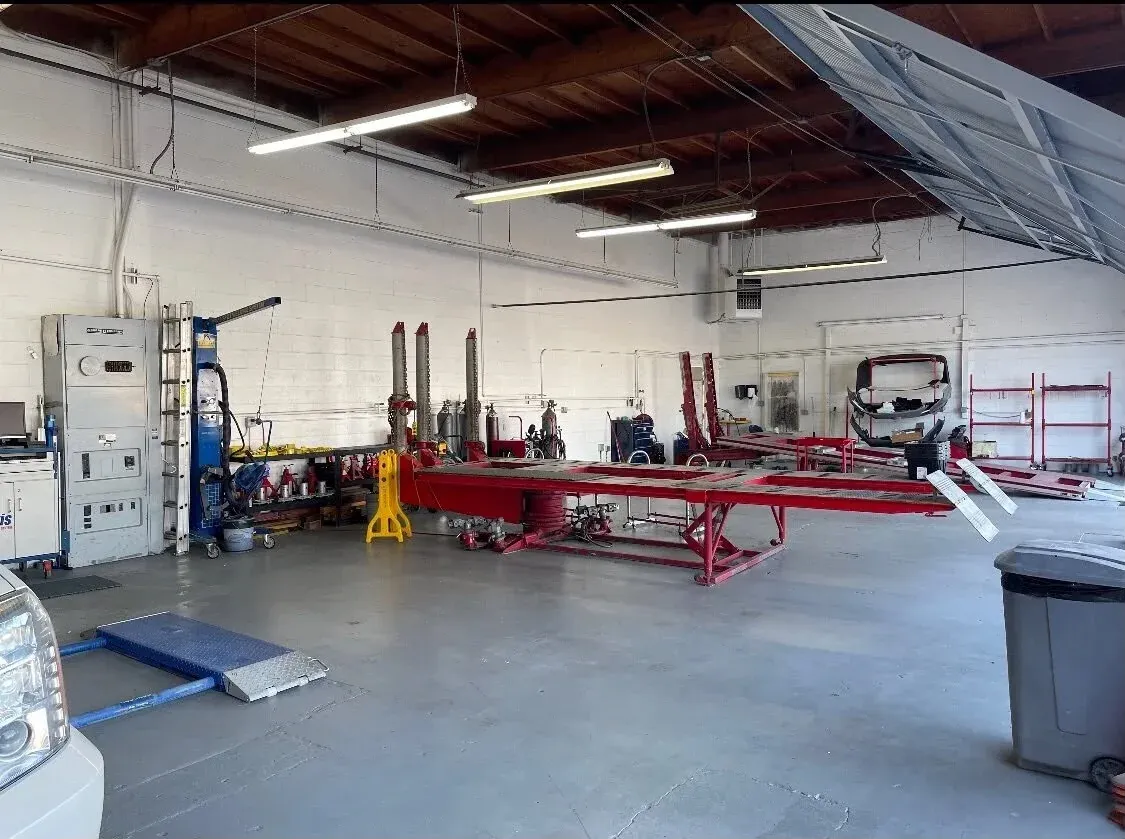
Measured, pulled, measured again
The car goes on the bench, and its structural points — the suspension mounts, the rail tips, the strut towers, the door hinges — are measured against the manufacturer’s specifications. That measurement is the diagnosis: it says which points have moved and by how much. Hydraulic pulls bring them back within tolerance, checked as we go, and the final measurement is recorded next to the first. Where a section of rail is kinked rather than bent, it is cut and replaced at the manufacturer’s sectioning points rather than pulled, because steel that has been folded does not go back to strength.
Suspension components that took the hit — control arms, knuckles, tie rods — are replaced rather than straightened, and the car goes for an alignment when the structure is right. Airbag sensors and driver-assistance cameras that sit on the structure may require recalibration afterwards. The finished car is one that tracks straight, wears its tires evenly and protects you the way it did before, and the before-and-after numbers are in your file to show that.
- Structural points measured against factory specifications
- Pulled to tolerance, or sectioned where steel is kinked
- Suspension parts replaced, then aligned
- Before-and-after measurements kept in your file
Repair cost against an older car’s value
This is where West Hill’s habit of keeping cars a long time matters. A structural repair on a twelve-year-old car can cost more than your insurance company believes the car is worth, and in Ontario there is no fixed percentage that makes it a total loss; the adjuster compares actual cash value against repair cost plus what the salvage would bring. We give you the honest repair number early, before pulling, so that if the car is going to be written off you know it before the rental clock has run. If you want to keep a written-off car and repair it, that is possible, though it comes back with a branded title and needs a structural inspection and a Safety Standards Certificate before it is licensed again.
If the slide was on ice with nobody else involved, it is a collision claim on your own policy with your deductible. If someone hit you, it is DCPD through your own insurance company, and the shop is your choice. A car that cannot be driven safely should be towed, to us, from wherever on Kingston Road it stopped.
Questions people ask
The car drives fine after hitting the curb. Could the frame still be bent?
Yes. A small shift at a suspension mount will not stop the car from driving; it shows up as a steering wheel that is not centred, uneven tire wear or a pull. If an alignment shop cannot bring the numbers into spec, the structure has moved. Photos of the wheel and the corner are a good first step.
Is a car with a straightened frame safe?
When it has been measured back to the manufacturer’s specifications and kinked sections have been replaced rather than pulled, yes. The measurements are the proof, and we keep them in your file. Where the damage is too far gone for that, we tell you and the insurance company so.
My insurance company says the car is a total loss but I want to keep it. Can I?
Usually, and the salvage value is deducted from your settlement. The car is rebranded, has to pass a structural inspection and a Safety Standards Certificate before it goes back on the road, and some insurance companies will only cover it for liability afterwards. It is a real option for a car you know well; we can talk it through.