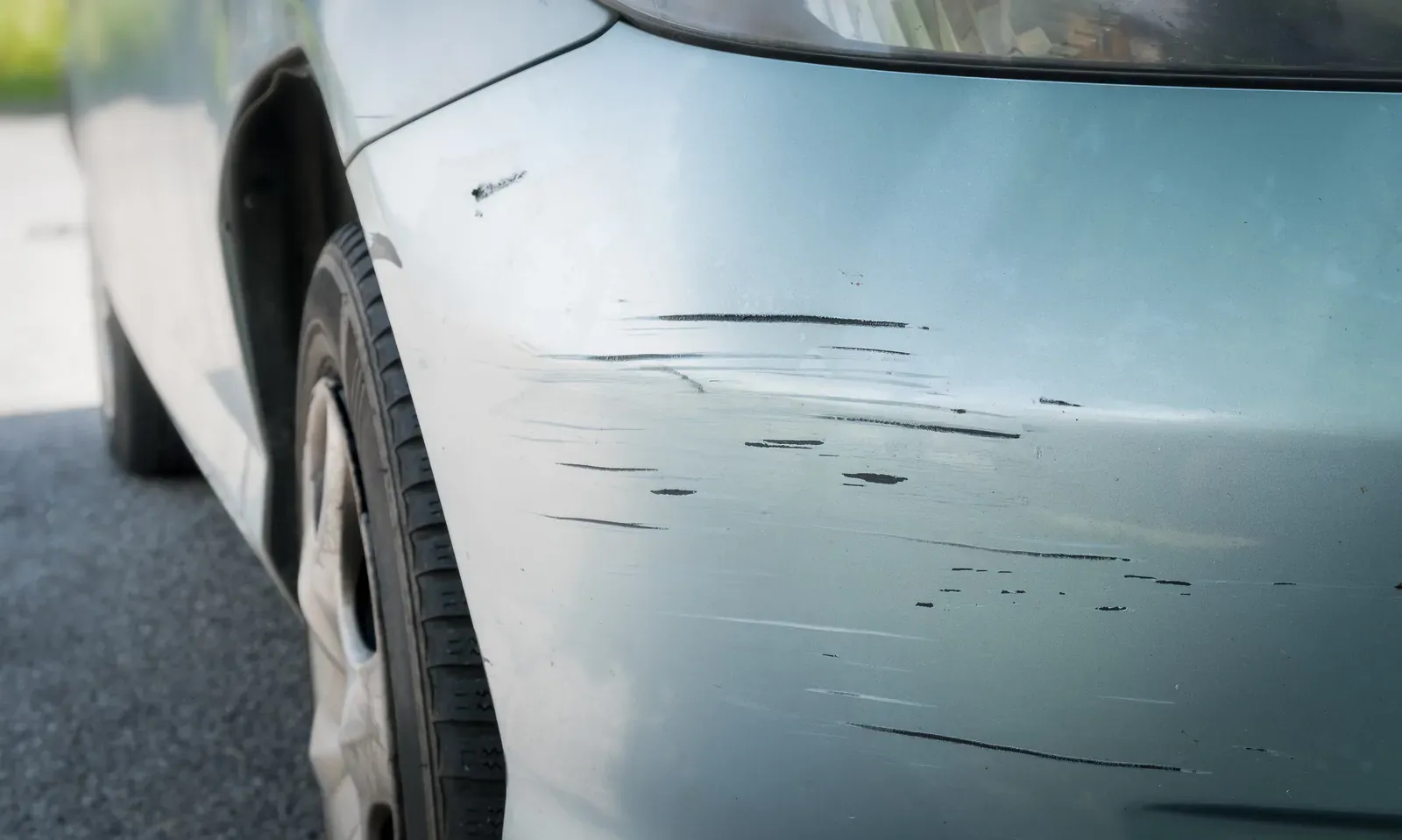
The mutual-driveway scrape
Ask anyone on Airdrie or Donegall and they will show you the same mark: a long horizontal scrape along a rear door and quarter, at roughly the height of a garage door frame or a fence rail. It comes from a driveway that was drawn for a 1930 sedan and now has to pass a modern SUV with the neighbour’s car parked on the other half. The line is shallow at the ends and deepest in the middle, often with a smear of paint from the frame or the cedar in it. Because the panel behind it is usually undented, people live with it for a year and then notice the primer showing through.
The second Leaside scratch is vertical: a door edge dragged down the side of the car next to it in a Bayview spot, or the corner of a shopping cart at the Laird lots. The third is the one nobody wants to talk about, a key line down the length of a street-parked car on a residential road. Each of these goes to a different depth, and depth is what decides the repair.
What shows at the bottom of the line — colour, primer or bare steel — sets the repair
Drag a fingernail slowly across the mark; if it glides without catching, the scratch is in the clear coat only, and it can be wet-sanded and machine-polished out without any paint — the finish that comes back is the factory one. If the nail catches but the scratch is still the colour of the car, it has gone through the clear into the base and the panel needs a localized refinish: the area is sanded, colour is applied only where it is missing, and clear is blended into the surrounding finish. If the scratch shows white, grey or bare metal, it is through to primer, and the panel needs to be filled, primed and painted.
On a door or quarter that means the whole panel gets colour and the panel beside it gets a blend, so there is no visible border. A key line that runs across three panels usually means three panels of paint, and the estimate will say so honestly. Steel that has been bare for a winter also has to be checked for rust before it is painted over, because sealing rust in is how a scratch becomes a bubble two years later. Everything refinished here carries a lifetime warranty on the paint.
Dropping off from Leaside without losing a day
Scratch work is one of the few repairs that can be timed around your day rather than the other way around. A polish-out is often done while you wait. A spot refinish is usually a day or two in the booth with cure time built in, and a full-panel repaint with a blend typically runs a few days. Send the photos first — one from a metre away, one close, one at an angle that shows the depth — and the written estimate comes back with the category and the window.
Getting here is Leslie or Don Mills north to Sheppard, about 11 to 17 minutes from Eglinton. Don Mills station is beside the shop, so the trip back is the subway and the Crosstown to Laird or Leslie, or the Don Mills bus straight down to Eglinton. If the scratch is part of an insurance claim — a keyed car under comprehensive, or a lot scrape with a note on the windshield — a rental through your coverage is arranged and the claim is opened from our counter.
Questions people ask
I found a key line down the whole driver’s side after a night parked near Trace Manes. Do the police need to see the car?
No. Vandalism is reported online or at a police station — not at a Collision Reporting Centre — and nobody needs to inspect the car first. Get the report number, photograph the line in daylight, and send us the pictures. Keying falls under the comprehensive part of an Ontario policy with that deductible; a line down one panel is sometimes close to the deductible and worth paying yourself, while a line across the whole side usually is not, and the estimate tells you which side of that you are on.
The scrape from the garage frame has been there since last winter. Does that change the repair?
Only if bare metal was exposed. A scratch that stayed in clear or colour is the same job a year later. One that went to metal and sat through a salted winter will have begun to rust under the edge of the paint, and that rust has to be removed before the panel is refinished — it adds a step, not a different repair. Send a close photo and we will tell you which it is.
Can you polish out the fine swirls and hedge marks without painting anything?
Usually, yes. Scuffs from a hedge on a narrow driveway, brush-wash swirls and light scrapes that have not broken through the clear coat come out with a wet sand and a machine polish, and the finish is the original paint rather than new. A mark that has cut into the colour coat is past what polish can reach and will need paint. We can do both on the same visit where a panel has a mix.