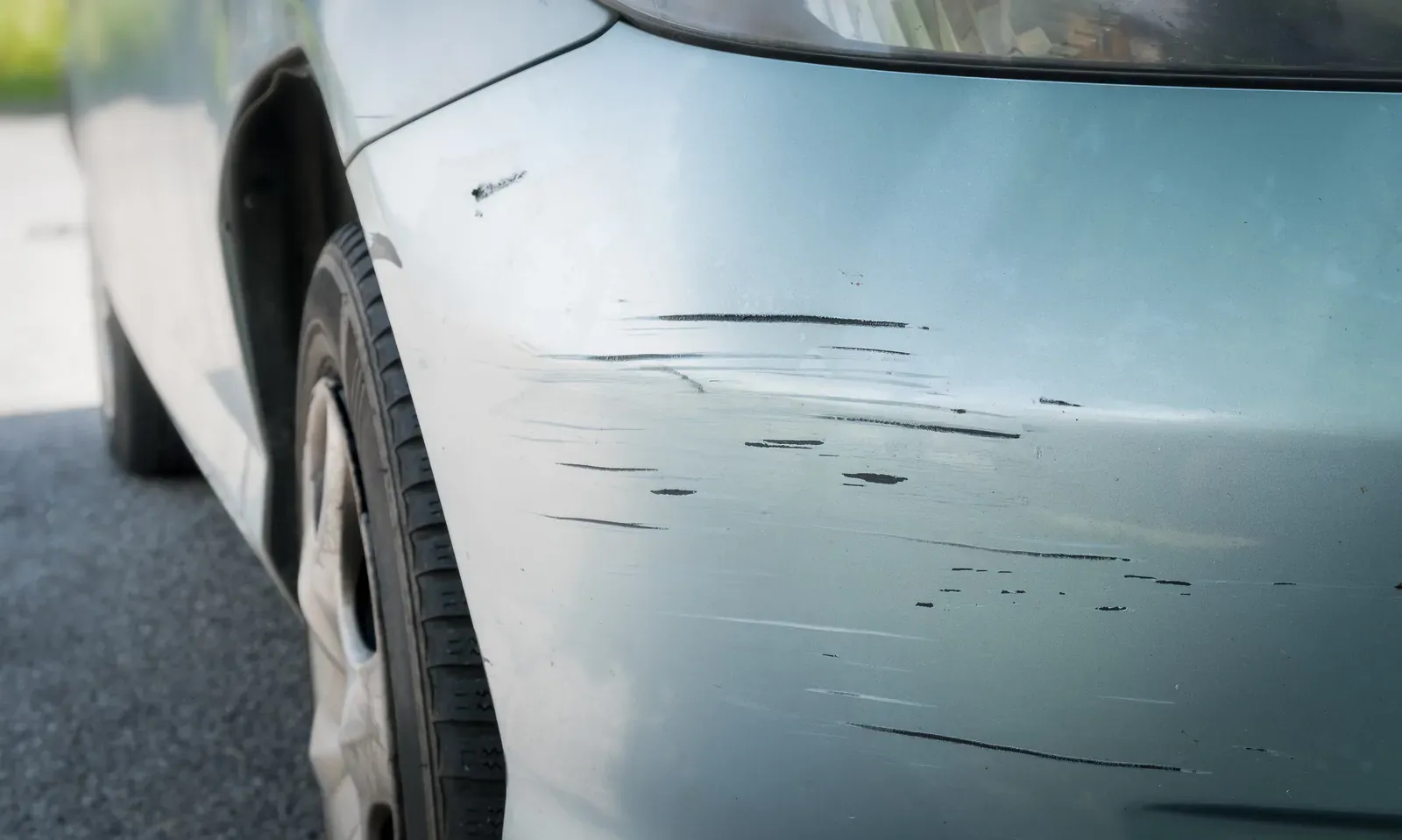
A year of scratches on a Hoggs Hollow driveway
January puts the cedar hedge along the driveway under a load of ice and turns it into a wire brush that rakes the passenger side every morning at the same height. February’s windrow freezes into a crust that scores a bumper cover when you nose over it. March sends grit down the York Mills hill in a spray that pits the rockers and the lower doors. Summer is the oaks and maples: sap that etches rings into the clear where it sat in the sun, and a branch that drags the length of the roof during a storm. Fall hides the gatepost under leaves and someone in the household drags a quarter panel along it. Add the one that has nothing to do with the seasons — a key run down the door in the garage under York Mills Centre — and you have the list.
Low sun and a wet rag tell you how deep it goes
Park the car nose out in the evening and look down the panel with the sun low across it. A scratch that only interrupts the shine — visible at some angles, gone at others — is sitting in the clear coat, and machine polishing takes it out, sometimes after a light wet-sand. Wipe a wet rag over it: a line that vanishes while the panel is wet will vanish permanently under polish, because the water is doing temporarily what fresh clear does for good. A line that stays stubbornly visible wet, or that catches the edge of a fingernail dragged gently across it, has cut through the clear into colour, and no polish puts colour back — that panel needs refinishing. White or grey in the bottom of the scratch is primer; bright metal is the full depth.
Depth changes the preparation too. On aluminum panels bare metal does not rust, but it oxidizes, and the oxide has to come off before anything sticks. On a plastic bumper cover the same scratch is repaired with a flexible filler before paint. Photos with the light raking across the mark at a low angle show all of this better than any description, which is why we ask you to take them that way.
Refinish, blend, and why the touch-up pen fails
A scratch through the colour is repaired by refinishing the panel: the scratch is sanded out and feathered, primed where it reached metal, then the panel gets base coat and clear in the booth and the colour is faded a few inches into the neighbouring panels so no edge is visible. On a door that usually means the fender and quarter are blended; on a hood, both fenders. The dealer’s touch-up pen puts a blob of the right code into a groove, and on a metallic or pearl the flake in the blob lies in a different direction from the flake around it, so the repair reads as a dark line from a metre away. It is fine for a stone chip and wrong for any line you can read from the sidewalk.
The key line from the York Mills Centre garage is the one scratch with a claim worth weighing: deliberate damage is vandalism, which sits under comprehensive coverage with its usually-lower deductible, and it is reported to police online or at a station — vandalism is never a Collision Reporting Centre matter. Polishing jobs are same-day. A refinished panel and blend is usually a few working days, and the paint carries a lifetime warranty. Leave the car in the morning and walk to Don Mills station; a rental is arranged if the scratch is part of a claim and your coverage allows it.
Questions people ask
The lower doors and rockers are covered in fine pitting from winter grit. Can that be polished?
No — pitting is hundreds of tiny chips through the clear, and polishing removes material around them without filling anything. The lasting fix is refinishing the lower panels and blending upward. Book it after pothole season ends, or the fresh paint drives straight back into the same sandblast.
Can sap damage from the trees over my driveway be polished out?
If it has only etched the clear, yes, and quickly. If it sat through a summer and burned through to the colour, the panel is refinished. Rinse sap off within a day or two when you can and it stays a polish job.
Will a polished scratch come back?
No. Polishing removes a thin layer of clear coat around the scratch so the surface is level again; there is nothing to come back. What can happen is that heavy polishing on a panel that has been polished many times before runs the clear thin, which is why we check the paint thickness first.