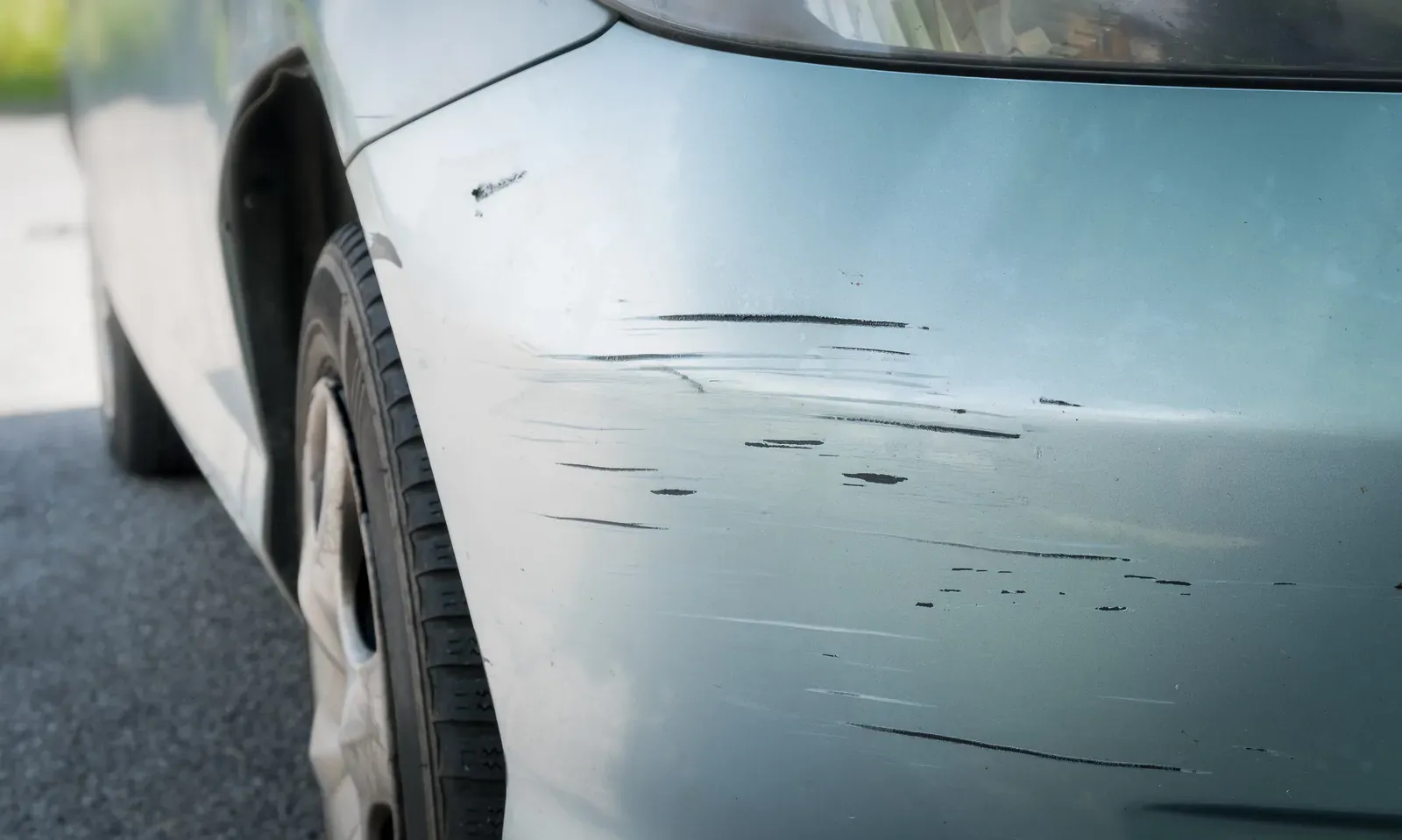
What shows at the bottom of the key line sets the fix
The fix for a keyed car is decided by depth, and the line itself tells you where it went. Draw the edge of a fingernail slowly across the mark: gliding straight over means the key stayed in the clear coat, and a polish may take it out. A light catch, with the scratch showing white or pale, means the key went through the clear into the colour, which means touch-up or a small spot repair. A hard catch with grey primer or bright metal at the bottom means the panel needs to be refinished. Most keyings are a mix: shallow at the start where the key was held loosely, deep in the middle where the person leaned on it.
Photograph it in daylight before anything else, both close and from a step back so the whole length shows. The scratch-depth guide goes further into reading a mark; the rest of this page deals with the keyed car in particular.
Polish, touch-up or repaint: what each involves
A clear-coat scratch is polished. The clear is levelled around the mark with a fine compound until the groove disappears into the surrounding surface, then refined back to full gloss. It is quick, it keeps the factory paint, and it is often done while you wait. It works only when there is enough clear coat to remove without going through, which is why the depth check comes first.
A scratch into the colour but not through it is filled. A short one is touched up by hand with matched paint built up in thin layers and levelled; a longer one is better handled as a spot repair, where the scratch is sanded, primed, painted and cleared in a small area and blended into the panel so the edge disappears. Touch-up on a long keying rarely satisfies anyone, because a hand-applied line of paint the length of a door is visible from across the street.
A scratch to primer or bare metal is a refinish. The panel is sanded, any metal is treated so it does not rust, primer goes on, then colour, then clear, all in the booth. Because a key usually runs across two or three panels, the repaint follows it: a door and both adjacent panels is a common outcome. The colour is blended into the neighbours so there is no visible edge, and the finish carries our lifetime warranty. The page on how much it costs to fix a scratch explains what drives the price without pretending to a number.
Is it covered? Usually, under comprehensive
Deliberate damage to a parked car is vandalism, and vandalism is a comprehensive claim, not a collision claim. That is good news in two ways. Comprehensive deductibles are often set lower than collision deductibles, and a comprehensive claim is not an at-fault claim, so it is treated differently on your record. You pay the comprehensive deductible and your insurance company pays the balance of the repair.
Whether to claim comes down to the same arithmetic as any small repair: the estimate against the deductible. A single shallow scratch that polishes out is nearly always below it. A key line across three panels that needs a booth almost never is. Get the written estimate first, then decide. If you do not carry comprehensive coverage, the repair is yours to pay, and we will still tell you which of the three fixes it actually needs rather than the most expensive one.
Reporting it, and whether a police report matters
A police report is not required to repair the car, but your insurance company may ask for one before paying a vandalism claim, and a report costs you nothing beyond a few minutes online. Toronto Police take damage-to-vehicle reports online when there is no suspect and nobody was hurt, and the reference number goes to the adjuster. If your car was keyed in a condo garage, a workplace lot or a shopping-centre lot, ask the property manager for camera footage the same day, before it is overwritten.
Report the claim to your insurance company promptly once you have decided to make one. Then send us the photos and the claim number and the rest runs the way any claim does: our estimator writes the estimate, sends it to the adjuster, and books the car in.
- Photograph the full length of the scratch in daylight.
- Ask for camera footage where the car was parked.
- File an online police report and keep the reference number.
- Get a written estimate, then decide whether to claim against the deductible.
Why a keyed door usually means painting more than the door
People are surprised when the estimate for a scratch on one door lists the fender and the rear door as well. A key rarely stops at a panel gap, and even when it does, a solid or metallic colour repainted on one panel and left original on the next shows a visible change under the right light. Blending carries the new colour a short way into the neighbouring panels and fades it out, so the eye reads one continuous surface. The answer on panel blending explains it properly. It costs more than painting a single panel, and it is the reason a finished keying repair looks like nothing happened.
Questions people ask
Can a keyed scratch be buffed out at home?
A shallow clear-coat scratch sometimes can, with a fine polish and patience. Anything that has cut through into the colour cannot, and aggressive compounding will thin the clear and make the mark more visible. If in doubt, let us look at it first.
Is the whole car repainted after a keying?
Almost never. The panels the key touched are refinished and the colour is blended into their neighbours. A car keyed the full length of one side may need that side repainted, but the roof and the other side are left alone.
Will a vandalism claim raise my rates?
A comprehensive claim is not an at-fault claim and is treated differently from a collision you caused. Many drivers see no change. Ask your insurance company how it handles comprehensive claims before deciding.
How long does a keyed-car repair take?
A polish is same-day. A spot repair is usually a day or two. A multi-panel refinish is typically several days for prep, paint and cure, and we arrange the rental through your coverage where it applies.