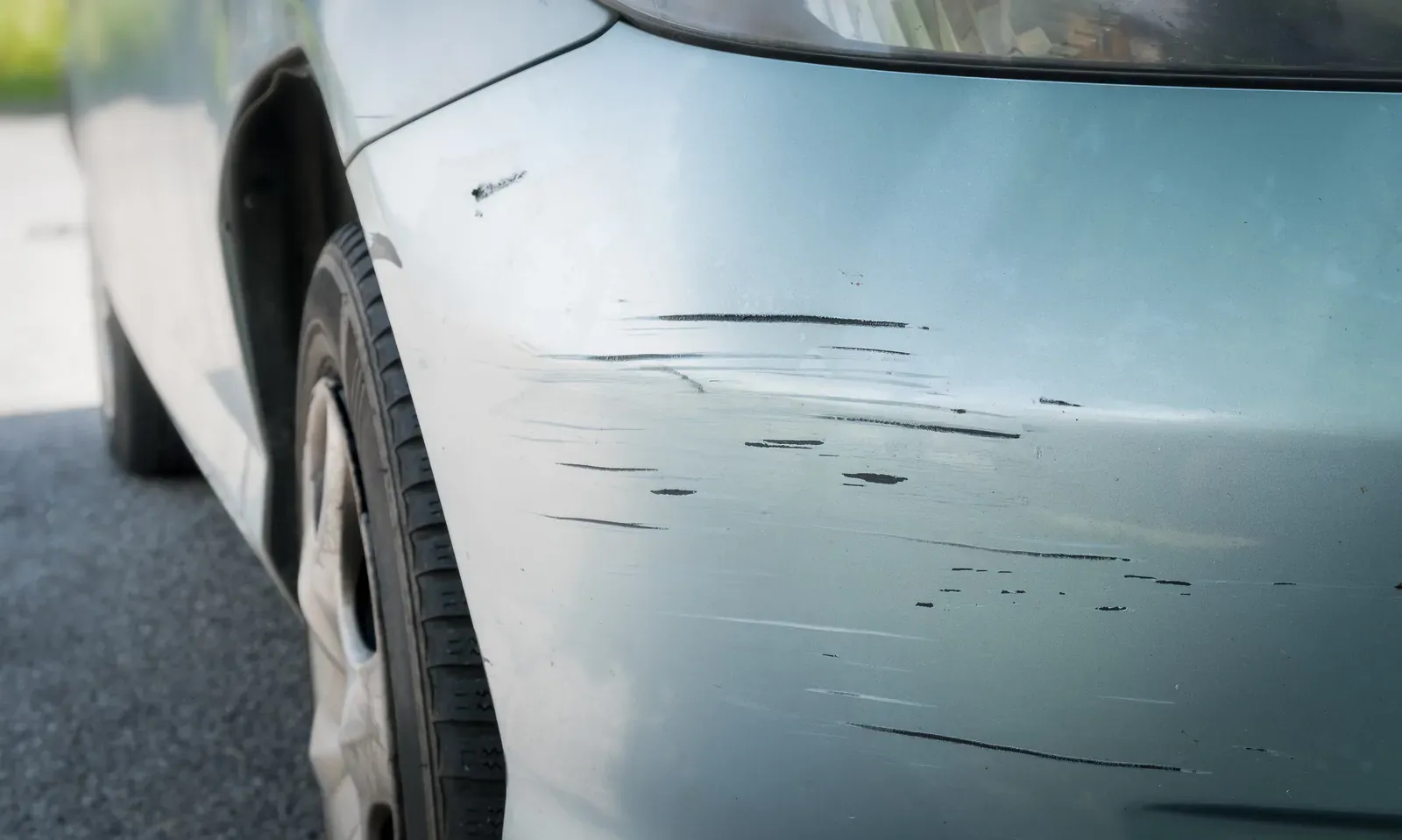
Narrow streets, tall hedges and concrete pillars
The Kingsway was laid out for smaller cars than the ones parked on it now. Streets like Grenview and Prince Edward run single-file between parked cars, the hedges grow to the sidewalk, and the winter windrows narrow everything further, so a long horizontal scratch down one side of a car is the neighbourhood’s signature. The condos are the other source. Under Islington City Centre and along Humber Bay Shores the garage ramps turn tightly, the pillars are square-edged, and the line on a rear door where it met one is short, deep and usually carries a smear of grey concrete. The Queensway and Sherway lots produce lower, longer scratches on bumper corners from carts and hitches, and every spring a few cars come in keyed from a street in Mimico or New Toronto. Each of those leaves a different depth of scratch, and depth is what the repair follows.
What a pale line, a deep groove and a grey smear each mean
Depth can be read in the driveway. A mark that stays in the clear coat shows as a pale line that fades from view at certain angles and darkens when wet; polishing cuts a few microns of clear and the panel never sees the booth. One that has gone through the colour — the kind a nail sinks into instead of skipping over — needs sanding, primer where metal shows, paint to the matched code and a blend into the neighbouring panel so no edge is left. Between the two sits the scratch that polishing improves but cannot erase, visible only up close and only in sun — a judgment call we make with you from the photos rather than for you.
Etobicoke adds a step the depth test cannot skip: concrete. A pillar scrape from the garages under Islington City Centre or Humber Bay Shores rarely arrives as a clean scratch — it is a grey smear dragged across the paint, and until that transfer is cleaned off with clay bar and solvent, nobody can say how deep the damage underneath goes. Half the time the smear takes most of the visible mark with it. Whenever the corner carried the car’s weight against the pillar, the cover is checked for a crack before any paint goes on, because refinishing over a cracked corner is money spent on a part that needs replacing.
- Stays in the clear coat: polished, no repaint
- Through the colour: sand, primer, paint, blend, clear
- Concrete transfer cleaned off before depth is judged
- Bumper corners that took weight checked for a hidden crack
A keyed car in Mimico: the online report comes before the wash
The keyed cars come off the side streets of Mimico and New Toronto, usually discovered in the morning, usually one line running tail light to headlight. The order of operations matters. Photograph the full length in daylight before washing anything. File a report with Toronto police online — vandalism to a parked car does not go through a Collision Reporting Centre — and keep the occurrence number, because your insurance company will ask for it. The claim runs through comprehensive coverage: no fault is assigned, and the deductible is often lower than collision. Then send us the same photos. Keys are priced by the panel, so a line across a door, a quarter and a bumper usually clears the deductible and is worth claiming, while a short scratch on one door may be cheaper to pay directly; the estimate shows both numbers and the choice stays yours. Deliberate scratches also tend to run deep and even — a key held at walking pace cuts through clear and colour in a way a hedge never does — so a keyed line almost never polishes, and the estimate does not pretend otherwise.
Questions people ask
The hedge on our street in the Kingsway scored the whole passenger side. Is that one panel of paint or four?
Often neither. Branches mark the clear coat but rarely cut through it, so what looks like four panels of damage frequently polishes off with no paint at all. The estimate is written per panel from the photos, and it is common for one door to need refinishing while the fender and quarter only need machine polish. Photograph the side in low morning light so the lines show, and we will split it panel by panel.
A windrow gouged my rocker panel in January. Can the repaint wait until spring?
The shallow marks can wait; a gouge to metal cannot. A rocker sits in the wettest, saltiest airflow on the car, and brine held in a metal-deep groove starts corrosion within weeks — by April the repaint has become a rust repair. If winter makes the trip awkward, send photos anyway: if it is metal-deep we book it within days, and if it is shallower we will tell you it can safely wait for a clear week.
I rubbed the bumper corner on a pillar in the Islington garage. Is it just a scuff?
Sometimes. A scuff on plastic can be sanded, textured and painted, but a corner that took weight often has a crack or a broken tab behind it, and paint on a cracked cover will not last. Send a photo from close and one from below, and our estimator will tell you whether it is a refinish or a new cover.