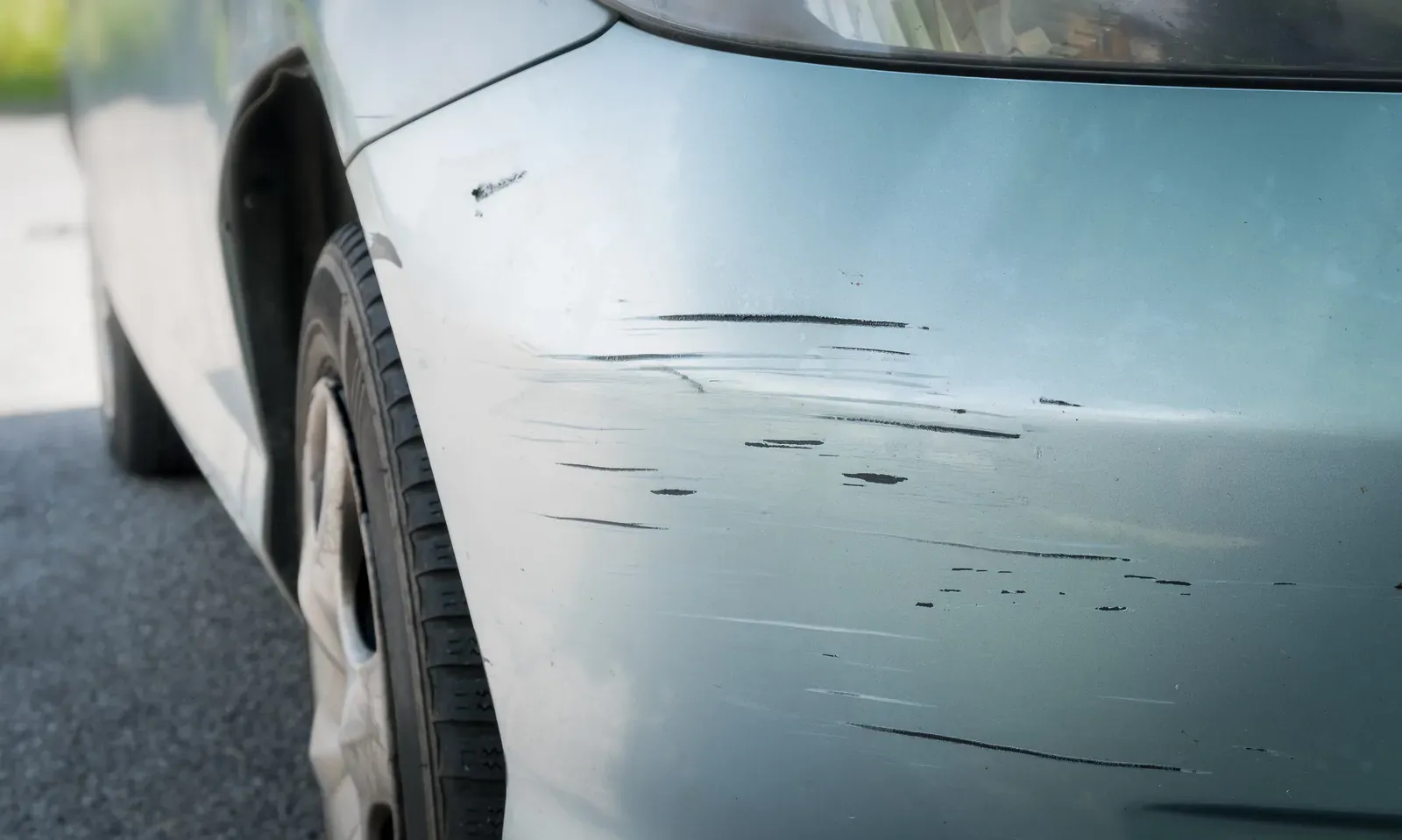
Why so many Thornhill scratches happen in reverse
Half of Thornhill’s scratches are made backing out. The lanes off Royal Orchard and the crescents that drop toward the German Mills ravine have driveways that slope to the garage, so a car swinging out is turning and climbing at once, and the rear quarter sweeps the exact spot where the stone gatepost or the cedar hedge stands. Those driveways were drawn for narrower cars than the crossovers on them now, and the margin on each side has gone. The result every spring is a strip of clear coat off a rear quarter or a mirror housing, usually before eight in the morning. The townhouse rows along Bayview and up Bathurst supply the other classic: the garage door frame that catches the same bumper corner on the same turn until somebody decides to fix it.
Then there is Yonge Street. Cars parked along the Thornhill Village strip sit beside live traffic and a sidewalk, and a line down a door from a passing bicycle bar-end shows up without a witness. Different causes, same first question: how deep did it go.
Reading depth by light and water instead of guessing
We read depth before we price it, and light tells you more than touch. Hold the panel so the sun or a garage light glances across the mark. A scratch that lives in the clear coat shows as a whitish haze that changes with the angle and almost disappears head-on; it usually polishes out, compound then refine, and the panel is done without paint. A scratch that has reached colour looks the same from every angle and shows a different shade at the bottom, because you are seeing the base coat or the primer. Wet the panel: a clear-coat mark vanishes under water for a second, a colour-deep one does not. A detailer’s polish that brought it straight back is an answer too.
Colour-deep scratches are sanded, primed where needed, refinished to your code and blended into the surrounding panel so no edge shows. Grey primer or bare metal means the panel needs sealing as well as colour, and it needs it soon. Plastic bumper corners and mirror caps get their own treatment, since flexible plastic takes paint differently. What we will not do is dab a touch-up pen into a metal-deep scratch and call it repaired; that seals nothing and shows from three metres. Every refinished scratch carries our lifetime warranty on paint.
- Clear-coat hazing polished out, no paint
- Colour-deep marks refinished and blended into the panel
- Bare metal primed and sealed before the first salt
- A daylight photo taken at an angle is all the estimate needs
Steeles and Bayview get salted first, and a rear-quarter scrape sits where the arch throws slush
A scratch that reaches metal is a door left open for road salt, and the timing of the salt matters. The regional roads that carry Thornhill south — Steeles, Yonge, Bayview, Bathurst and Leslie — are treated before the crescents behind them, so a car that commutes on any of them is driving through brine while the side streets are still white. The gatepost scrape has the worst seat in the house. It sits on the rear quarter just behind the wheel arch, which is exactly where the tire throws slush every kilometre, so a line that reached metal in October is packed with salt by the first storm and bubbling by March. A scratch repaired in the fall costs what a scratch costs. The same scratch in spring is a rust repair, and those are priced by the panel.
For coverage, a hedge scrape or a gatepost strip is normally a cash repair below any deductible. A keyed door on Yonge is vandalism under comprehensive with your normal deductible and no fault assigned, and it is worth a police report made online or at a station — a Collision Reporting Centre is for collisions. Either way the drive down Leslie happens once, when the panel is booked.
Questions people ask
I caught the gatepost backing out on Royal Orchard. Does the whole side need repainting?
Almost never. A strip that stayed in the clear is polished; one that reached colour is refinished on the quarter and blended into the door beside it. Two panels at most, and the estimate lists exactly which.
The cedar hedge scrubbed the paint off my mirror cap. Is the cap refinished or replaced?
It depends on the cap. A painted cap with the scratch in the paint is sanded and refinished like any panel. A textured black cap, or one cracked at the clip, is replaced, since texture cannot be sprayed back. Where the mirror carries a camera for the surround view, moving or replacing the housing may require that camera to be recalibrated, and the estimate says so if your car needs it.
The car is leased and goes back in the spring. Do the gatepost scrapes on the quarter need fixing before return?
Usually yes, if they reached colour. Lease inspections work from a wear guide, and a scrape through the clear into the base coat almost always sits outside it and becomes a line on the return invoice. A refinished and blended quarter takes the line away, and the estimate lets you compare the two numbers before you decide. Hazing that stayed in the clear is often polished for far less.
Does a scrape on the plastic rocker moulding rust like a scraped steel rocker would?
No. The moulding is plastic and does not corrode, so a scuff on it is cosmetic and can wait. What matters is whether the strike pushed the moulding into the steel rocker behind it or cut through where the two meet; if it did, salt gets to the steel and the same clock starts. We check behind the moulding when the car is here, which is the reason to send a photo of the low corner as well as the door.