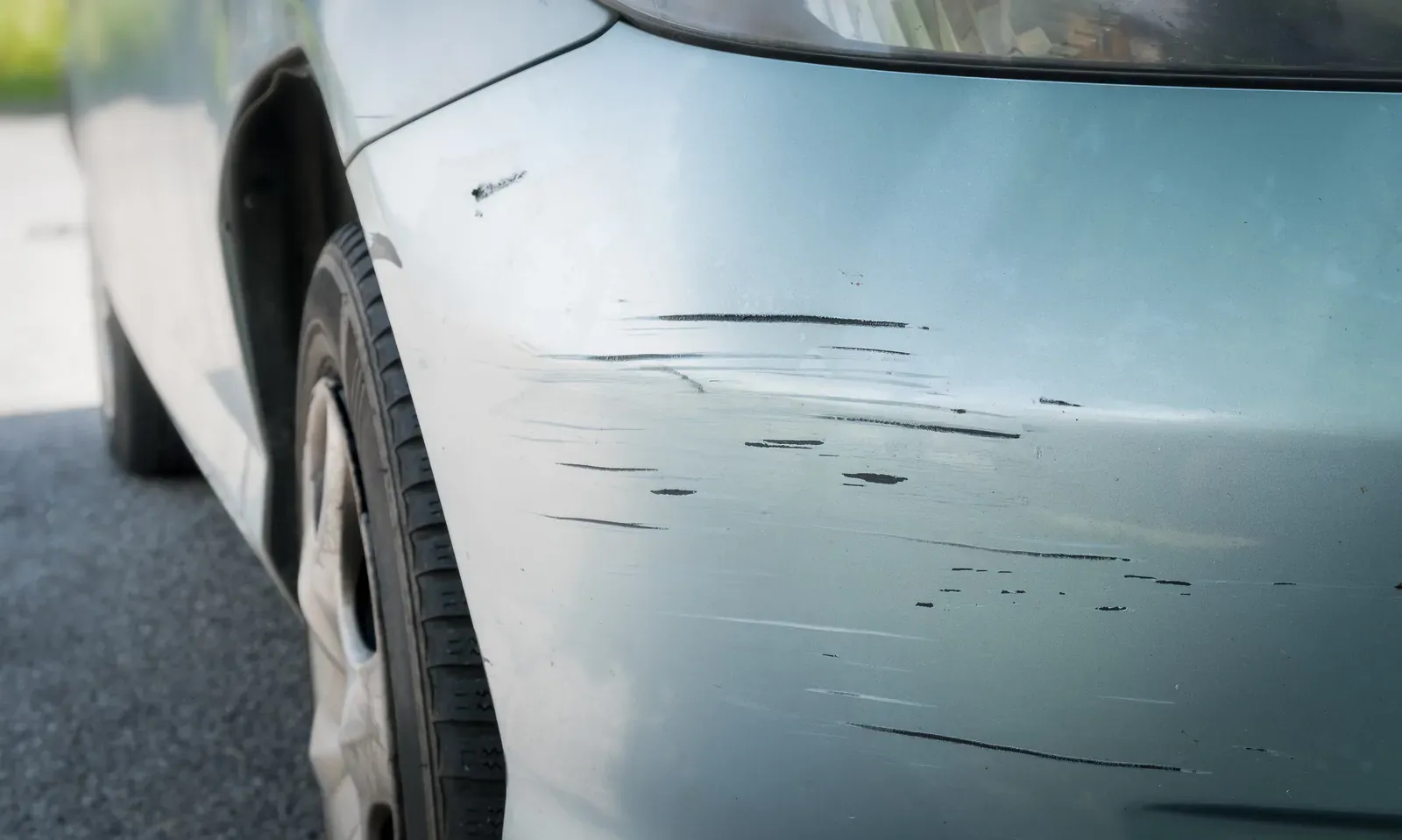
Garage frames, shared walls and hedge lines
The geometry of the newer neighbourhoods does most of the work. The townhouse rows off Leslie and the detached streets north of Elgin Mills have garages a hand’s width wider than the car on each side, and the trim of a garage door frame or the corner of a shared wall will take a stripe off a rear quarter at walking speed. Hedges along the narrow driveways in the older part of town do a gentler version, a set of fine parallel lines down the side that show only in low sun.
The rest come from being parked. Cars left all day in the commuter lots along Yonge and at the GO stations get the shopping-cart scuff and, now and then, the key. The Hillcrest and Highway 7 plaza lots produce the bumper-corner scrape from the car pulling out beside you. And on the Oak Ridges side, brush along the shoulders of the sideroads and gravel thrown up from a driveway apron scratch the lower doors and rockers.
- Garage-frame and shared-wall stripes on rear quarters and doors
- Hedge lines along the narrow driveways of the older core
- Key marks and cart scuffs in the Yonge Street commuter lots
- Brush and gravel scratches on the Oak Ridges sideroads
Reading the depth from what water and low sun do
Depth decides the repair, and it can be read in a driveway. Wash it and look in low sun. A scratch that only shows when the light hits it from one side, and vanishes while the panel is wet, is in the clear coat, and a machine polish removes it rather than covering it. A mark that stays the same colour wet or dry — white on a dark car, grey on a light one — has gone through the clear into the colour or the primer, and polishing only makes it shinier. A groove that holds a thread of orange after a week of rain is at the steel and needs sealing before the 404 brine gets into it.
That reading sets the price, which is why we ask for a close photo taken across the mark in daylight. A clear-coat scuff is a polish and a short wait. A key line down a door is a refinish of that door with the colour blended into the fender or the quarter, and on a pearl or a tri-coat the blend is what makes it invisible. If a polish has already been tried and the mark is still there, it is below the clear.
- Clear-coat marks that vanish when wet are machine-polished, no paint involved
- Colour-deep lines refinished and blended into the next panel
- Anything at the steel primed and sealed before November
- A polish that did not work means stop polishing
A key, a shared wall, or your own garage frame: who pays
Who did it decides the coverage. A key line in the GO lot is vandalism, a comprehensive claim with your normal deductible and no fault assigned; it is reported to police online or at a station, not at a Collision Reporting Centre. A stripe you put on the car yourself against the garage frame is either a collision claim with the deductible or an out-of-pocket job, and for one panel the second is often cheaper. A scrape from the car beside you at Hillcrest, with no note, is a collision claim on your own policy with a police report; photograph the stall and ask the mall about cameras first.
Polishing is a while-you-wait job when the schedule allows. A refinish means two to four working days, and the estimate is written from your photos so the drive down the 404 is the drop-off, not a look. A scratch through to metal should not sit through a salt season: the rust that starts in the groove costs more than the scratch ever did, and on a lease it turns a cosmetic note into a chargeback.
Questions people ask
I scraped the garage door frame backing out. Is that a polish or a repaint?
Almost always a repaint of the panel involved. Garage-frame contact drags paint off in a stripe and usually goes through to primer, and a rear quarter is a panel that has to be blended into the door and the bumper. Send a close photo and we will confirm before you come down.
In our townhouse row the garages share a wall and I scraped the corner of it. Is that the condo’s problem or mine?
Yours, for the car. The wall belongs to the corporation or the neighbour, and a driver who scrapes a fixed wall is at fault for the damage to the vehicle, so the choices are your own collision coverage with the deductible or paying directly. The wall is a separate question: a scuffed block is usually nothing, but if you knocked brick loose, tell the corporation before they find it. For one rear quarter the out-of-pocket route is often cheaper once the deductible is counted, and the estimate shows both figures.
The rocker on my car is covered in fine scratches from brush on the sideroad to Lake Wilcox. Polish now or wait for spring?
Deal with it before the salt. Brush marks are usually clear-coat deep and polish out, but a rocker is the lowest, wettest panel on the car and the one the 404 brine hits first, so any line that got through to primer will be a rust streak by March. Send a photo of the rocker wet and one dry: if the marks disappear wet, it is a polish and a coat of sealant before November; if any stay put, that section is refinished now rather than after a winter has worked on it.
My detailer on Yonge polished the scratch and it is still there. Is it worth trying again?
No. If a proper machine polish did not remove it, the scratch is below the clear coat, and a second pass only thins the clear around it until that spot fails early. The next step is a refinish of the panel, blended into its neighbour; on a short line into colour, a careful touch-in can be enough. Send a photo in daylight and the estimate says which.