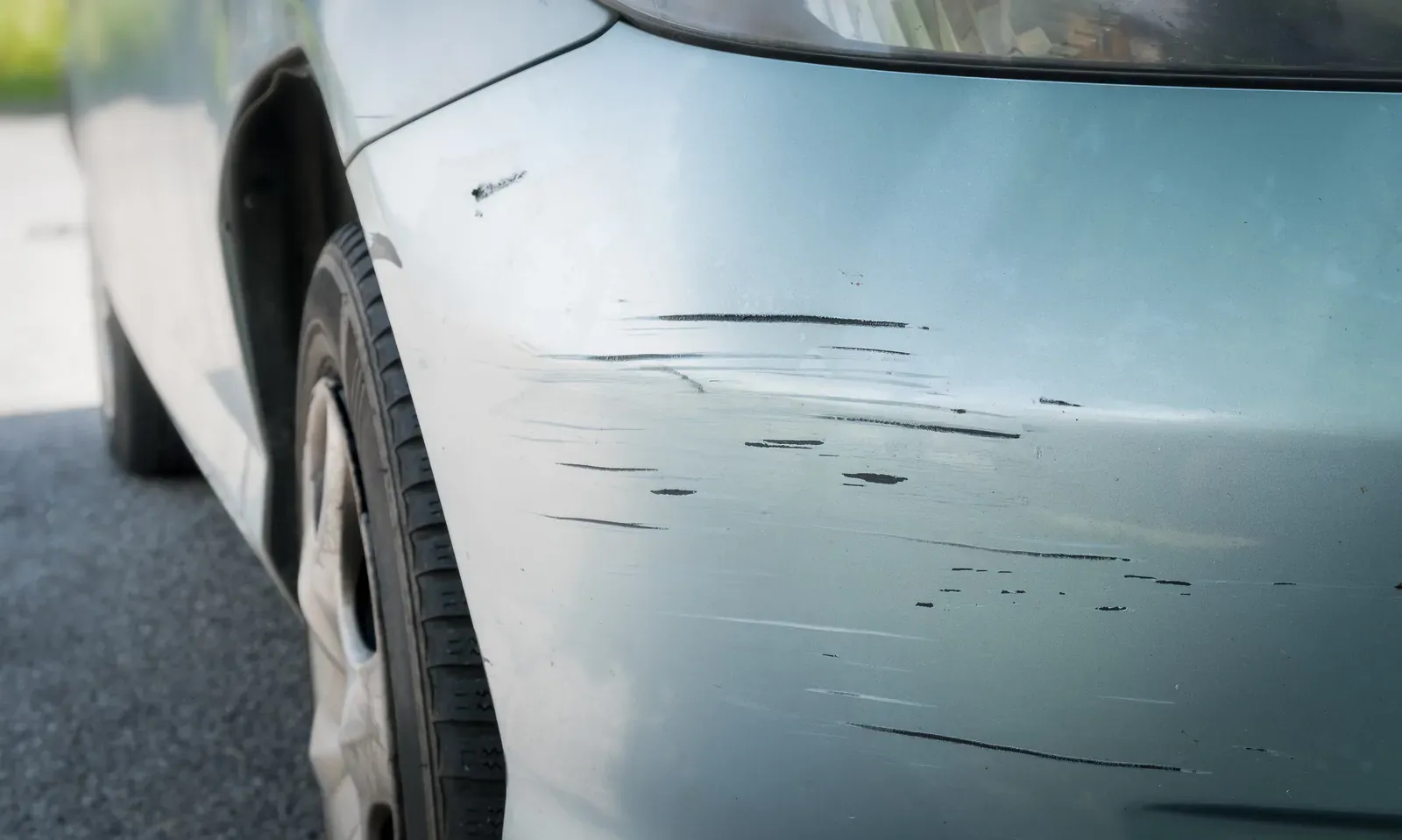
The ramp wall, the column and the smear of yellow
Every condo garage between Eglinton and Davisville has one turn on the ramp that is tighter than the others, and a column near the elevator that has been repainted yellow more than once. The scratch they leave is distinctive: a wide band of dulled paint with a grey crust of concrete pressed into it, sometimes a smear of pillar paint on top, running the length of a door or across the corner of a bumper cover. It looks worse than it usually is. Concrete is abrasive but soft, and the first pass often takes only the clear coat. Where the car was dragged along the wall with real weight behind it — the bumper corner on the way down the spiral at night — the scrape goes through the colour and into the plastic, and that is a different repair.
The rest of Midtown’s scratches are the ordinary city kind: a key dragged along a car parked overnight on Chaplin Crescent, a wheel and bumper lip ground on a Yonge curb after a rideshare pulled out ahead, a laneway garage door frame in Forest Hill catching the same fender every winter.
Timed for the commute
Scratch work fits the Midtown day better than any other repair. A clear-coat scuff can often be sanded and polished while you have a coffee at Fairview Mall. A scratch that needs colour on one panel is generally a one-day job — dropped on the way to work, ready by the time you come back up Sheppard. Only a scrape across two or three panels, or one that has cut into the bumper plastic, needs the car overnight, and the estimate will say so before you book.
Photograph the whole side of the car, the scratch up close, and the paint-code label inside the driver’s door; our estimator reads all three and puts a number on the work before you book anything. For the concrete scrapes, one more picture after you wipe the grey dust away with a wet cloth tells us most of what we need about depth. If the scratch came from another driver or from a hit-and-run in the garage, the same photos go to your insurance company when the claim is opened.
Clear coat, colour or primer: how deep decides the job
Depth is the whole diagnosis. A mark a fingernail passes over smoothly is in the clear coat, and the fix is machine polishing after a light wet sand — no new paint, no blending, the factory finish still intact. If the nail hangs up in the groove but you can still see the car’s colour at the bottom of the scratch, the colour coat has been cut and the panel needs a spot refinish: the scratch is levelled, primed, painted and cleared, with the colour blended outward so there is no edge. If the bottom of the scratch is white, grey or bare metal, primer is gone; on a steel panel that is a rust starter and needs proper prep, and on a plastic bumper the gouge is filled and textured before paint.
The rule is to do only what the depth demands. A garage scuff polished out on a Tuesday is a better result than the same scuff repainted, and when a refinish is genuinely needed it carries a lifetime warranty.
Questions people ask
The scratch on my bumper has yellow paint in it from a garage column. Does that change anything?
Not much. Transferred paint sits on top of your finish and usually comes off with a solvent wipe or light polishing; what matters is what is underneath it. Wipe the area with a damp cloth, photograph it in daylight and send the pictures — the depth of the scratch under the transfer decides whether it is a polish or a refinish.
My detailer polished the garage scrape twice and a shadow still shows. Is more polishing the answer?
No — stop polishing. Each pass removes clear coat, and a mark that survives two proper machine polishes has reached the colour layer, so a third pass only thins the clear around it and risks burning through at the edge. The fix at that point is a spot refinish with a blend into the panel. Send a photo taken after the panel is washed, and the estimate will say how much paint the scratch genuinely needs.
Can a clear-coat scratch be left alone?
A shallow one, yes, although it will collect dirt and look worse over time. Anything that has reached colour or primer should not wait — water and winter brine get under the edge of the paint, and by spring a scratch has become a bubble. On a car parked in a damp garage that happens faster than on a driveway.