The calendar of a King City scratch
Scratches here follow the seasons more than the parking lots. April to June is stone: the thaw lifts gravel on the 15th and 16th Sideroads and the shoulders of Jane and Weston Road, and every car that runs them daily comes out with chips and short gouges on the lower doors, rockers and the leading edge of the rear arches. Long gravel drives do the same in slow motion. July and August are brush: the hedgerows and overgrown cedars along a narrow drive lean in, and a wide SUV comes out wearing parallel lines from the front door back to the quarter. Fall is trailer season — a horse trailer, or the boat coming out of the water, drags a fender line down the side of the truck. And winter is ice: the frozen windrow at a driveway mouth and the crust on a gravel drive gouge the lower bumper and rocker like a rasp.
The village adds its own. Keys at the GO lot on a dark morning, cart corners at the King Road plazas, and bicycle handlebars along a car parked at the Seneca campus.
Bill or claim: how the cause decides
The same line down a door can be a bill or a claim depending on how it got there, and the difference is worth knowing before you decide anything. A key at the GO station is vandalism: comprehensive coverage with your normal deductible, no fault attached, worth a police report if it is long. A scrape from another car in the plaza lot is a collision claim when the other driver is identified, and a hit-and-run claim on your own collision coverage when they drove off. Gravel, brush, trailers and the cedars along your own drive are wear, and no policy covers them. Our estimator prices every scratch job both ways so the decision gets made at your kitchen table, and when the bill is yours we will say plainly when a shop closer to King Road serves you as well as the drive does.
Three layers, three repairs
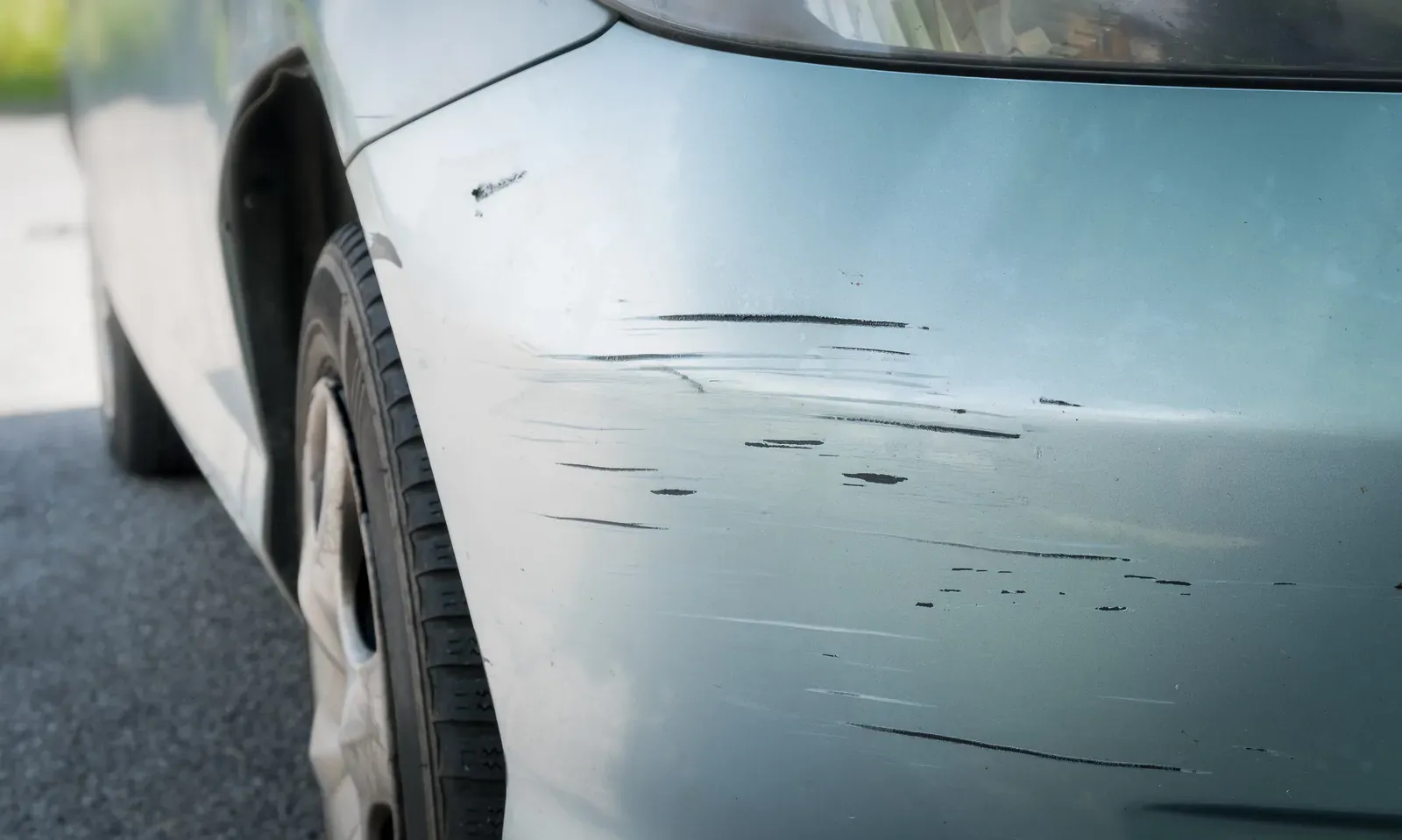
A car’s paint is a stack: clear on top, colour under it, primer under that, then steel, aluminum or plastic. Where the scratch stopped in that stack tells us the job. Marks that stay in the clear — the hedge lines, the light cart scuffs — come out with machine polishing, no paint, and often while you have a coffee. Marks that reach the colour show as a groove the nail catches in, still the same shade as the panel; that panel gets refinished, with the new paint blended out at the edges so the repair has no boundary. Marks that show grey or bright metal have gone through everything, and on a rocker or a door bottom they are the start of rust once the brine reaches them; the panel is repaired, primed, sealed and refinished, and the job should happen before the salt trucks roll rather than after.
Photograph the scratch in daylight with the sun behind you, at a shallow angle so the groove shows, and our estimator can usually place it in the stack without the car in the bay. Colour is mixed to the code, corrected against the panel and test-sprayed first, and refinish work carries a lifetime warranty. Polishing can be a same-day drop for a commuter passing Sheppard; a refinish is a booked drop-off with the pickup set when the cure is complete.
- Still in the clear — polished, nothing sprayed
- Reached the colour — the panel refinished, edges blended
- Bare primer or metal — sealed and refinished ahead of the brine
Questions people ask
The gravel on the 16th Sideroad has chipped my rockers and lower doors. Polish or paint?
Paint. Stone chips punch through the clear and the colour in a single hit, so there is nothing to polish; the lower door or rocker is refinished as a panel and blended upward. If any chips have gone to metal they are treated first. Paint protection film on the refinished area is worth discussing if the car will keep running gravel.
My boat trailer dragged a line down the side of the truck at the ramp. Claim or bill?
A bill, in nearly every case. Damage from your own trailer is a single-vehicle collision on paper, but it usually prices near a typical deductible and the claim would go on your record, so most owners pay out of pocket. Send a photo; if the line is in the clear it polishes, and if it caught the colour that panel is refinished and blended.
Do I need to fix brush scratches before winter, or can they wait?
If they are only in the clear coat they can wait; nothing under them is exposed. If any have gone through to primer, do not let them sit through the salt season — brine gets under the edge and the scratch becomes a rust line by March. Send a photo and our estimator will tell you which you have.