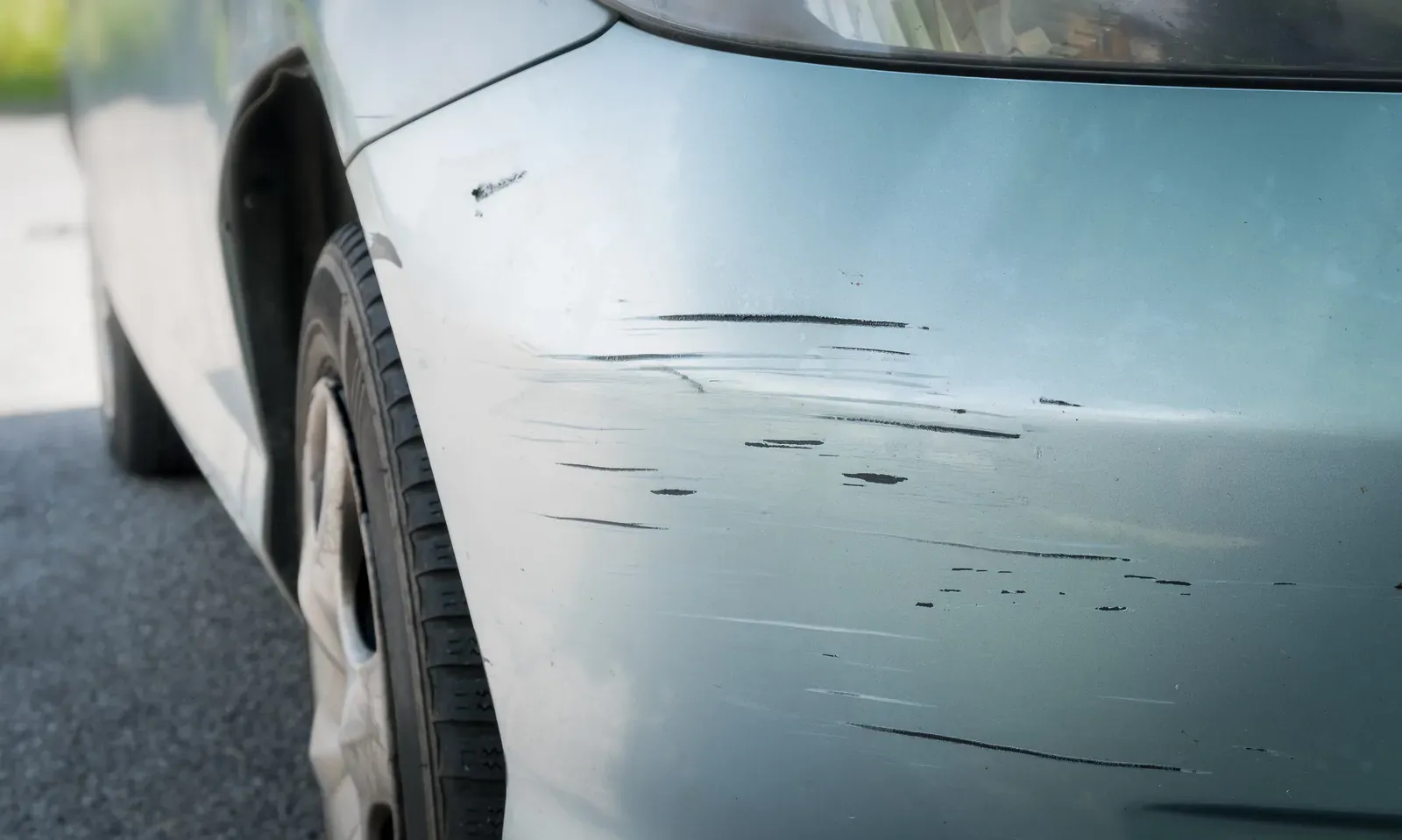
Where Maple scratches come from
Half of them come from home. The cedar hedge along the interlock driveway grows into the path of the passenger side. The garage-door frame takes a mirror and a strip of door on a rushed morning. A wheelbarrow, a bicycle pedal or a hockey stick on its way into the garage leaves a line across the quarter panel. On the older village streets near the GO station, where the cars park on the road, the scratch is a passing van or a neighbour’s bumper, and nobody leaves a note.
The rest come from the roads and the lots. Gravel from the trucks on Teston scores the lower doors and rockers as well as chipping the hood. The plazas on Rutherford and the hospital lot at Jane produce the key mark, usually a long, deliberate line down a door. Winter adds its own set: a stiff snow brush dragged across a dark roof leaves swirl marks in the clear coat, and the drifting snow on Dufferin hides a curb that takes a bumper corner and a rocker in one slow scrape.
Why a Teston gravel score is never just a polish
Start with the deepest case, because Maple produces it weekly: a stone off a gravel truck that scores a rocker or a lower door on its way past. That line goes through everything — clear, colour, primer — and no compound will touch it. It also cannot wait, because bare steel behind a winter of brine rusts outward from the scratch, so a gravel score is filled, sealed and refinished before the first salt run down Teston, not after. The tell is at the bottom of the line, where sunlight shows a grey floor of primer or metal instead of your colour.
Most other Maple scratches sit higher in the stack. A cedar scuff or a snow-brush swirl lives in the clear coat: it reads white, a smear of detailer’s glaze hides it for a wash or two, and a proper machine polish removes it for good with no paint involved. A line whose floor shows a different shade has reached the colour: that panel is sanded, primed and refinished, with the blend carried into the neighbour — wider on the pearl whites and metallic greys that fill these driveways than on a solid black. Photos settle most of it: one straight on, one at a low angle so the light rakes the line, and one of the whole panel.
- Clear-coat scuffs: polished out, no paint
- Through the colour: sanded, primed, refinished, blended
- Down to metal or plastic: filled or plastic-repaired, sealed, then painted
Your own hedge is a collision claim; a Rutherford key mark is comprehensive
A scratch you caused yourself, on the hedge or the garage frame, would be a collision claim against your own policy with your deductible applied, and for a single panel the repair is often close enough to the deductible that paying outright makes sense. A key mark is vandalism under the comprehensive part of your coverage, where the deductible is usually smaller; a scrape from an unknown driver’s bumper in a lot is a hit-and-run that runs under your own collision coverage instead. Our estimator writes the estimate, and if the number makes a claim pointless we say so rather than open one.
When the scratch runs across two panels, a door and a bumper for example, the cost climbs because each panel is a separate refinish, and that is where a claim starts to earn its keep. If you do claim, the estimate goes to your insurance company from our counter and the rental through your coverage is booked for the day you drive down from Major Mackenzie. A single-panel scratch is usually done in a few days.
Questions people ask
My car was sideswiped overnight on the street near Maple GO and nobody left a note. Which coverage is that?
Collision — contact from another vehicle stays a collision claim even when the driver is unknown, while comprehensive is for vandalism, hail, theft and the like. Report it promptly at a Collision Reporting Centre, photograph the car where it sits, and set the estimate against your collision deductible: a scrape down two panels usually clears it, a scuffed corner rarely does.
The cedar hedge has left lines down the whole passenger side. Do all four panels need paint?
Usually not. Hedge scuffs mostly sit in the clear coat, so several panels polish clean, and paint happens only where a branch stub dug through the colour. A mixed repair — polish three panels, refinish one — is common and far cheaper than painting the whole side. Photograph each panel separately and the estimate prices them one by one.
The scratch runs across the rear door and the bumper. Do you repaint both?
Yes, each panel is refinished where the scratch crosses it, and the colour is blended into the quarter panel beside the door so there is no line. The bumper cover is plastic and is painted separately with a flexible system. The estimate lists each panel so you can see where the cost sits.