Aprons drawn for 1955
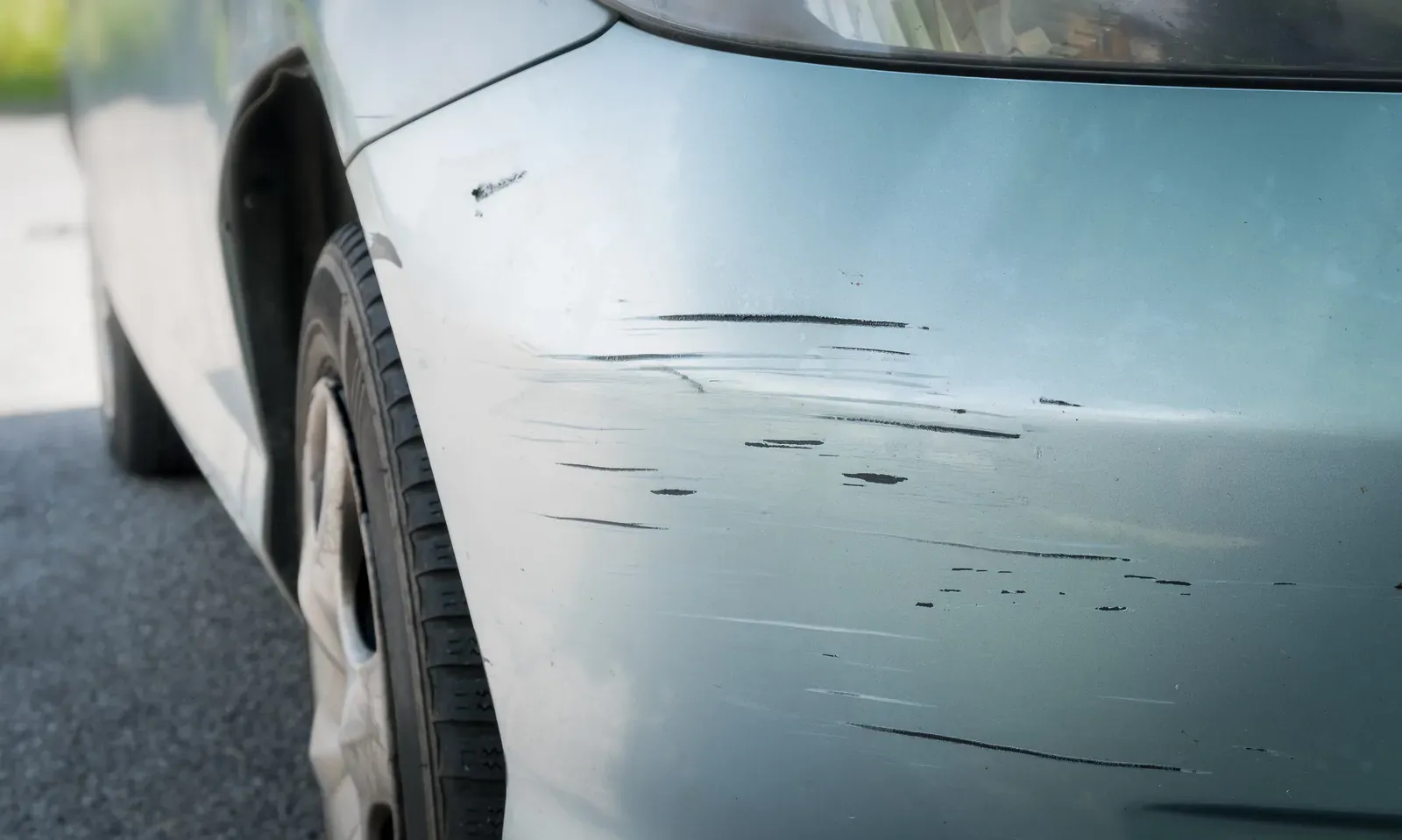
The houses on the curved streets of the original Don Mills were built around a garage or carport sized for the cars of the mid-1950s, and the apron in front of it is often no wider than the door. Many driveways are shared between two properties, with a strip of lawn or a hedge down one side and a neighbour’s car parked on the other. A modern crossover reversing out of that space, turning to clear the second car, drags its rear quarter along the garage frame or its door along the hedge. The result is a scratch that runs the length of a panel, usually low, usually through the clear coat and into the colour.
The other Don Mills scratch is the street kind. Cars parked overnight on the crescents, or on the surface lots at the Lawrence plazas, come back keyed, or with the long white scuff of a passing mirror. The condo towers along Don Mills add the pillar scrape, a wide smear of paint and concrete dust down a bumper corner that looks worse than it usually is.
A hedge line polishes out; a garage-frame drag needs paint
Depth is the whole question, and a thumbnail drawn slowly across the mark answers most of it: it either passes smoothly or clicks into the groove. A pass means the mark is in the clear coat only, and it can usually be polished out by machine with no paint at all. A click while the scratch is still the colour of the car means the clear is gone and the colour coat is exposed; that is a spot refinish, feathered into the surrounding area and cleared over. If you see grey primer or bare metal, the panel needs to be refinished properly and blended into its neighbours, because a scratch that deep cannot be hidden with a touch-up pen and will rust if it is left.
Photos tell us most of this. Shoot the scratch straight on, then at a low angle so the light catches its edges, and once close. Our estimator writes the estimate from those the same business day, and will say plainly when the honest answer is a polish that takes an hour rather than a panel that takes three days.
What insurance does and does not do for a scratch
A scratch you put on the car yourself in your own driveway is a collision claim, and for a single panel the cost is often close enough to the deductible that most people pay for it directly. Keying and vandalism fall under comprehensive coverage, with its own deductible and usually a police report. A scratch from a neighbour’s car on a shared driveway is a DCPD claim through your own insurance company if the neighbour is identified, and in that case it costs you nothing.
If the car is leased and the return date is in sight, a proper refinish now is nearly always cheaper than the charge the leasing company applies for a scratch it can see. We do a lot of that work for Don Mills, and the lifetime warranty on the refinish goes with the car.
- Depth read from your photos, then a firm price in writing
- Polish, spot refinish or blended repaint depending on depth
- Advice on comprehensive versus collision versus paying directly
- Lifetime warranty on any panel we refinish
Questions people ask
I scraped the whole rear quarter along the garage frame backing out of a shared driveway. Is it one panel or two?
Usually the quarter panel and the rear door, because the scrape rarely stops at the seam. The quarter is refinished and the colour is blended into the door so the two read as one surface. If the door only has a light clear-coat mark, that part may polish out and reduce the job.
A pillar in my building’s garage left a wide smear on the bumper corner. Is that paint transfer or my paint gone?
Usually both, in layers. The pillar’s paint and concrete dust sit on top and mostly polish off; whatever still shows after that is your clear coat scuffed through, and that part needs refinishing. Photograph it dry and straight on, and our estimator will say from the picture which half you have — the transfer-only version is a quick job.
Can you touch up a small chip on the hood so I do not have to repaint it?
A single stone chip can be filled and levelled so it stops rust and is hard to find, though a touch-up is never invisible on a hood in full sun. A hood with many chips across the leading edge is a refinish. Send a photo of the area and our estimator will tell you which side of that line it falls on.