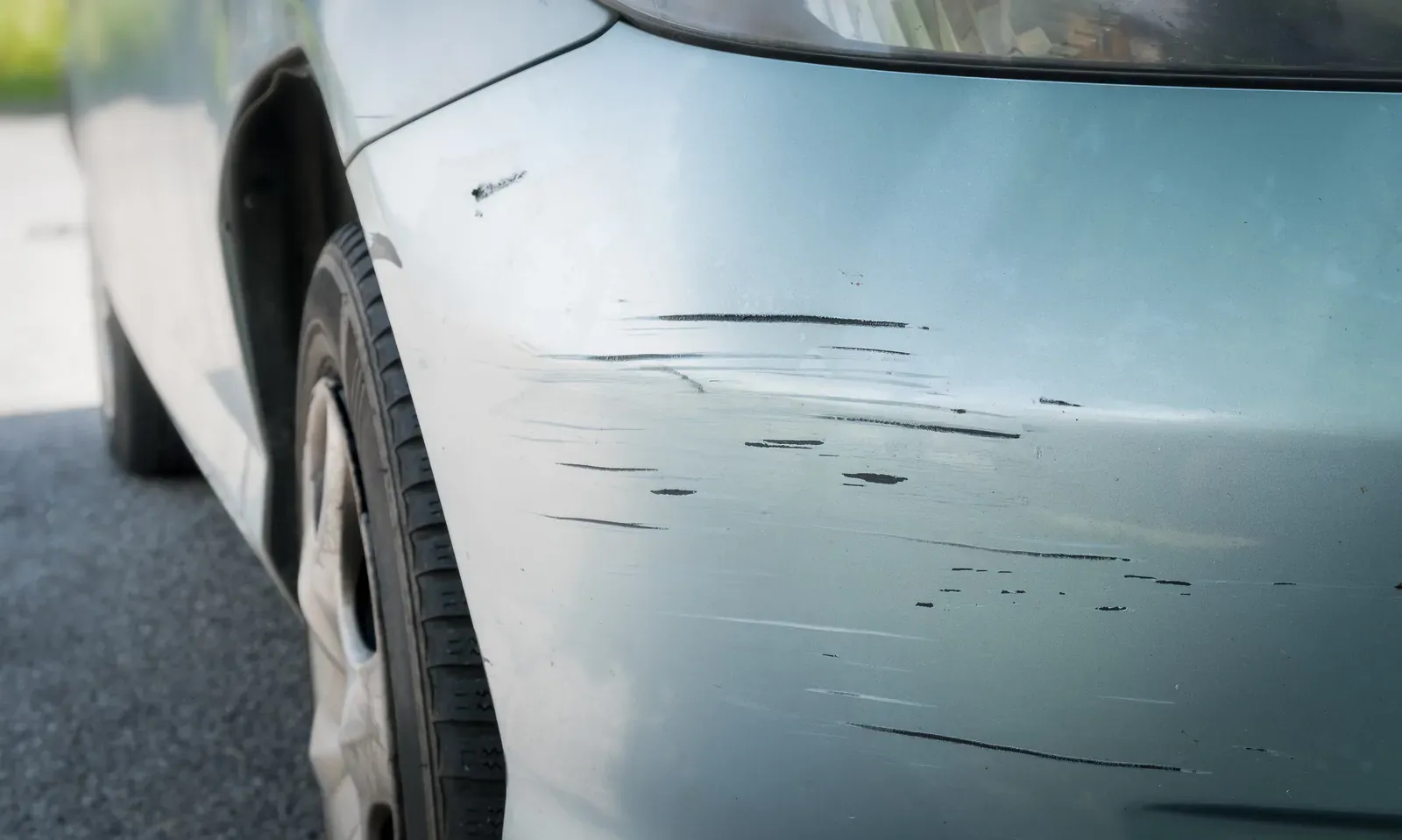
Scratches with a trade behind them
Drive the units along Weston Road and Jane between Highway 7 and Rutherford at seven in the morning and you will see where a lot of Vaughan’s scratches are born. Pickups and cube vans park nose to tail in yards built for half as many, ladders come off roof racks at an angle, conduit slides across a tailgate, and a drywall cart catches a door on the way past. The scratch on a work vehicle is rarely one scratch; it is a season of them, and by the time the van is due back on lease the rear doors look like a chalkboard.
The passenger cars pick theirs up elsewhere. The underground garages at the VMC produce the long keyed line down a door — a dispute over a visitor space, usually — and the pillar wipe along a rear quarter. The Vaughan Mills lot adds the cart scuff at bumper height, and the driveway adds the bicycle handlebar and the recycling bin. All of them get photographed the same way: straight on, close, in daylight, with one more shot taken along the panel at a shallow angle so the light shows how deep the mark sits.
Reading the depth from a photo
Paint is layers — clear, colour, primer, then metal or plastic — and the repair is decided by how many the scratch went through. A mark too shallow for a nail to find is still in the clear, and it is machine-polished out, no paint involved, often while you wait. A scratch with real depth that still shows the car’s own colour has reached the base coat: the area is sanded, colour is sprayed and blended into the surrounding panel, and clear goes over the lot. If it shows grey primer, silver metal, or black plastic on a bumper, the scratch is through everything and the panel needs a proper refinish — and on steel it needs it soon, because bare metal in a Vaughan winter rusts in weeks.
A keyed line the length of a door is nearly always the third kind. It is handled like a collision panel: sanded back, primed, painted edge to edge, and blended into the panels either side so there is no colour step at the seams. The refinish carries a lifetime warranty.
- Clear-coat scuff: machine polished, no paint
- Through the colour: spot repair and blend
- To primer, metal, or plastic: full panel refinish, blended both sides
The inspector’s depth gauge is why a polished scuff beats a repaint
A leased crossover from a Highway 7 dealership goes back in three years to an inspector with a depth gauge, and the difference between a polished scuff and a repainted door is the difference between a clean return and a bill. Fleet vans face the same inspection at the end of the term, only with more doors. That is why the depth reading matters more than the length of the mark: a season of shallow rack scuffs can polish out in an afternoon, while one gouge through the colour is a repaint whichever way the inspection goes.
Our estimator looks at the close-up and the low-angle shot, tells you which of the three depths you have, and puts the number in writing the day the photos arrive, so a Vaughan driver never comes east to find out it was a polish. Most scratches are paid for directly rather than claimed — the deductible sees to that — and vandalism with a police report is the exception that goes through comprehensive.
Questions people ask
A ladder came off a rack and scraped my white van to the metal. How long before it rusts, and can you fix it between jobs?
Bare steel starts to surface-rust within days in a salted Vaughan winter and within weeks the rest of the year, so it should not wait for a quiet month. A gouge that long means refinishing the panel, with booth and cure time, and we book vans around their work week so the downtime lands where it hurts least. Until then, a coat of primer from a rattle can is ugly but keeps the water off.
Our work vans go back on lease in the spring. Can you take the scratches off in batches?
Yes. Photograph each van’s doors and sides, and our estimator writes one estimate per vehicle sorted into polish, spot repair, and repaint. We schedule them so the fleet is never down more than one van at a time, shortest jobs first.
Can I try polishing a scratch out myself before deciding?
Wet the scratch first: one that disappears under water and returns as it dries is shallow enough that a hand polish will often improve it and cannot hurt. One that stays visible when wet has depth — stop there, because rubbing a scratch that has reached the colour thins the clear around it and turns a spot repair into a bigger one. Send the photo first.