Fairview Mall’s lots, ranked by what they do to doors
The parking structure is the worst offender. Stalls were painted for a smaller generation of cars, columns sit at the end of most rows, and the ramps turn tight enough that a long crossover uses the whole width. Doors open into columns and into the car beside them, and the sound of a cart rolling into a rear quarter carries a long way in a concrete garage. The surface lots off Sheppard and Don Mills are gentler until December, when they fill by mid-morning and every third stall is being reversed out of by someone who cannot see past the SUV next door. The station side adds the drop-off tap: a bumper nudged at walking speed while the driver watches for a bus.
Outside the mall the pattern shifts underground. The towers along Sheppard East between Don Mills and the 404 park their residents in garages where a stall next to a column is a stall next to a dent, and where visitor parking gets the worst of the door-swing. Henry Farm adds the seasonal version: the windrow the plow leaves across the driveway mouth in February becomes a frozen ridge that creases a front corner or a rocker. Consumers Road adds lunchtime, when the office lots east of the 404 all reverse at once.
Paintless or painted: deciding which dent gets which
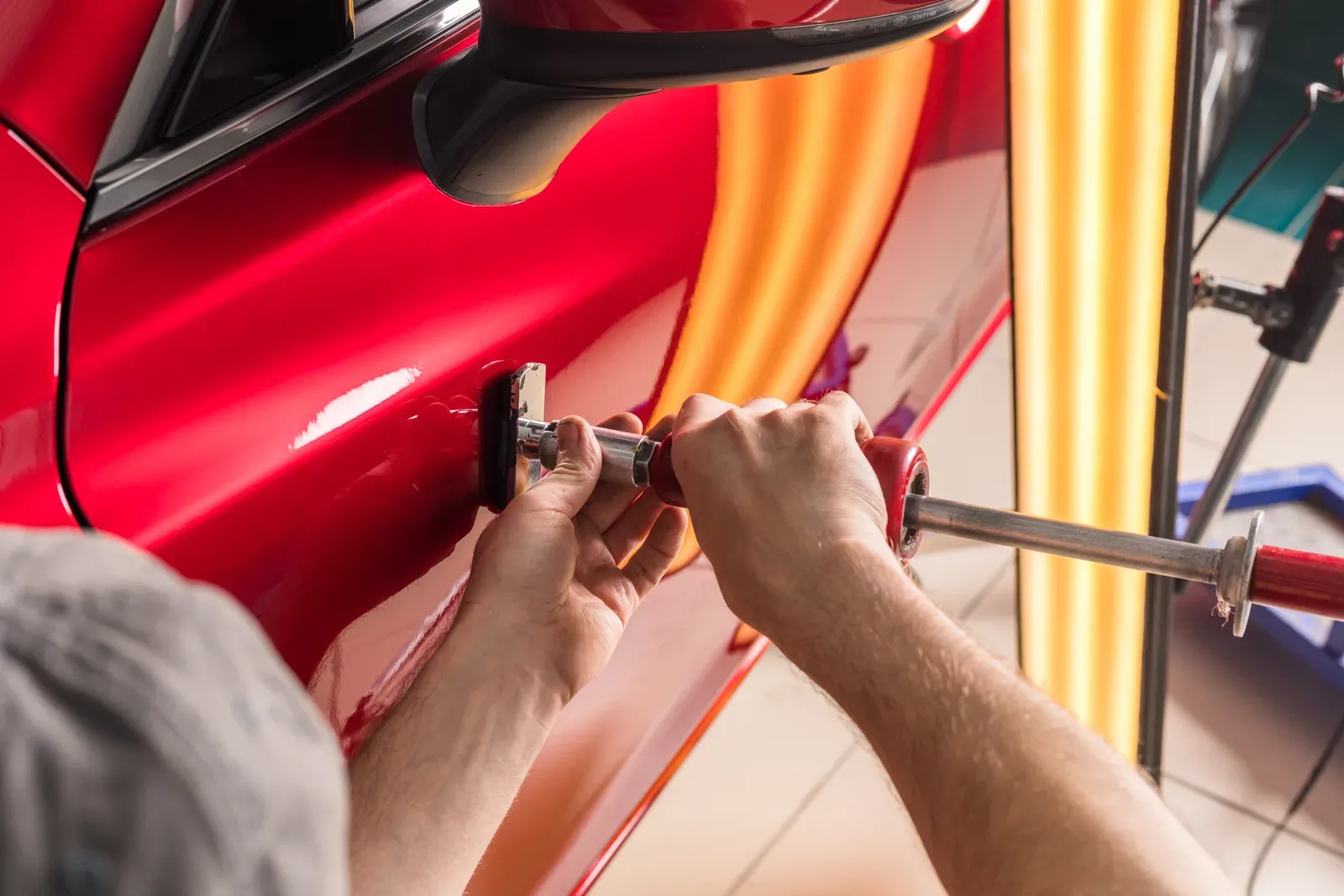
A dent with intact paint, reasonable access from behind and no sharp crease is a candidate for paintless repair. The metal is worked back from inside the panel in small pushes until the reflection line runs straight again, and the factory finish is never touched, which is the best possible outcome for a leased car or a newer one. Aluminum hoods and doors behave differently from steel and want more patience, but many still come back without paint.
When the paint has cracked, the dent sits on a body line, or the metal has stretched into a crease, pushing it back is only half the job. The panel is worked as close to flat as the metal allows, filled thin where it must be, primed, and refinished in colour tinted to your car and blended into the next panel. Sometimes the honest answer is a replacement skin, and we say that when it is cheaper and better.
- Paintless repair where the finish is intact and the metal has access
- Fill, prime and refinish where the paint cracked or a crease stretched the metal
- Replacement recommended only when it is genuinely the better repair
- Written estimate from three photos, one of them at an angle to the panel
The deductible question, answered before you decide
A single door ding often costs less to fix than a typical deductible, in which case a claim gains you nothing and puts an entry on your record. A creased quarter panel and a scraped bumper corner from the same reverse is a different sum. The only way to make that decision well is with the real repair figure beside the deductible, which is why the photo estimate comes first and the claim question second. If another driver caused it and left a note, your own insurance company handles your car under DCPD. If nobody left a note, the repair usually goes through your collision coverage with the deductible, which makes the math matter even more.
Logistics stay easy at the home shop. A single-panel paintless job is often finished while you are across the lot in the mall or on a return trip on Line 4. Several dings collected over a couple of years cannot go on one claim, but they can be priced together for one out-of-pocket visit, which is the economical way to reset a car before a lease return or a sale.
Questions people ask
The windrow at the bottom of my driveway creased the corner of the bumper. Is that a dent job or a bumper job?
A bumper job, because the corner is plastic and paintless techniques are for metal. Plastic that creased without cracking can often be reshaped with heat and refinished; a cover that split at the corner usually gets replaced. Send a photo of the corner and one from underneath and we will tell you which before you drive anywhere.
I have a hail-sized ding on an aluminum hood. Can it come out without repainting?
Often, yes. Aluminum springs back less willingly than steel and needs slower, gentler pushes, but a shallow ding with unbroken paint and access from below is a normal paintless repair. A ding on the hood’s front edge or on a crease line may not be, and we will say so from the photo.
I have three dings from the Fairview lot over two years. Can they go on one claim?
No. A claim covers one incident, and folding unrelated damage into it is misrepresentation. What we do instead is price all three as one repair visit, which often costs less than you expect because the car is masked and in the booth once. If one of the three is large enough to claim on its own, we separate it out.