The second car in the visitor stall is where the dings start
The townhouse complexes off Neilson, McLevin and Empringham were planned around shared visitor lots, and those lots do the dent damage in Malvern. Stalls are narrow, the lighting is patchy, and by ten at night every space holds a second car that does not fit in the garage court. A door swings open into the car beside it; a bumper corner catches a fender on the way out; someone in a hurry at five in the morning reverses into the next row. The result is the classic ding — round, shallow, the size of a fist, paint intact — and no note.
Malvern Town Centre adds the cart creases, especially at the busy end of the lot where carts drift on their own. The Neilson and Finch plazas add door edges from cars parked tight to the storefronts. In the garage courts the damage is quieter: a bike, a bin or a hockey bag leaned on a rear quarter, leaving a soft dent you notice weeks later at the car wash.
Reporting it, claiming it, or just fixing it
For a hit-and-run in the visitor lot, take photos where the car sits, note the time and look for a camera on the complex, then report it to police. Your insurance company will want that report if you claim. Whether you should claim is a separate question. A single paintless ding usually costs less than the collision deductible, and a claim on your own policy stays on your record, so the honest answer for one dent is often to pay directly.
Where a claim makes sense is when the dent came with company: a cracked bumper, a scraped door, or several panels hit at once. Send the photos and our estimator sets out the numbers both ways before you decide. A photo from whoever has the keys is enough to start the estimate.
- Hit-and-run in a lot: photograph, report to police, then send us the pictures
- One small ding: usually a pay-directly repair
- Dent plus a cracked bumper or a scrape: a claim is worth weighing
- Written estimate from photos before anything is booked
How a dent comes out without paint
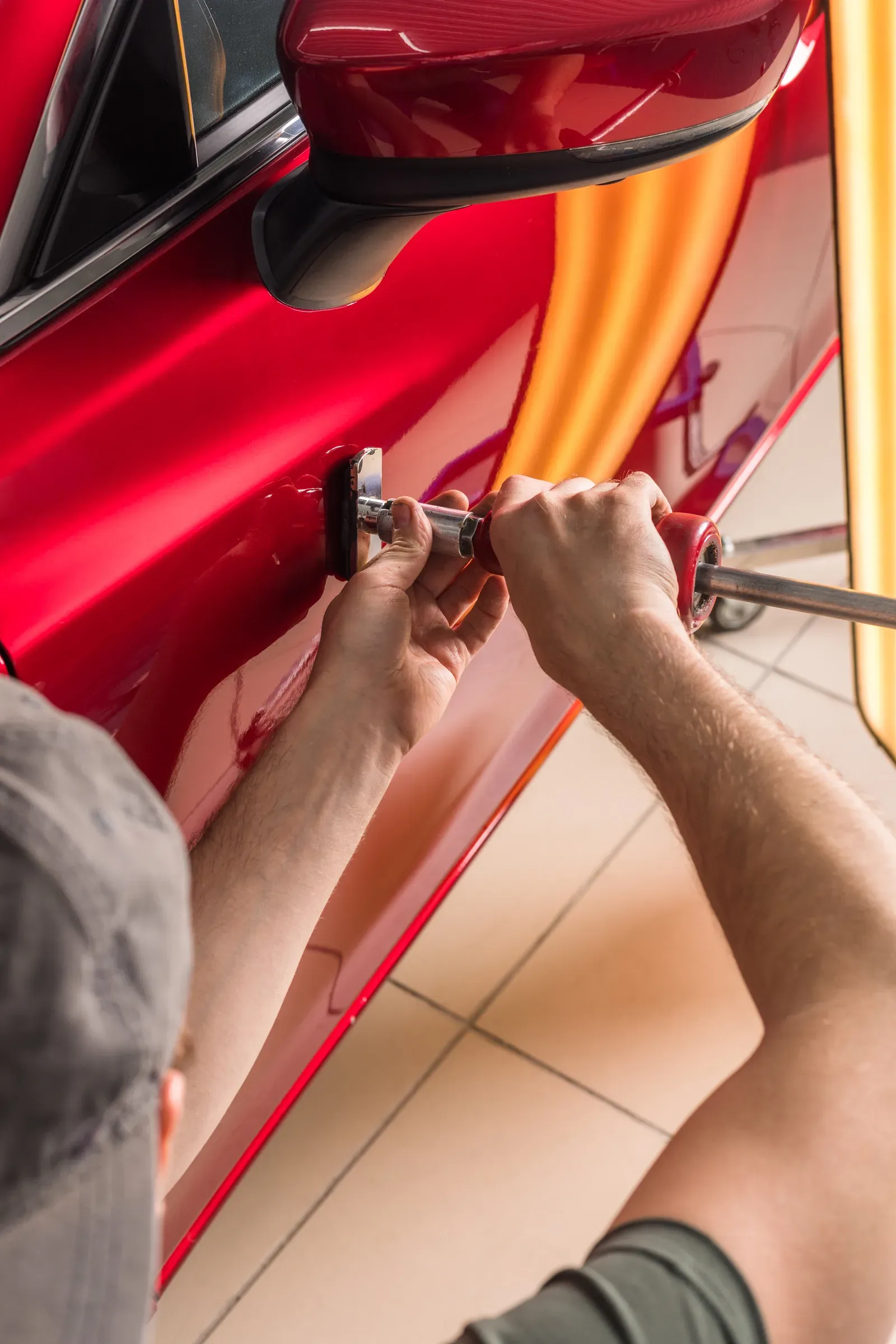
When the paint is unbroken the dent is worked from behind. The trim or a lamp comes off for access, a steel rod reaches the back of the panel, and the metal is pushed back a fraction at a time under a light that shows every ripple in the reflection. The factory paint stays on the car, which is the best outcome there is. A fist-sized visitor-lot ding is often done in an hour or two, so plenty of Malvern drivers wait for it, or leave the car for the morning and take the express bus back to Neilson.
A dent that sits on a body line, has a sharp crease, or has cracked the paint is a different repair. The metal is pulled up as far as it will go, filled and blocked flat, then primed, painted and blended into the panel — a few days rather than an hour, with a lifetime warranty on the paint. Aluminum hoods and tailgates can often be worked paintless too, more slowly. Send a photo with light falling across the dent and we can tell you which repair yours is.
Questions people ask
Someone hit my parked car in the visitor lot and left. Will my deductible apply?
It depends on your policy. Most insurance companies treat a police-reported hit-and-run as a collision claim, and many apply the deductible; some do not when the report is on file. We check with your insurance company before any work is booked so you know the number in advance.
The complex’s camera caught the car that hit mine in the visitor lot. Does that change the claim?
Yes, in your favour. With the other vehicle identified and insured in Ontario, the damage moves from your own collision coverage to a DCPD claim through your own insurance company, rated not-at-fault for you — and usually with no deductible unless your policy carries one for DCPD. Give the police report number and the footage to your insurance company, and send us the same photos; the repair itself is identical either way.
The corner of the garage-court wall dented my door. Can the estimate go to the property manager?
Yes. If you believe a broken curb stop or the court’s layout contributed, the estimate can be written to the property manager or copied to them, itemized so the complex’s insurance or the condo corporation can review it. Keep in mind that hitting a fixed object is normally a collision claim on your own policy if you claim it at all — the property conversation runs separately, and we give you the paperwork for both.