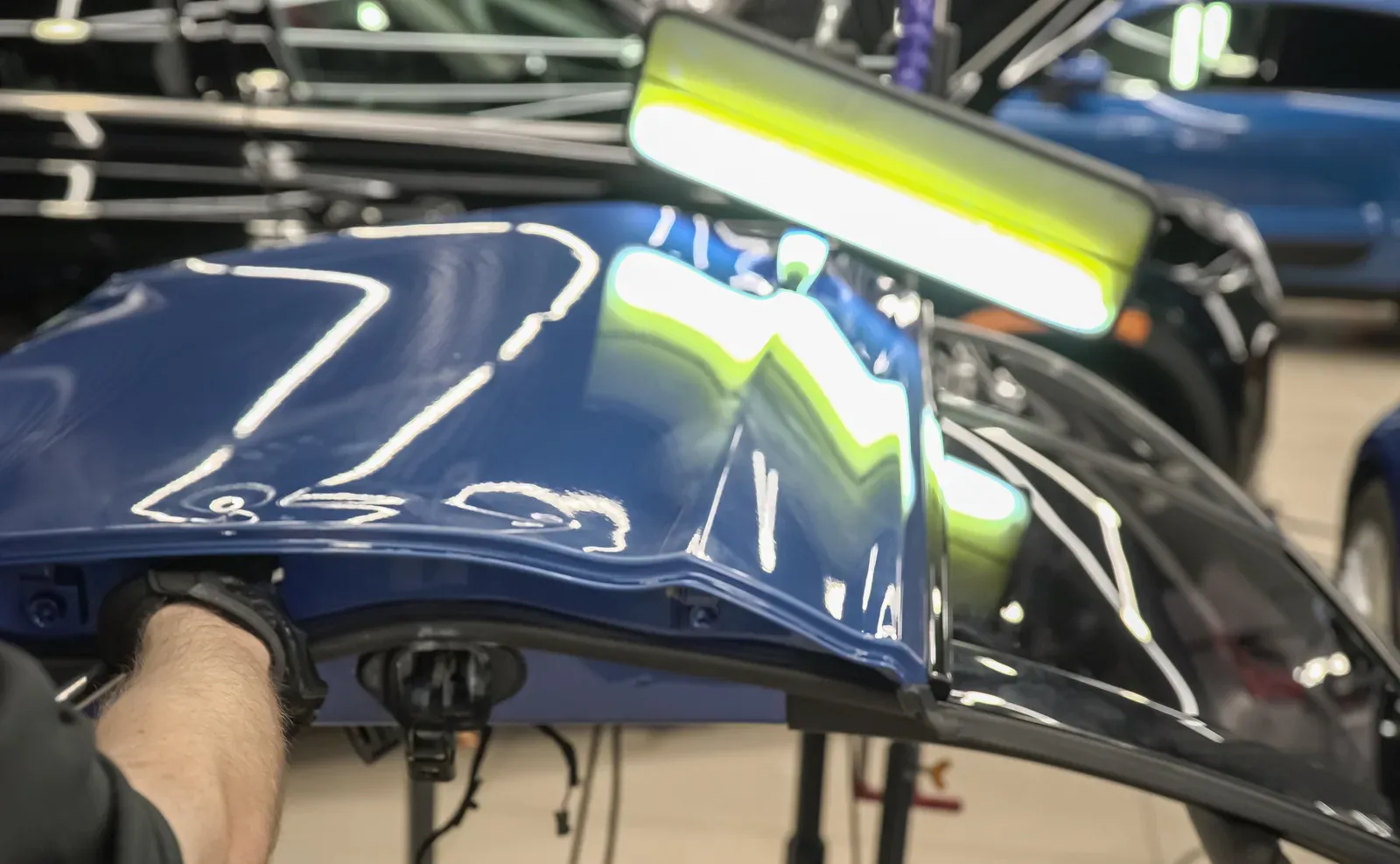
Stretched metal under unbroken paint is a job for rods, not filler
A dent is stretched metal, and if the stretch is gentle and the paint over it is intact, the metal can be persuaded back from the other side. The technician gets a rod behind the panel — through the window slot, a wiring hole, or with the trim off — and pushes the low spot up a fraction at a time while a striped light board on the outside shows every ripple that is left. When the stripes run straight across the panel, the dent is gone. No filler, no primer, no paint, no blend into the door beside it. The factory finish is untouched, which is why this is the repair to want when the car is leased, newish, or simply looked after.
It stops working when the paint has cracked, when the crease is sharp enough to have folded the metal, or when the dent sits on a body line or the very edge of a panel where the steel is stiffest. Those get the conventional repair: the metal is pulled close, a skim of filler levels it, and the panel is primed, painted and blended. Our estimator tells you from the photos which one you are getting, and the estimate names it.
Where Danforth dents come from
The Green P lots behind Greektown are the first source. They were laid out for the cars of another era, the aisles are narrow, and on a Friday night every space is taken by someone in a hurry to get to dinner, so the door beside yours opens into your rear door about once a season. The laneway garages are the second. A frame you clear by a hand on each side eventually gets touched by a fender or a mirror, and the dent it leaves is shallow and round with the paint usually intact — the ideal paintless case. The curb is the third: a car that lives on Logan, Carlaw or Hampton gets leaned on by bikes, brushed by a stroller, tapped by the car parking behind it and, in August, walked past by a crowd with nowhere else to go.
Almost none of these break the paint, which is the whole point. The photo that decides it is the close one: take it at an angle in daylight so the reflection shows the edges of the dent, and our estimator can see whether the surface is cracked before the car comes in.
- Round, shallow, paint intact: paintless, usually one day
- Cracked paint or a sharp crease: fill, paint, blend
- Several dents at once: batched, cheaper per dent
Drop it in the morning, collect it in the afternoon
A single paintless dent is a same-day job more often than not, which changes the logistics. There is no need for a rental. Drive up Pape, which becomes Don Mills Road at O’Connor, and you are here in about 15 to 24 minutes; leave the car, walk to Don Mills station, and the subway or the 25 bus has you back on the strip in time for whatever you had planned. We call when it is ready, and the car looks the way it did before the lot.
On the claim question: a single dent is nearly always below the collision deductible and we say so plainly, so the repair is paid directly and no claim is opened. The exception is a car with many dents at once — hail, or a whole side worked over — which is a comprehensive claim with a lower deductible and no at-fault mark. Send the photos and ask; the estimate is free, and it says which side of the line you are on.
Questions people ask
The dent from the lane garage is on the fender near the wheel arch. Paintless or not?
Probably paintless. Fender arches are reachable from behind once the liner is pulled back, and a garage-frame dent is usually round and shallow with the paint intact. What rules it out is a crack in the paint or a crease on the arch lip. The angled photo tells us which.
My lease ends next spring and the doors have four or five dings from the Green P. Is it worth doing them now?
Yes, and together. Paintless repair leaves the factory paint untouched, which is exactly what a lease inspector wants to see, and doing all the dings in one visit costs less per dent than one at a time. Do it before the return so the inspector has nothing to list.
A bike locked at the ring post fell against my fender on Carlaw and left a soft dome in the panel. Paintless?
Almost certainly. A falling bike is a low-force, rounded impact — exactly what the rods handle. The liner comes back, the dome is pushed out from behind under the light board, and the factory paint never knows it happened. The one check is the point of contact: a brake lever can leave a small scratch at the centre, and if it cut the clear, that spot is polished or touched in after the metal is back in shape.