The Ajax GO lot, and the other places dents come from
Ajax GO is the dent capital of Durham. The surface lot and the garage off Westney fill before the first express trains and empty in a rush after the last, and every space is a car length from a door swung open by someone late for the platform. The dings are round, shallow and sit on the widest part of the door — exactly the kind that comes out from behind without paint. Durham Centre adds the cart dents, on lower doors and rear quarters, from the big-box end to the Harwood side of the plaza. And the hospital lot on Harwood Avenue South, where shift changes happen in the dark, produces creases with no note under the wiper.
Then there are the driveways. In the Salem and Audley subdivisions a driveway barely wider than the SUV means bicycles, hockey nets and the recycling bin land on a rear quarter, and a garage-door frame catches a mirror. A summer hailstorm every few years spots a roof and hood with dozens of small dents at once. The common thread is that the paint is usually still whole, and that is what decides how the repair is done.
Pushing it out versus filling it in
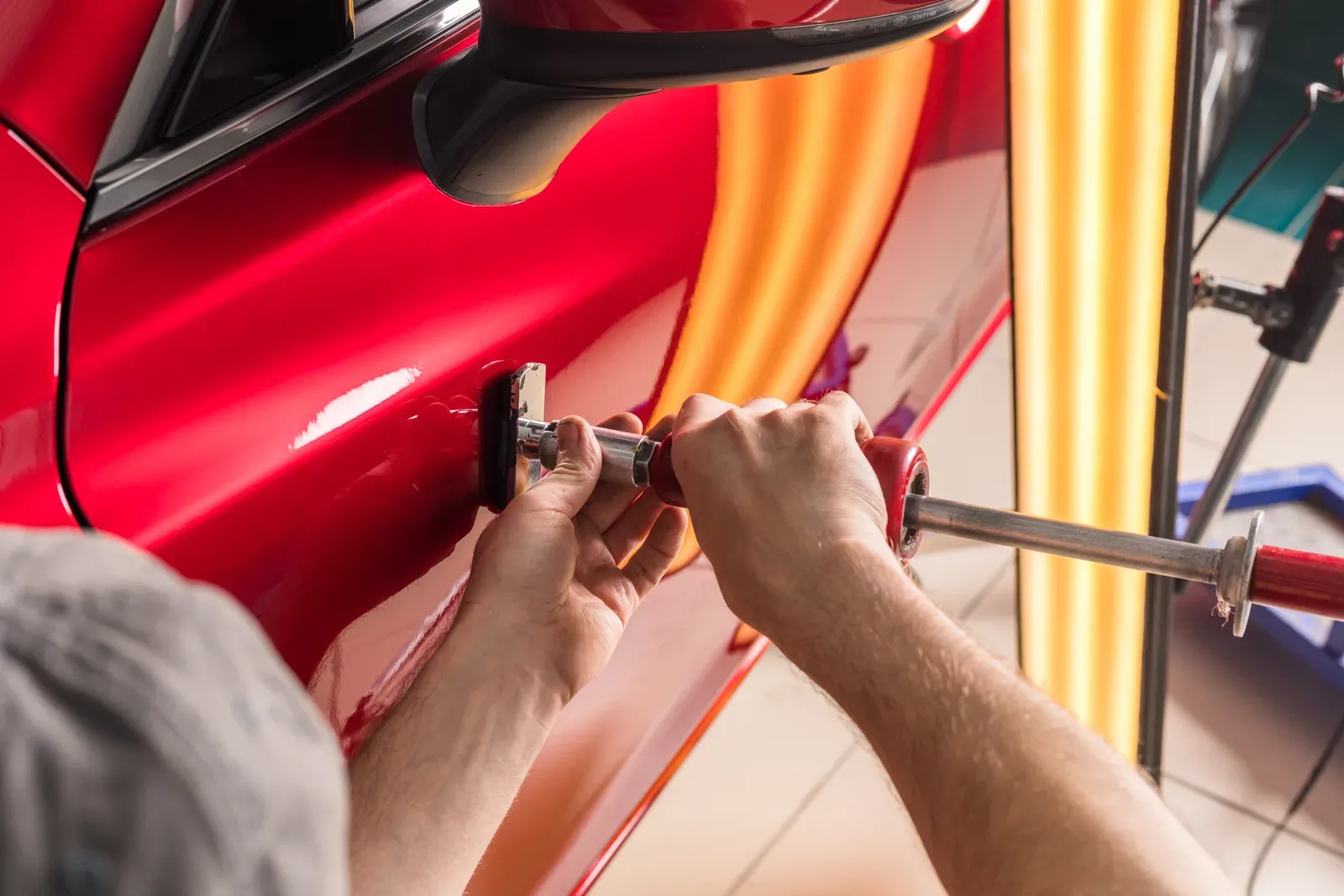
When the paint is unbroken the dent is worked from behind with rods and levers, through the door’s drain holes or the wheel well, until the metal returns to its original shape under a reflection board. No filler, no primer, no colour, and the factory paint stays on the car — which matters for a lease return and for anyone who cares about resale. It suits round dings, soft creases and hail, on steel or aluminum, and it is usually finished in a single visit.
When the paint is cracked, the metal is stretched, or the dent sits on a body line or a panel edge, pushing alone will not do it. Then the panel is worked back with conventional tools, skimmed with a thin layer of filler, primed, and refinished with the colour blended into the neighbouring panel. Sometimes the honest answer on a badly creased door is a replacement skin. Our estimator tells you which route from the photos in almost every case, and confirms in person before any work starts.
Deciding from Ajax whether to claim it
A small dent is the classic case where the deductible matters more than the damage. Send photos — straight on, from an angle that shows the reflection, and one of the whole panel — and the written estimate follows. Compare it with your deductible; for a single paintless ding the repair is often below it, and paying directly keeps a claim off your record. For a hail-covered roof the comprehensive claim usually makes sense, and we run it with your insurance company for you.
Either way the drive is planned. A paintless repair is booked for a day you are already coming west, and the car often goes home the same day. A repair that needs paint is timed to a rental pickup through your coverage, so the car is dropped and collected in one trip each. The estimate says plainly which one you have, because from 33 kilometres away the wrong guess costs you a morning.
- Three photos, one written answer, before you decide anything
- Paintless where the paint is intact — no colour, no filler
- Deductible compared before any claim is opened
- Same-day return on most single paintless dents
Questions people ask
The neighbour’s trailer swung into my parked car on our shared driveway off Audley. Whose insurance pays?
Yours, in the DCPD sense: when another identified, Ontario-insured driver damages your parked car, your own insurance company pays the not-at-fault claim, and their company answers to them — a trailer counts as part of the vehicle towing it. Get the plate and insurance slip, photograph both vehicles where they stand, and decide with the estimate in hand; a single shallow dent may still be cheaper to settle between driveways than to claim.
A summer hailstorm spotted the hood and roof. Can that be done without repainting?
Very often, yes. Hail dents are shallow and round, and the paint usually survives them, so the panels are worked from behind one dent at a time, preserving the factory finish — which is why it is the usual method on hail claims. Hail itself is a comprehensive claim, with no fault attached. A dent that cracked the paint or sits on a panel edge gets a conventional repair instead.
Can a dent on a body line be fixed without paint?
Sometimes, but body lines are the hardest case because the metal is stretched at the crease. We say from the photos whether it will come back clean or whether a light skim of filler and a blended refinish will look better. The wrong choice shows in the reflection, so we would rather tell you before the drive.