The dings that come home from Cumberland and Bay
Almost nobody in Yorkville dents their own car. It happens while the car is parked. The valet at a hotel on Yorkville Avenue slots it beside a pillar and a door swings; the Cumberland garage stall is a shade narrower than the SUV beside it; a shopping bag with a hard corner meets the quarter panel on the way into the Manulife Centre garage; a courier threading the curb lane on Bloor catches a mirror. Under the condo towers on Bay, a column at the turn into a stall puts a crease in a rear door, and nobody hears it; on the spiral down to the lower levels, a mirror folded a second too late meets the wall instead. A summer thunderstorm on a car left outside on Scollard leaves the roof and hood peppered with hail. Each one arrives with the same question: does this need paint, or can the metal be worked back with the factory finish untouched?
Door-edge dents at valet height, and the aluminum question
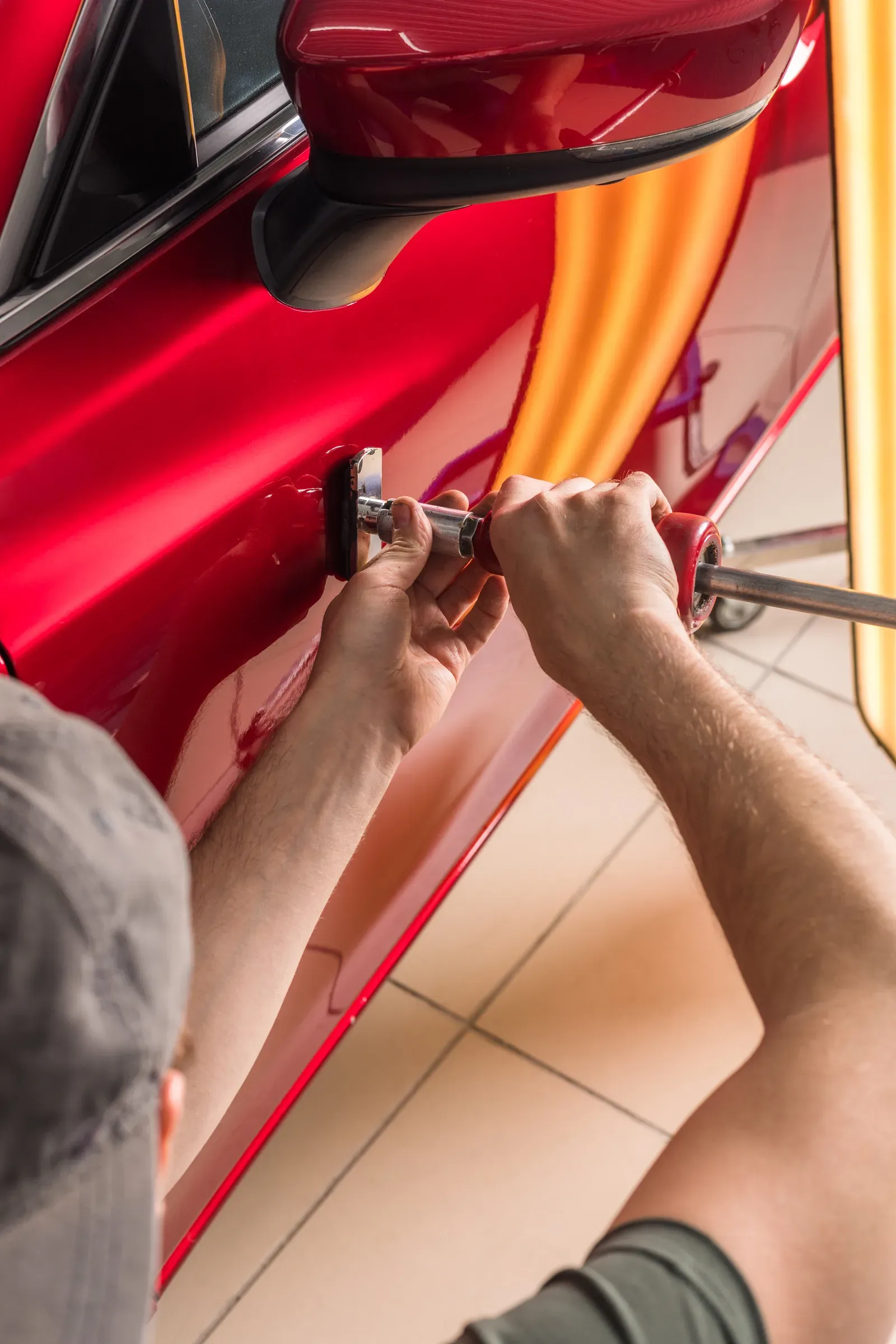
A door swung into a pillar three levels under Cumberland leaves a particular dent: door-edge shaped, a fixed height off the floor, and more often than not sitting right on the panel’s crease line. That location is what decides the repair. Off the body line, with the paint intact and room behind the panel, a technician works the metal back with rods and levers, reading the surface in a reflection board until it sits flat — no filler, no primer, no colour, and the finish the factory applied is still there for the lease inspector. On the line, the metal is stretched, and pushing it flat without paint is a gamble we will not take on a pearl. Aluminum, which is what many hoods and doors around Hazelton are made of, adds its own limit: the metal is soft but has little spring-back and stiffens where it is worked, so it is warmed and moved slowly, and a second attempt risks cracking it. Where a brace or a door beam blocks access, glue tabs on the outside pull the low spot up instead. Once the paint has cracked, the repair is conventional — work it, fill the last of it, refinish with a blend — and we say so from the photos rather than promising paintless on a panel that will not take it.
Valet slips, deductibles, and the claims worth opening
A single door ding from a driver who was never found is a collision claim on your own policy — a hit-and-run, less your deductible — and a small dent often sits close to that deductible, so most owners pay for it directly and keep the claim history clean. Deliberate damage is vandalism and falls under comprehensive instead. A hail-covered roof and hood is a comprehensive claim too: it does not count as at-fault, and the count of dents runs into the dozens, so it is usually worth opening a file. Valet damage sits in between, because the operator usually carries liability coverage and will respond if you report it before you drive away, ticket in hand. Whichever route fits, send the photos first; our estimator prices the paintless route against the conventional one and says plainly whether a claim makes sense. Lease-return owners with several dings across the car often bundle them into one visit before the inspection, which is where the paintless approach earns its keep.
Questions people ask
The valet dented the door and the operator is disputing it. What evidence helps?
The ticket with the time on it, photos of the dent taken before you leave the forecourt, and the walk-around video some operators record at intake — ask whether one exists before the conversation hardens. A dent at door-edge height with paint transfer in it supports your version of events. If the operator still refuses, your own collision coverage can take over, and our written estimate documents the damage either way.
A car parked on Hazelton took hail in a storm. How is that priced and repaired?
By counting the dents on each panel and sizing them. Small round hail dents on a roof, hood and trunk lid with intact paint are ideal for paintless repair, one at a time. It is a comprehensive claim on your own policy, it does not affect fault, and the estimate from photos is the starting point for the adjuster.
Can dents be fixed while I wait, so I do not need a rental?
A single small ding in an accessible spot is often a same-day paintless job, and you can wait at Fairview Mall next door — no rental involved. Several panels, an aluminum hood or anything that needs paint means the car stays a few days: on a claim, a rental runs for as long as your loss-of-use coverage allows; paying directly, we book the work so the days without the car are as few as possible.