Pearl, tri-coat and the colours that show every shortcut
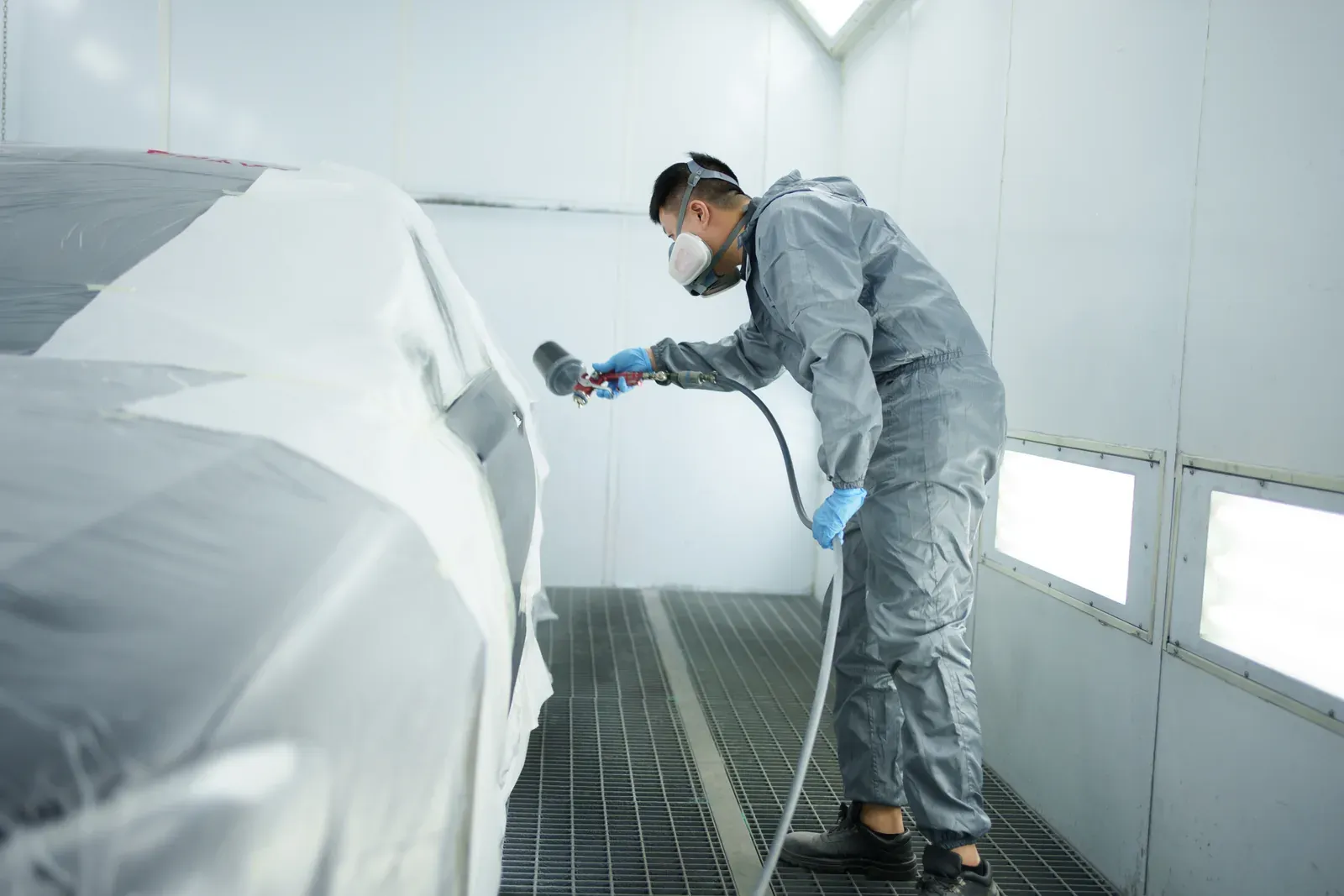
Walk the rows outside Bayview Village Shops on a Saturday and count the colours: pearlescent white, candy-apple and wine reds, deep blues that look black in shade, greys with a coarse metallic that flips in sunlight. These are the finishes carmakers charge extra for, and they are the finishes that punish a careless refinish. A pearl is a three-stage system — base colour, a translucent mid-coat carrying the pearl flake, then clear — and the shade shifts with how many mid-coats went on and how wet they were sprayed. A metallic changes with gun distance and air pressure, because that decides how the flakes lie down.
The paint code on your door jamb gets us to the neighbourhood of the colour. It does not get us to your car, which has faded a little on the sunny side and picked up years of Bayview road grime. So the mixed colour goes onto a test card first, sprayed the way the panel will be sprayed, and that card is held against your car outdoors and under the booth lamps before anything touches metal. If it is off, the mix is tinted and sprayed again. That step is the difference between a repair you forget and one you notice every time you unlock the car.
Where the paint work in this neighbourhood comes from
Very little of it is a whole car. Most of it is a bumper cover scuffed to the primer in the angled lot at the Shops, a door edge chipped against a column in a shared garage on Rean Drive, a hood scored by a maple branch that came down on a Hawksbury driveway, a fender keyed along Bayview. The question in each case is how much has to be painted to make the repair invisible, and the honest answer is usually more than the damaged spot. A repaired door is painted fully and the colour is blended into the fender and the rear door so the eye never finds a line. Clear coat goes across the whole panel, because a clear edge shows as a shadow within a couple of winters.
Sun does its own kind of damage here too. Cars that live outdoors on the ravine streets instead of in a garage arrive with clear coat peeling on the roof and the hood, and with a spoiler or a mirror cap that has gone chalky. That is a refinish job rather than a collision job, but it goes through the same booth and the same match process, and it gets the same lifetime warranty on the paint.
- Bumper covers scuffed in the Shops lot, refinished and blended
- Door and fender damage from underground garages along Sheppard
- Branch scores and clear-coat failure on cars parked under trees
- Keyed panels and vandalism scratches along Bayview and Finch
Timing the job when you live five minutes away
Because the drive from Bayview and Sheppard is so short, a lot of people try to drop in for a look. Send photos instead: one showing the whole panel and its neighbours, one close on the damage, one at a raking angle so the depth reads. Our estimator writes the estimate from those the same business day, and it states which panels are being painted and which are being blended, so there are no surprises at pickup. Paint work usually takes a few days, because the colour needs to be sprayed, baked and allowed to cure before it is polished and reassembled, and we would rather keep the car an extra day than hand back a finish that has not hardened. The Sheppard subway from Don Mills gets you home to Bessarion in two stops while it cures.
Questions people ask
Why does the estimate list my fender when only the door was damaged?
That is the blend. The new colour is faded into the fender and the rear door so the transition is invisible from any angle, rather than stopping at a panel gap where a slight difference would show. On pearl and metallic colours it is not optional; it is what makes the repair disappear.
Can you repaint just the scuffed corner of my bumper?
We repair the corner and refinish the bumper cover as a unit, blending where the cover meets the fender. Painting only a corner leaves a visible edge in the clear coat, and on the dark metallics common around the Shops it would show within a season.
How soon after painting can I wash the car or park it under the trees on my street?
We hand it back polished and safe to drive, but fresh paint keeps hardening for several weeks. Avoid automatic car washes, waxing and tree sap on the new panel for the first month if you can; a gentle hand wash with plain water is fine. Bird droppings and sap should be rinsed off promptly during that window.