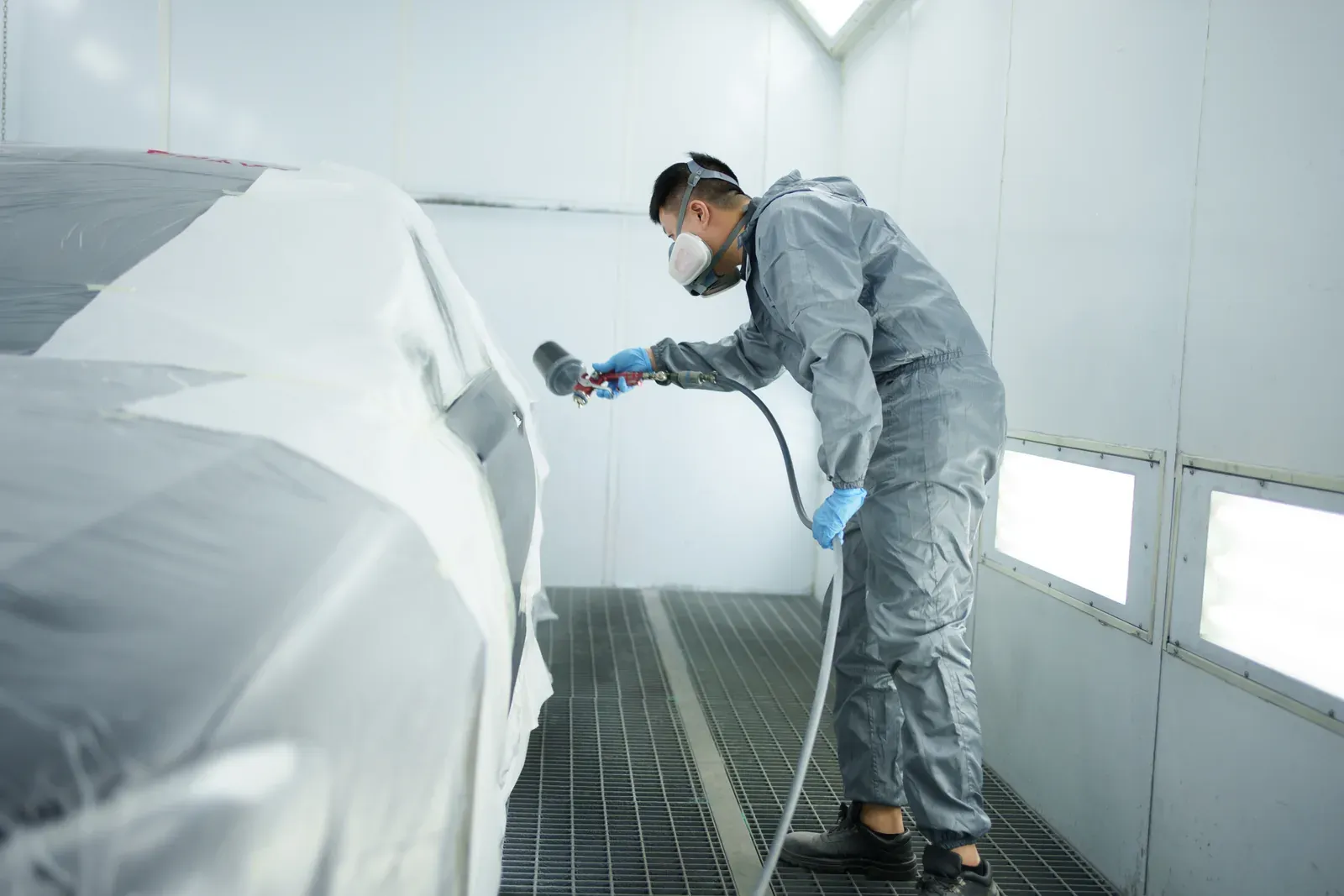
Two Thornhill cars a kilometre apart that need opposite paint jobs
Picture two cars parked a kilometre apart. The first is a sedan on Royal Orchard that has spent eight summers under a Norway spruce and a maple: sap etching on the roof and hood, bird-dropping burns on the trunk, a roof faded a shade lighter than the doors, and ten winters of Steeles and Bayview slush chipping the lower third of every panel. The second is a three-year-old SUV in a townhouse garage off Bayview, a tri-coat pearl white that still reads as showroom under the tube lights and shows any mismatch from across the street.
One door on the first car cannot be matched from the code, because the code describes a colour that car has not been for years. One bumper on the second cannot be matched from the code either, because a pearl is a stack of three coats and the code only names the ingredients. Both need a match built on the car in front of us, and each needs a different kind of work to get there.
Cutting sap out of soft clear, and letting down a three-stage pearl
The sedan’s problem is the clear coat. Sap and bird droppings are mildly acidic, and on a roof that bakes under a canopy all August they etch a crater into the clear that a detailer’s polish will flatten but not remove. If the etch stopped inside the clear, we can level it and refine the surface without paint. If it has reached colour, the roof is sanded to sound material, primed and refinished, and the new colour is tinted against the faded doors rather than the code, then feathered into the pillars so no edge shows. The sprayout card is checked against the car under corrected light before the colour goes near the vehicle.
The SUV’s problem is the pearl. A tri-coat is a white base, a translucent mica coat that makes the shimmer, and clear over both, and the shade depends on how many passes of mica went on. So we spray a let-down panel — the same base, then one, two, three, four coats of mica in bands — hold it against the bumper and find the band that disappears. That band becomes the recipe. Because the eye reads the mica across a long stretch, a pearl blend runs two panels wide instead of one: bumper cover painted complete, fender and often the front door blended so the plastic’s slightly different texture does not read as a colour step.
- Etching levelled without paint when it stopped in the clear
- Tint built against the faded panel rather than the code on the jamb
- Let-down panel sprayed for every pearl and tri-coat
- Pearl blends run two panels wide by design
Booth time booked once, and what the paint warranty says in writing
Refinishing rarely hides surprises the way collision work does, so the number of days quoted at booking is the number you can plan a week around. The estimate is written from photos, booth time is reserved, and the trip down Leslie or Bayview happens once. If Friday is the day that works, the car comes in first thing and goes home the following week, so nobody is timing a cure against the end of the day.
The warranty is worth reading as a warranty rather than a slogan. Our lifetime warranty on paint and refinish covers the work we sprayed for as long as you own the car: if the refinished area peels, checks or loses its gloss ahead of the original paint around it, we redo that area. It does not cover new damage — a fresh gatepost scrape, a stone chip on Steeles — or panels we never touched. Sap etching and fade are wear, and nobody insures wear, so the estimate is a plain cash number. A key line down a door on the Thornhill Village strip is vandalism under comprehensive with your usual deductible, and our estimator runs that claim from the counter if the number clears it.
Questions people ask
The detailer polished the sap spots on my roof twice and they came back. Is that a paint job now?
Probably. A polish removes a little clear coat and flattens the edge of the crater; if the etch went deeper than the clear, the mark reappears as soon as light hits it at an angle. Send a photo of the roof taken from a low angle in daylight and our estimator can usually tell whether it levels or needs colour.
My pearl-white SUV picked up column paint on the bumper in our townhouse garage. Polish or repaint?
Start with a solvent wipe and a light compound, which is what we do at the counter. Column paint sits on top of your clear, and if the clear under it is only dulled, it comes off with nothing more. If the corner shows a grey scuff where the clear was scrubbed through, the cover is refinished complete and the fender blended, because a pearl will show a corner-only repair from the driveway.
Why does blending a tri-coat pearl take more booth time than a solid colour?
Three reasons. The let-down panel has to be sprayed and matched before the car is touched. The mica coat goes on in more passes than a single-stage colour, each with its own flash time. And the blend runs into the next panel, sometimes two, so more of the car is masked, sanded and cleared. Cost follows hours, so it costs more, and the estimate shows where.
How long should a fresh refinish stay out of a brush car wash?
The clear leaves the booth cured, but it keeps hardening for a few weeks. Hand washing or a touchless wash is fine after a few days; hold off on brushes, wax and sealant for about a month so the surface finishes curing before anything works on it. If the car lives outside under the trees on Royal Orchard, rinse sap off with water in the meantime rather than rubbing it.